The long dream of the Googlebook — SkimNews

Get the Culture newsletter
Daily culture — film, music, books, the trends and ideas worth your attention. Free.
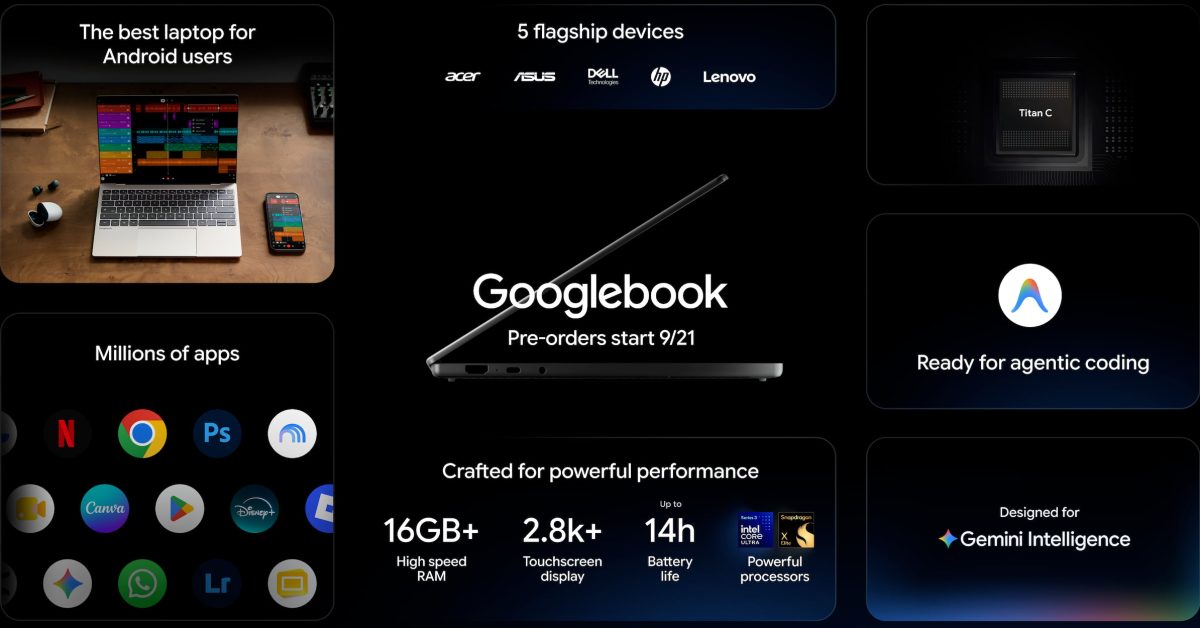
- Google launched Googlebook OS across five new devices, led by a 13-inch Dell XPS Googlebook with 16GB of RAM and a Qualcomm processor.
- Project Aluminium — the internal effort to merge ChromeOS capabilities into Android rather than the reverse — was greenlit by hardware chief Rick Osterloh as "the ultimate focusing move" for the company.
- VP of engineering Prajakta Gudadhe argued Android had matured into a cross-platform OS after years of supporting phones, wearables, TVs, and autos, finally making an Android laptop viable.
- Magic Pointer, a feature designed by senior director Alexander Kuscher, lets users invoke Gemini by wiggling the cursor over text or images — baking AI into the OS itself rather than offering it as a separate app.
- The Googlebook team pulled expertise from Android Automotive (multi-user switching), Android Wear (Bluetooth), and the XR team (multi-window support) to assemble the new platform.
- The project reverses former CEO Eric Schmidt's "disposable hardware" philosophy in favor of Osterloh's belief that laptops are a "resonant form factor" AI won't displace — just look at Apple's high-end Mac sales.
- Deep integration with Android phones (widgets, notification shades, synced data) leaves iPhone owners mostly locked out of the Googlebook ecosystem.
Why it matters: Google is reversing its "disposable hardware" era by betting premium laptops are worth fighting for in the AI age, simultaneously trying to unify its fragmented OS strategy into one cross-device Android platform. With five OEM partners and system-level Gemini, Google is also deepening Android lock-in — iPhone users are shut out of the tightest integration perks.
Ask SkimNews