Googlebook OS Feels Worse Than ChromeOS at Launch — SkimNews

Get the Tech newsletter
Daily tech — startups, AI labs, chips, the launches that shape the next decade. Free.
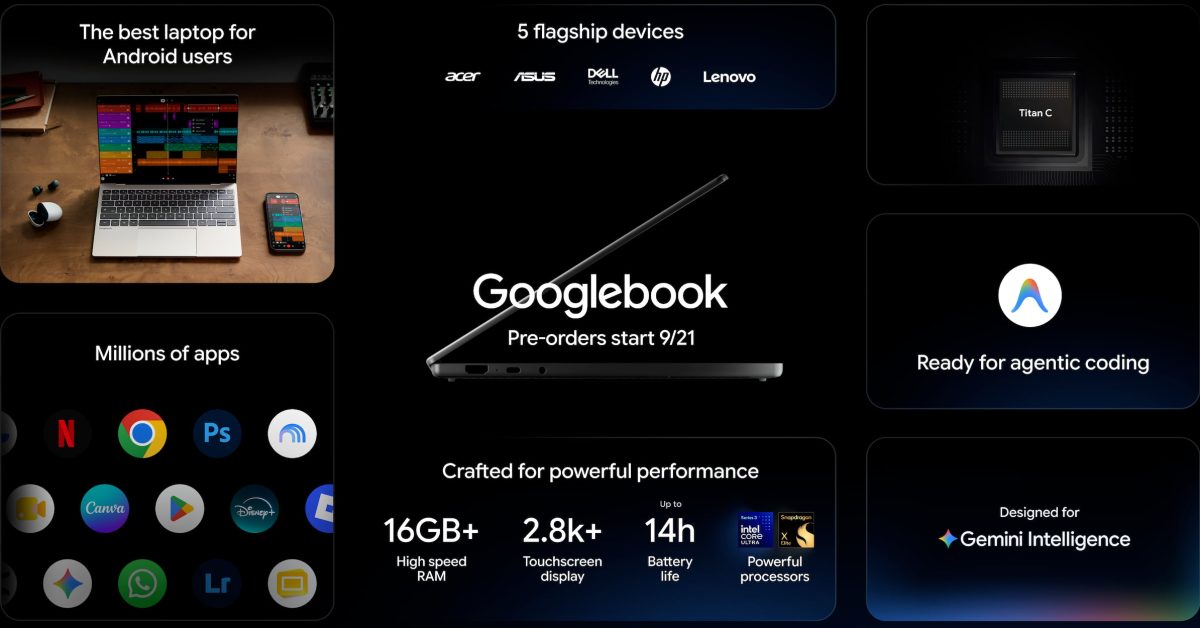
- Google launched five Googlebook laptops from partner OEMs (HP, Lenovo, Acer, Dell, Asus) with hardware ranging from "great to excellent," but staff Slack discussions at The Verge have been "filled with collective venting" about the software.
- Googlebook OS feels like a setback from ChromeOS at launch — it shares ChromeOS flaws like blocking separate Chrome accounts, and Android apps feel just as clunky on the new laptops as they did on ChromeOS hardware.
- Google told reviewers the shift from ChromeOS to Android would enable "much faster development," but reviewer Antonio G. Di Benedetto says that promise needs to go "into warp speed" given the current state of the OS.
- App developers haven't optimized for the laptop form factor — Netflix and other streaming apps launch full-screen in tablet mode, many apps don't render correctly when window-resizing (including some of Google's own), and reviewers note "if I can't pause the movie by whacking the space bar, your app doesn't work with keyboards."
- Linux apps installed through Googlebook's Debian virtual machine live in isolation from the rest of the OS — no app drawer icons, no taskbar presence, no shared clipboard or files with Android apps, and Steam games tested by reviewer Stevie Bonifield were too laggy to be playable.
- Phone-laptop integration — the OS's headline selling point — worked only "half the time" for reviewer Dominic Preston, with connections dropping, no way to pair a second device, painfully slow file browsing via the Files app, and apps like Bluesky, banking, and a credit card app failing or rendering poorly when cast.
Why it matters: Google is replacing ChromeOS with an Android-based OS as the foundation of its laptop strategy, betting that Android's maturity will accelerate development. But a week of hands-on testing across five OEMs suggests the ecosystem isn't ready: the developer community hasn't optimized apps for the laptop form factor, Linux can't bridge the gap, and the phone-integration magic that's supposed to differentiate Googlebooks from Windows and Mac works too rarely to feel seamless — meaning early buyers are effectively paying to beta-test an unfinished platform.
Ask SkimNews