Thwaites Sea-Level Rise Projection Doubles — SkimNews
Get the Energy newsletter
Daily energy & climate — solar, EVs, oil, the policy fights and tech bets shaping the transition. Free.
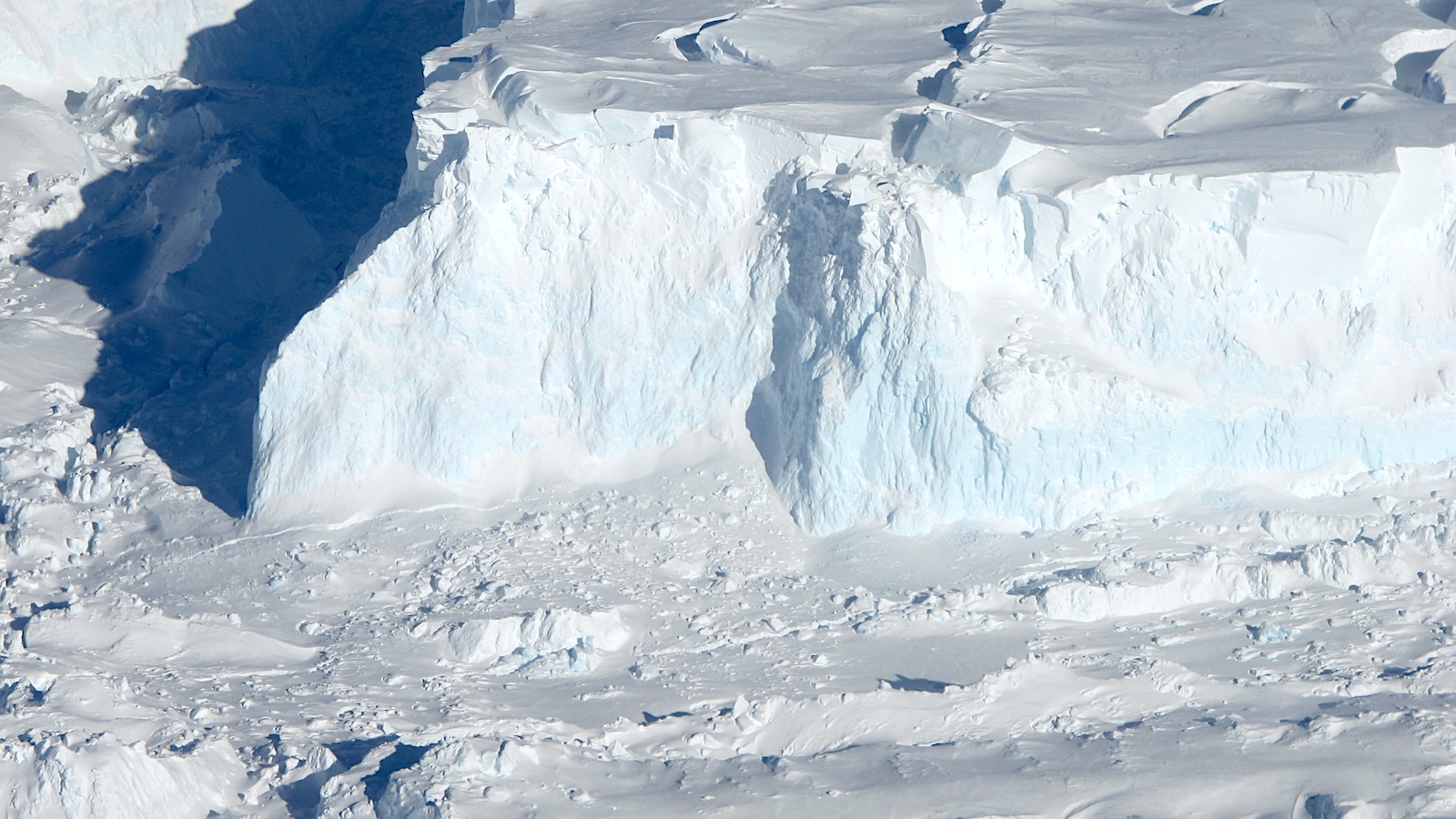
- The new model projects that Thwaites will contribute twice as much to sea-level rise by the end of the century as previous models had estimated.
- Mattia Poinelli’s team built the first simulation to account for the grounding zone’s tidal oscillation and warm-water channels beneath Thwaites, reproducing satellite-observed retreat that older models missed.
- The model places Thwaites’ permanent unpinning from the seafloor as early as 2038 and assigns a 60% chance to that state by the end of the century.
- With the climate as warm as it is now, the model puts Thwaites on course to add 3 centimeters of sea-level rise by century’s end, twice the earlier projection.
- Thwaites has contributed about 10 centimeters—roughly 4%—of sea-level rise over the past three decades, enough to send homes in North Carolina into the sea and force communities in the Solomon Islands and Senegal to relocate.
- In a hypothetical model with ocean melt switched off completely, Thwaites would keep losing ice and raising sea levels for at least 150 years, while Pine Island would regain ice within a decade and eventually regrow to its size 80 years ago.
- Rosie Williams said each fraction of a degree of warming changes how quickly Thwaites disintegrates, and slowing that warming would prolong the time communities have to adapt to the changes already underway.
Why it matters: For coastal communities in North Carolina, the Solomon Islands and Senegal, Thwaites is already a material adaptation issue: its roughly 10-centimeter contribution over the past 30 years has sent homes into the sea and forced relocation. The new model’s 2038 earliest unpinning date, versus prior estimates of slower loss, leaves communities less time to adjust.
Ask SkimNews