Israel Holds 1,000sq km Across Gaza, Lebanon, Syria — SkimNews

Get the Geopolitics newsletter
Daily geopolitics — wars, elections, sanctions, the diplomatic moves that move markets. Free.
- Al Jazeera's investigation found Israeli forces control roughly 1,000sq km (386 sq miles) across Gaza, southern Lebanon, and southern Syria — about 5% of Israel's pre-October 2023 landmass including the occupied Palestinian territories and Golan Heights.
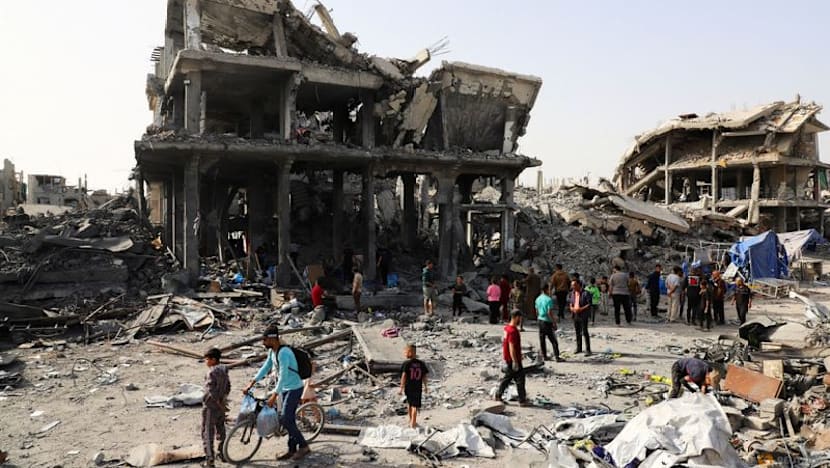
- Israel's 'Yellow Line' in Gaza, introduced after an October 2025 ceasefire to delineate roughly 200sq km of control, was routinely pushed beyond declared limits: northern Gaza control expanded from 67.3sq km to 73.9sq km, swallowing 54.7% of the north, with unannounced demolitions documented in the Shujayea neighbourhood.
- In southern Lebanon, following an April 2026 ceasefire, official Israeli maps claimed a 570sq km buffer zone, but satellite imagery captured building demolitions in towns outside the declared lines, including Zawtar al-Sharqiya.
- In southern Syria, where no declared boundary exists, Israel built a continuous network of fixed military outposts beyond the 1974 alpha-line disengagement boundary, creating a 235sq km de facto control zone stretching from Mount Hermon to the Yarmouk River, with over 800 documented incursions between December 2024 and January 2026, one reaching 63km into the Deraa countryside.
- Analysts Ehab Jabareen, Mohannad Mustafa, and Mamoun Abu Amer characterized the expansion as 'calculated chaos' and 'strategic deception,' arguing Israel is using geographic control as a substitute for decisive military victory, with the political echelon aiming to occupy up to 70% of the Gaza Strip.
- Prime Minister Benjamin Netanyahu is using the land seizures to sell a 'picture of victory' domestically because he cannot claim Hamas is finished, Hezbollah is disarmed, or Iran is permanently deterred, according to Jabareen.
- Experts warned the strategy is unsustainable, drawing parallels to Israel's failed 'security belt' in southern Lebanon that ended in a chaotic 2000 withdrawal, and noting that controlling 1,000sq km is overstretching Israel's relatively small reserve army and pressured economy.
Why it matters: By controlling 1,000sq km across three countries through undeclared buffer zones and 800+ documented incursions, Israel is reshaping regional geography without triggering formal international legal consequences. The pattern — declared lines contradicted by ground operations — means mediators and the international community are negotiating boundaries that do not reflect actual military reality, while Netanyahu trades land for political survival at home.
Ask SkimNews