Taiwan's Silicon Shield Is a Race Against AI Time — SkimNews

Get the Geopolitics newsletter
Daily geopolitics — wars, elections, sanctions, the diplomatic moves that move markets. Free.
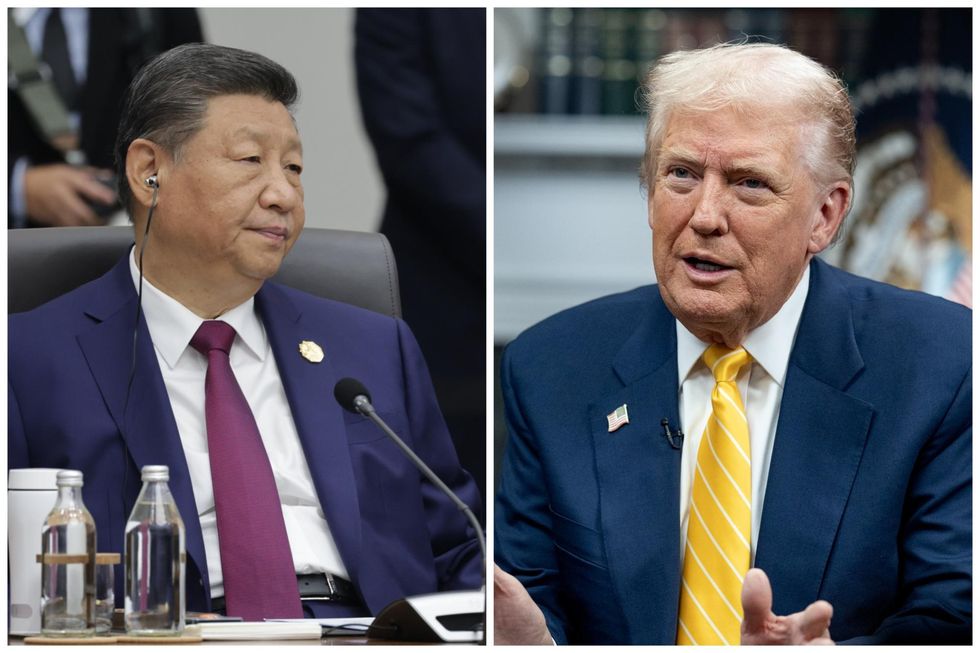
- Trump and Xi Jinping met in Washington on September 24 with AI and Taiwan on the agenda; Xi urged AI remain "under human control" and pressed Washington to "oppose Taiwan independence" and handle the issue "with caution."
- Trump entered the summit having rejected calls to slow the AI race ("Whoever wins AI, wins"), and Washington had floated an AI incident-notification mechanism ahead of the meeting — risk management that stops short of strategic restraint.
- Taiwanese firms account for nearly 90% of global AI server production; while final assembly is dispersing to the US, Mexico and Southeast Asia, the dense ecosystem of leading-edge process technology, advanced packaging and engineering talent behind it remains far harder to reproduce on a political timetable.
- Huawei is pushing its Ascend ecosystem and unveiled the Atlas 960E SuperPoD as part of a broader effort to reduce dependence on US-controlled technology.
- A June White House memorandum directed agencies to accelerate frontier AI adoption, maintain "technological overmatch" and build a supply chain that "cannot be severed in times of conflict."
- Author Chih-Cheng Meng argues that a Taiwan disruption would impose asymmetric timing costs on both sides: hitting US frontier AI expansion directly while disrupting China's still-unfinished transition to technological self-reliance.
Why it matters: Reframing Taiwan's value from scarcity (costly to lose) to time (hard to replace fast enough), the analysis turns every AI hardware generation into a fresh strategic deadline. With Taiwanese firms at ~90% of global AI server production and US frontier acceleration codified in a June memo, Washington's Arizona and Southeast Asia diversification hedges future exposure without closing the current vulnerability window.
Ask SkimNews