India, Israel Only Foes to UN Arms-Control Draft — SkimNews

Get the Geopolitics newsletter
Daily geopolitics — wars, elections, sanctions, the diplomatic moves that move markets. Free.
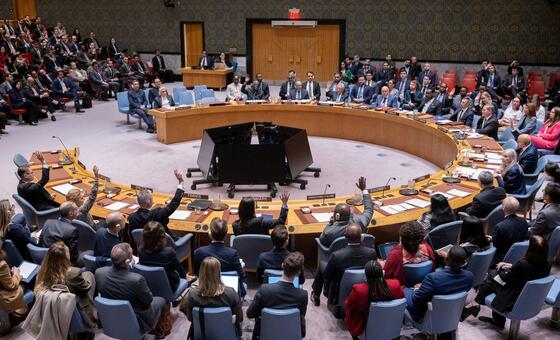
- UN General Assembly First Committee approved the draft "General and complete disarmament: Conventional arms control at the regional and subregional levels" on Monday with 180 votes in favour, two against and no abstentions in the 193-member body.
- India and Israel were the only countries to oppose the resolution, with no abstentions recorded.
- Anmol Sher Bedi, First Secretary at India's Permanent Mission to the UN, said conventional arms control is a global issue and India was "not fully convinced" that it should be pursued primarily in regional and sub-regional contexts, adding that the vote was in line with India's past position.
- UN Disarmament Commission: India questioned the resolution's request that the Commission draw up principles for regional arms-control agreements, pointing to three consensus outcomes already adopted — 1993 guidelines and recommendations on regional disarmament, 1999 guidelines on conventional arms control and disarmament, and 2017 recommendations on practical confidence-building measures — and asking why a settled subject needs another round "unless the aim is to keep the UN disarmament machinery busy."
- India objected to the draft's approach to maintaining a balance in defence capabilities within a region or subregion, arguing that "the security concerns of States politely stop at their regional borders. They do not," and that regional balance appears unrealistic.
- South Asia: India cast a separate vote against a paragraph that noted with "particular interest" "the proposals for conventional arms control made in the context of South Asia," alongside initiatives including consultations among some Latin American countries.
- Pakistan and Belarus moved the resolution, which states that most post-Cold War threats arise mainly among countries in the same region, seeks agreements at "the lowest possible level of armaments and military forces," and assigns "militarily significant States and States with larger military capabilities" a special responsibility for regional security.
Why it matters: With 180 votes in favour and no abstentions, the resolution's premise — that regional agreements should hold armaments to "the lowest possible level" and that militarily significant states must lead — enters the UNGA record even as India rejected both the regional-first logic and the South Asia paragraph. Delhi is now formally on record opposing frameworks built around regional balancing.
Ask SkimNews