Russia Intercepts Record 389 Ukrainian Drones Overnight — SkimNews
Get the Geopolitics newsletter
Daily geopolitics — wars, elections, sanctions, the diplomatic moves that move markets. Free.
- Russia's Defence Ministry said air defences downed 389 incoming Ukrainian drones over 13 Russian regions and the illegally annexed Crimean Peninsula, calling it the largest reported overnight attack on Russian territory since the February 2022 invasion.
- Ukraine's domestically developed long-range drones demonstrated growing capability, with 56 of the 389 shot down over the Leningrad region north of Moscow, where a fire broke out at the Baltic Sea port of Ust-Luga.
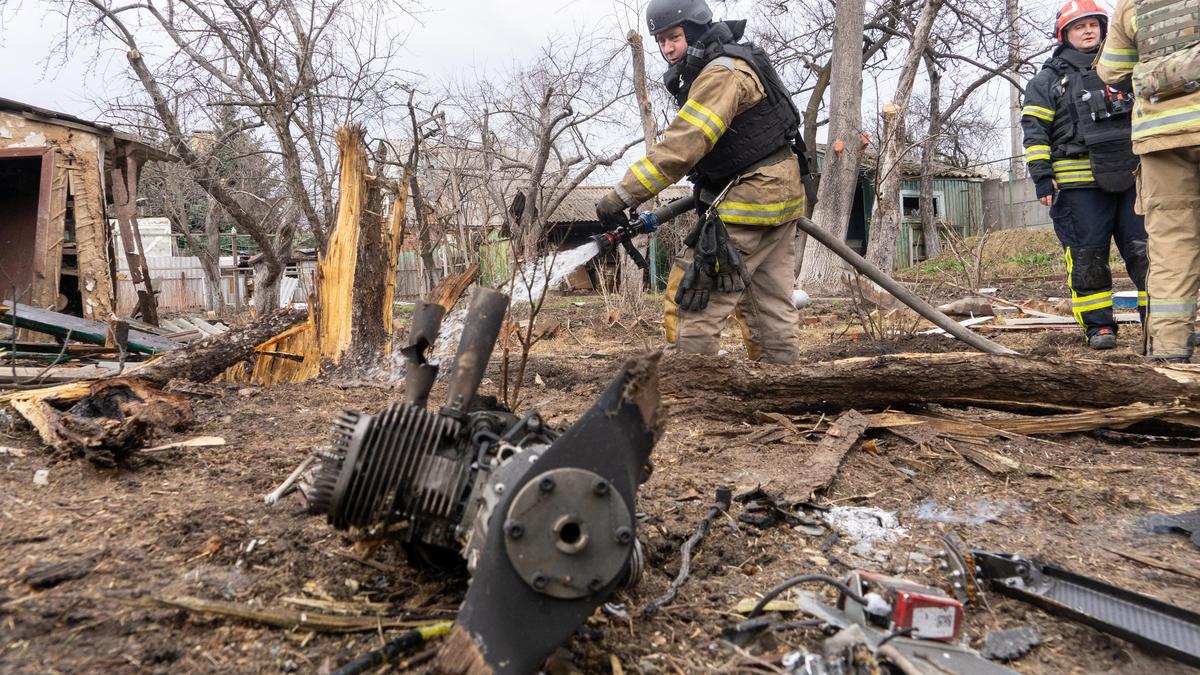
- Russia struck back the previous day with nearly 1,000 drones and 34 missiles at civilian areas of Ukraine in a 24-hour span — one of the war's biggest aerial attacks — killing at least six people and injuring around 50, Ukrainian authorities said.
- UNESCO said it was "deeply alarmed" that Russia's bombardment hit a World Heritage site in the western Ukrainian city of Lviv during that earlier barrage.
- Drone debris spilled across NATO's eastern flank, clipping a power plant chimney in Estonia roughly 31 miles from Ust-Luga, crashing in a Latvian border region, and hitting a frozen lake in Lithuania on Monday, though officials said none appeared to be deliberate strikes.
- Moldova asked citizens to conserve electricity during peak hours after Russian strikes on Ukraine's grid severed a key power line connecting it to Romania.
- The escalation comes as U.S.-mediated peace talks are paused, Washington's attention is consumed by the Iran war, and Ukraine braces for a spring offensive by Russia's larger army.
Why it matters: Each side is now launching close to 1,000 drones in a single 24-hour window, a scale that is straining air defences and energy grids across the region. The pause in U.S.-mediated talks — coinciding with the Iran war distracting Washington — gives Kyiv little leverage to negotiate and may push it to escalate further before a Russian spring offensive, while debris from both sides is now regularly crossing into NATO territory.
Ask SkimNews