Carbon Brief Debunks 9 North Sea Drilling Myths — SkimNews
Get the Energy newsletter
Daily energy & climate — solar, EVs, oil, the policy fights and tech bets shaping the transition. Free.
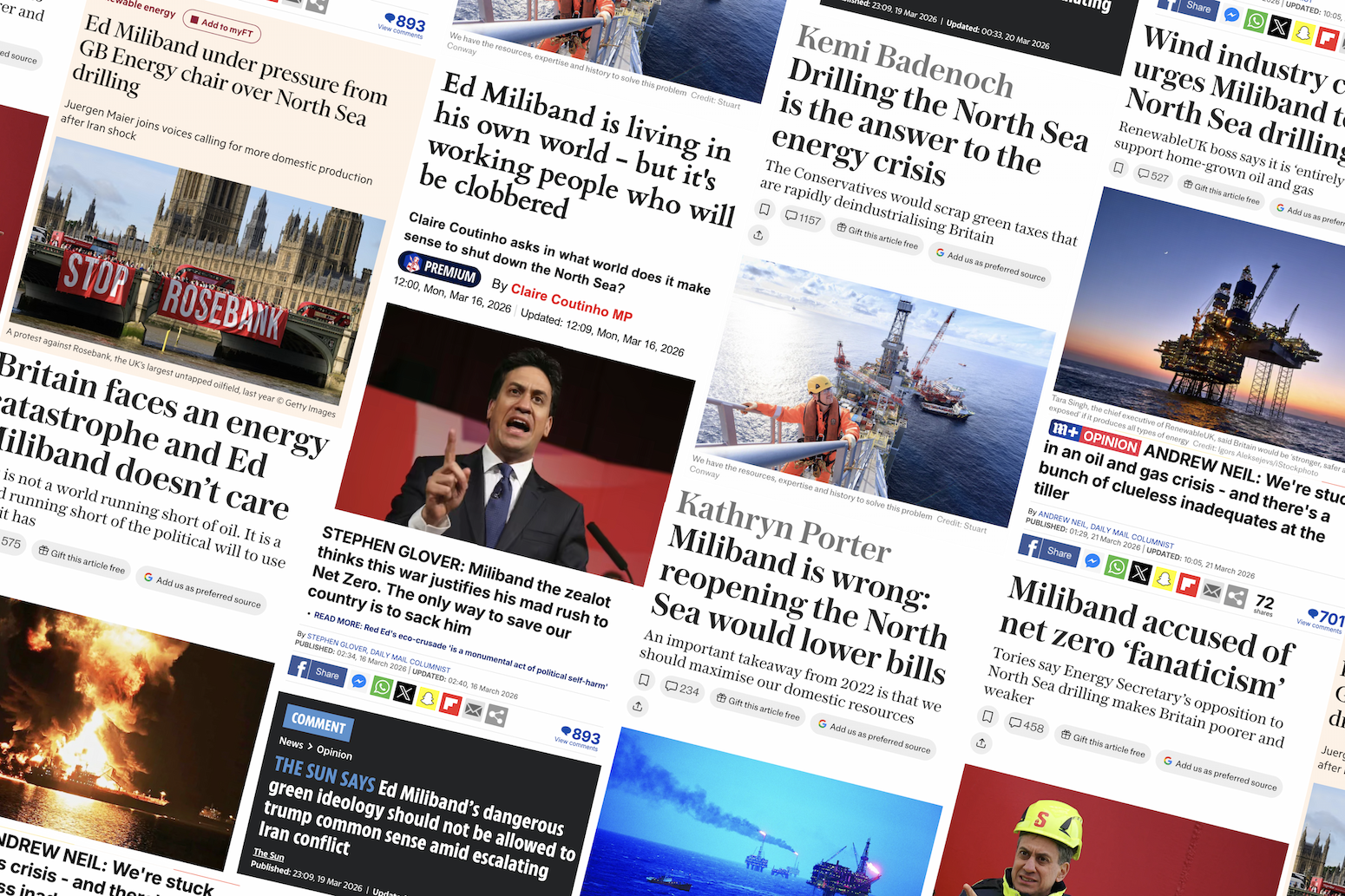
- Carbon Brief factchecks nine claims about North Sea oil and gas being pushed by politicians, newspapers and AI-generated social media posts, triggered by renewed drilling arguments amid the Iran war energy crisis.
- The claim that "reopening the North Sea would lower bills" is false because the UK is a "price-taker" on international markets—even all proven UK gas reserves would meet only ~1% of European demand to 2050, per the Climate Change Committee.
- The widely-cited "four times fewer emissions" claim for North Sea gas versus imported LNG is misleading; when combustion emissions are included, the gap shrinks to just 15%.
- The North Sea is a "mature basin" with ~90% already extracted, mostly oil (80% of which is exported), and even a maximal-extraction scenario would cut household bills by only £16–82 per year, or 1–4.6%.
- Pro-drilling arguments have been amplified by AI-generated posts from fake accounts that typically share anti-immigrant and anti-Muslim content, according to Carbon Brief.
- Even drilling advocates—including Ambrose Evans-Pritchard in the Telegraph and shadow energy secretary Claire Coutinho—have acknowledged that new North Sea licences would not bring down energy bills.
Why it matters: With the Iran war driving up global energy prices, Reform, the Conservatives, and even Donald Trump are pressing Keir Starmer to open up the North Sea—but Carbon Brief's analysis shows the basin is too depleted to move international prices and the UK is structurally a price-taker. The political narrative promising bill cuts from more drilling doesn't survive contact with the data: the most optimistic scenario yields single-digit percentage bill reductions while accelerating fossil fuel lock-in.
Ask SkimNews