Gabbard: US, Israel Pursue Different Iran War Goals — SkimNews
Get the Geopolitics newsletter
Daily geopolitics — wars, elections, sanctions, the diplomatic moves that move markets. Free.
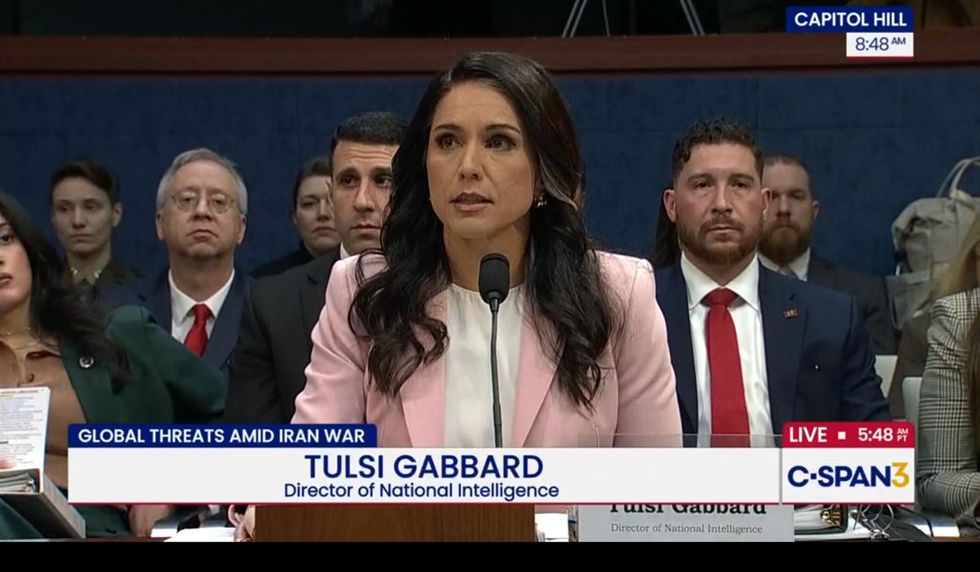
- Tulsi Gabbard testified that U.S. and Israeli war aims in Iran differ, with Israel focusing on disabling Iranian leadership and the United States aiming to destroy Iran’s ballistic missile launching, production, and naval capabilities.
- John Ratcliffe stated that the president’s objectives under Operation Epic Fury do not include regime change, contrasting with Israel’s goal of targeting Iranian leadership.
- President Donald Trump had earlier asserted in a Feb. 28 address that the U.S. was seeking regime change in Iran, urging the IRGC to lay down arms and promising to take over the government.
- Israel killed Ali Larjiani, a senior Iranian security official known as a consensus‑builder who favored talks with the United States, according to Trita Parsi.
- Rep. Elise Stefanik questioned Gabbard about the resignation of NCTC director Joe Kent and his letter claiming Iran does not pose an imminent threat; Gabbard declined to disavow the letter but emphasized her duty to provide intelligence to the president.
- Gabbard told the Senate that the intelligence community found no evidence Iran was attempting to rebuild its nuclear enrichment program after U.S. strikes on its nuclear facilities last June.
Why it matters: The split between U.S. and Israeli war objectives, highlighted by Gabbard’s testimony, complicates coordinated policy and reduces diplomatic leverage, while Israel’s killing of a moderate Iranian official narrows off‑ramp options; the intelligence community’s finding that Iran isn’t rebuilding its nuclear program tempers the perceived immediacy of the threat.
Ask SkimNews


