U.S. Army Research Built China's Unitree Robot Dogs — SkimNews
Get the Tech newsletter
Daily tech — startups, AI labs, chips, the launches that shape the next decade. Free.
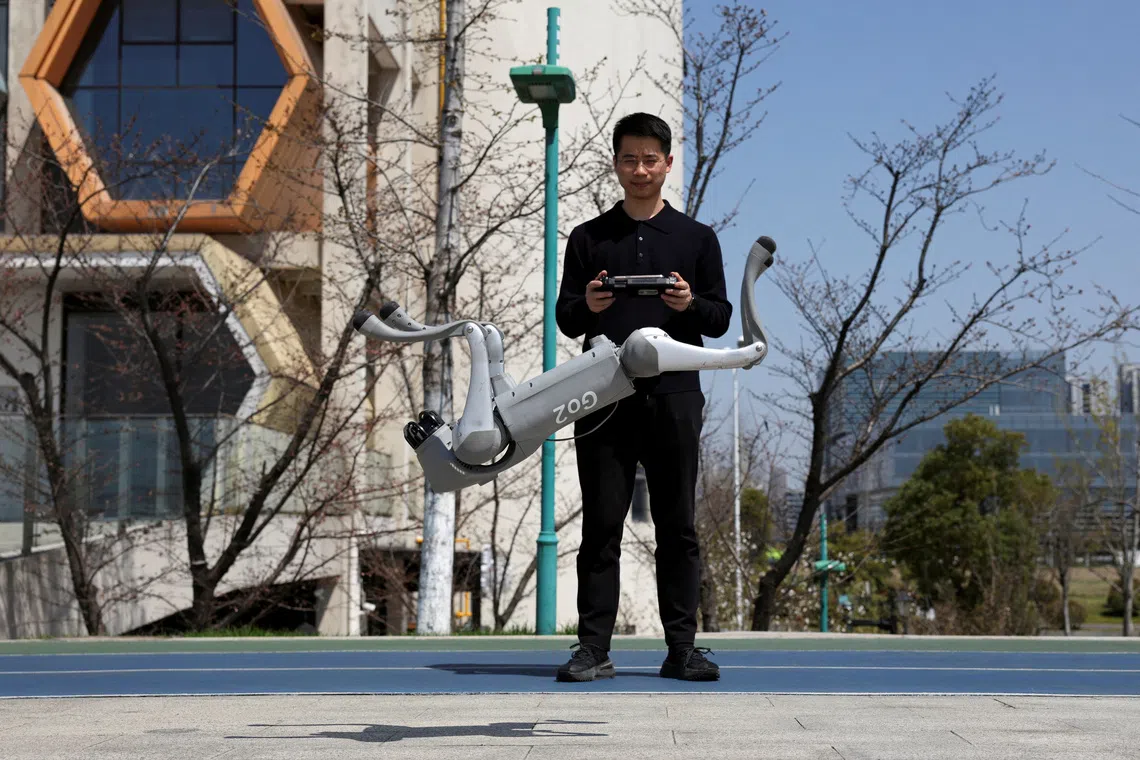
- Unitree Robotics built its $1,600 Go2 robot dog (launched 2023) on breakthroughs from a U.S. Army-funded program — its Go series dimensions are "to the millimeter" nearly identical to MIT's Mini Cheetah, per researchers involved in the original work.
- DEVCOM Army Research Laboratory funded the Robotics Collaborative Technology Alliance from 2010 to 2020, a consortium of UPenn, MIT, Boston Dynamics, NASA JPL, and General Dynamics Land Systems; its findings were published openly, allowing Unitree founder Wang Xingxing to build directly on them in his 2016 thesis.
- Unitree sold 18,000 quadrupeds and more than 5,500 humanoids last year and is valued at roughly $9 billion ahead of its Shanghai IPO, while no U.S. company has mass-produced comparable robots and Ghost Robotics — which commercialized the original U.S. research — operates at much smaller scale.
- The Pentagon added Unitree to a list of Chinese military companies in June, and the FCC banned imports of foreign-made humanoid and quadruped robots including Unitree's in July; China has threatened retaliation and Unitree declined to comment.
- China's edge comes from state-directed manufacturing: subsidies, dense component-supplier clusters near Hangzhou, dominance in critical-mineral refining, and tolerance for low margins — all flowing from Xi Jinping's 2015 10-year industrial plan, the article notes.
- Elon Musk himself acknowledged the gap on Tesla's January earnings call, calling China "incredibly good" at scaling production while Tesla's Optimus humanoid remains a prototype years after its first public display.
Why it matters: The episode exposes a structural gap the U.S. hasn't closed: it funds the research and publishes it openly, but can't mass-produce the result — while Unitree shipped 18,000 quadrupeds last year and is now valued at $9 billion. The FCC ban and Pentagon designation buy time but don't build the capital, supplier clusters, and industrial base that researchers say are needed to actually compete with China's coordinated national strategy.
Ask SkimNews