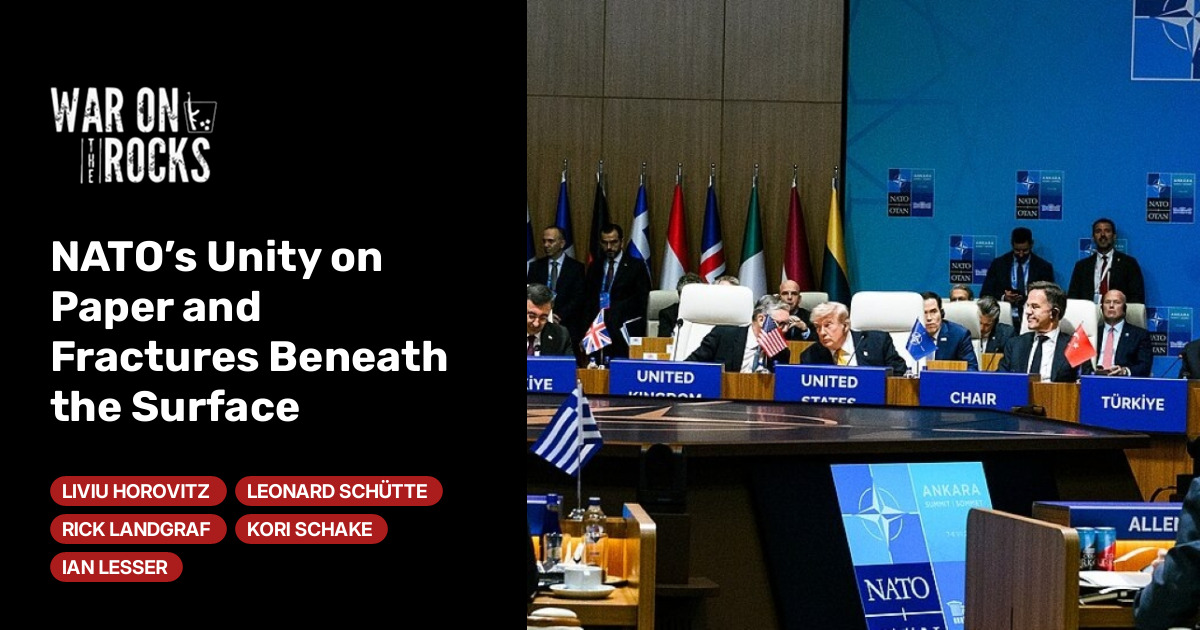
NATO Ankara Summit: Unity on Paper, Cracks Underneath
Get the Geopolitics newsletter
Daily geopolitics — wars, elections, sanctions, the diplomatic moves that move markets. Free.
- NATO held its 36th official summit in Ankara, Turkey on July 7-8, with the wars in Ukraine and Iran and the future of European defense as chief topics.
- Trump arrived attacking allies and questioning the alliance's value but left reaffirming Article 5 and praising its unity, according to German Institute for Security and International Affairs associate researcher Liviu Horovitz.
- Horovitz argued the Trump administration is rediscovering that competing with China, managing the Middle East, and containing Russia are easier to pursue alongside capable European allies than without them.
- Russia's determination to continue its war against Ukraine is making European rearmament unavoidable, with Ankara producing a sharper focus on implementation — expanding defense production, sharing defense know-how, and supporting Ukraine.
- Leonard Schütte of Harvard Kennedy School's Belfer Center wrote that NATO increasingly appears to be the wrong venue for Europeans to develop plans to deter Russia without the United States.
- Schütte identified Trump's threats to withdraw troops across Europe and against Denmark as the latest reminders that the credibility of the US security umbrella is in tatters, with Europeans now needing to decide which capabilities they need independent of Washington.
Why it matters: The summit produced no new strategic direction but sharpened an implementation agenda — expanded defense production, know-how sharing, and Ukraine support — while two of the five experts concluded Europeans must now build independent deterrence capabilities because Trump's troop threats and attacks on Denmark have shredded faith in the US umbrella. The second-order consequence is that European capitals will increasingly plan military capability acquisition around a worst-case scenario in which Washington is unreliable.


