Kospi Enters Bear Market as AI Chip Concentration Bites — SkimNews

SkimNews Take
A 20% Kospi decline reflects foreign capital unwinding its concentration in two AI-linked names rather than broad Korean corporate deterioration, illustrating how index-level bear signals can diverge sharply from underlying economic conditions.
Get the Finance newsletter
Daily finance — markets, central banks, M&A, the prints that move money. Free.
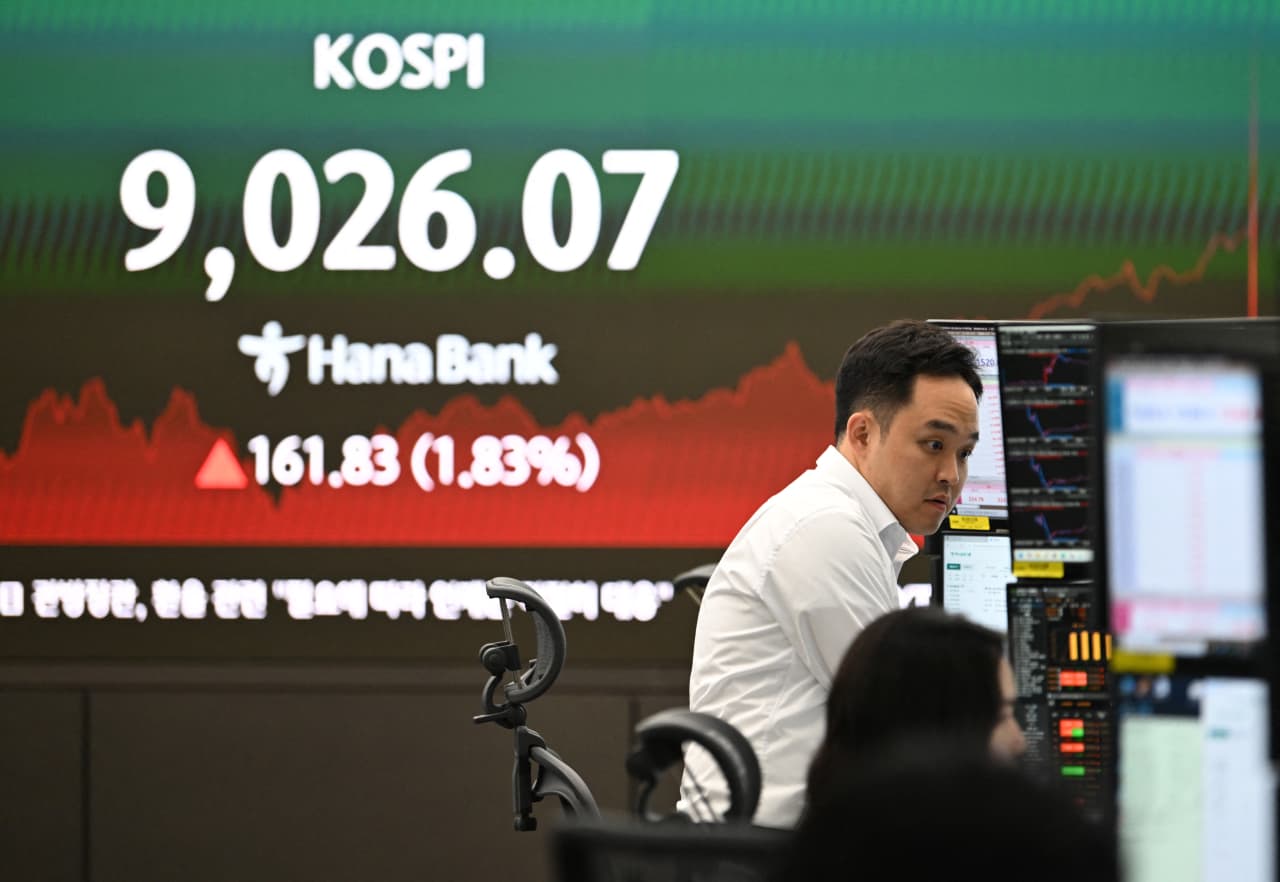
- Kospi fell more than 5% on Wednesday, entering bear territory at 20% below its June 19 record high, before closing slightly higher Thursday in choppy trading.
- Samsung Electronics and SK Hynix accounted for more than half the Kospi's weighting as of June, per Emmer Capital data, creating the "extreme market concentration" that Emmer Capital CEO Manishi Raychaudhuri says fueled the reversal.
- Samsung Electronics reported blockbuster profit on Tuesday, yet its shares still tanked on concerns about AI spending — illustrating Fibonacci Asset Management's Jung In Yun's point that "the market is questioning the pace of earnings growth rather than the sustainability of AI demand."
- Memory prices rose 50% to 80% sequentially in Q2 with further increases expected, per Futurum Group's Rolf Bulk, who cited a multi-year supply shortage and long-term contracts with hyperscale customers as evidence that "fundamentals for memory makers remain intact."
- The Kospi volatility index has surged over 200% since the start of the year, with KB Financial Group's Peter Kim attributing increasingly common 5% to 10% swings to the "gamification of finance" via retail flows, leveraged ETFs, and AI-driven concentration.
- Despite the selloff, the Kospi remains up more than 70% year-to-date after gaining over 75% in 2024, framing the drop as "a healthy reset rather than a fundamental change in the outlook," per Jung.
- SK Hynix's U.S. listing on Friday and Q2 earnings disclosures from both chipmakers later this month could serve as near-term catalysts, Bulk said, with constructive commentary on cycle durability through 2H 2026 potentially lifting the broader Korean market.
Why it matters: Samsung and SK Hynix's combined majority weighting means the Kospi functions less like a diversified national index and more like a leveraged AI chip bet — so the 20% drawdown reflects positioning unwinds, not deteriorating fundamentals, with memory prices up 50% to 80% sequentially in Q2 and SK Hynix's Friday U.S. listing set to test whether foreign capital returns.
Ask SkimNews