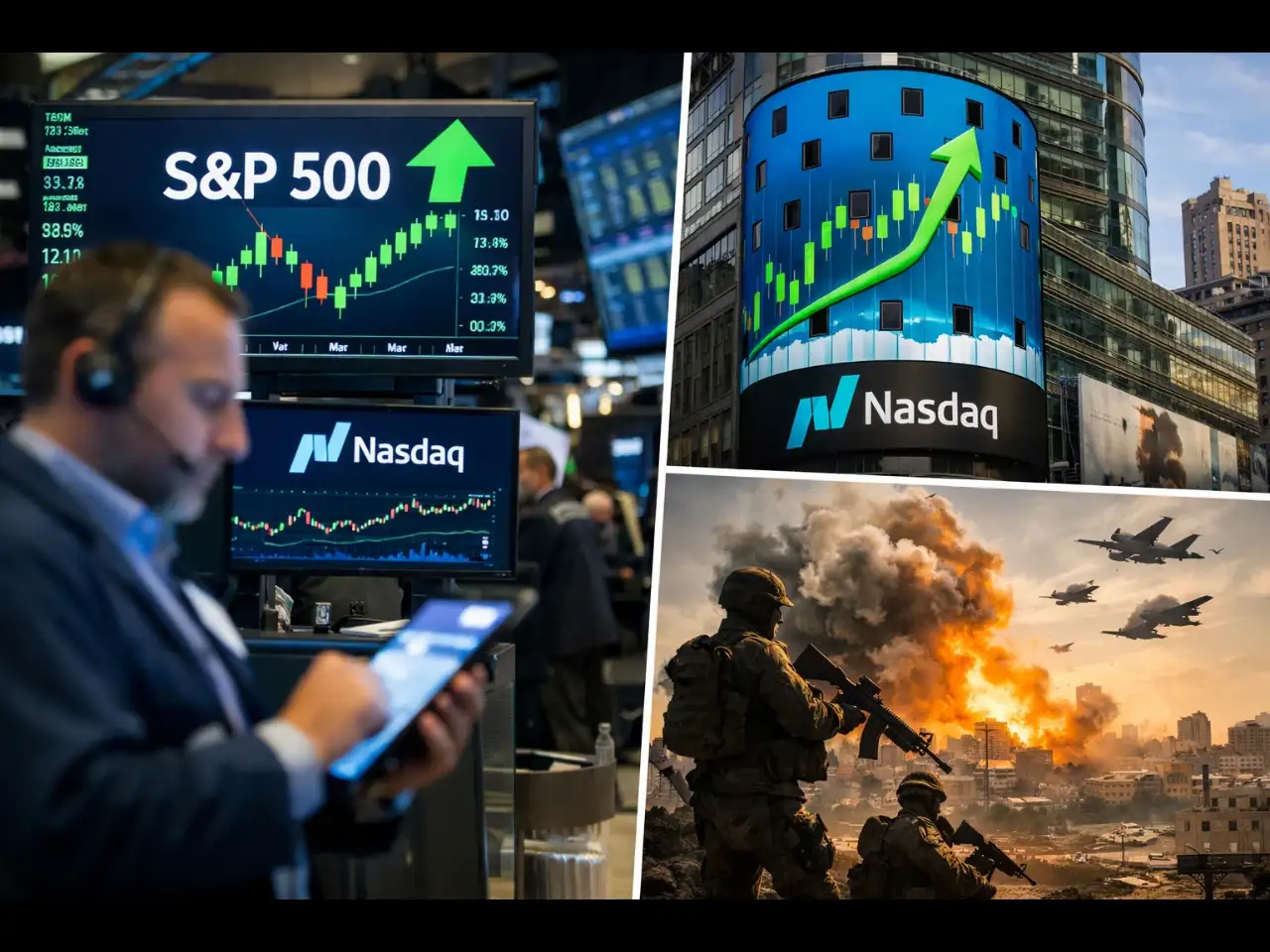
S&P 500, Nasdaq Jump 1% on Iran Talk Hopes — SkimNews
SkimNews Take
The rally is driven by a repricing of conflict risk rather than any resolution, leaving today's gains symmetrically exposed to the same diplomatic uncertainty that could undo them.
Get the Finance newsletter
Daily finance — markets, central banks, M&A, the prints that move money. Free.
- S&P 500 gained 80.54 points (1.17%) to 6,966.78, the Nasdaq Composite added 452.18 points (1.95%) to 23,635.92, and the Dow rose 317.14 points (0.66%) to 48,535.39, with the S&P 500 still roughly 0.17% below its late-January record close of 6,978.60.
- Trump told the New York Post that talks to end the Iran war could resume in Pakistan within two days, after the collapse of weekend negotiations prompted Washington to impose a blockade on Iranian ports.
- Israeli and Lebanese envoys met with Secretary of State Marco Rubio on competing agendas, with Israel demanding Beirut disarm Iran-aligned Hezbollah, a backdrop NFJ's Burns McKinney said left investors "not want[ing] to miss the rebound."
- March producer prices rose less than expected, with services costs unchanged, giving markets an inflation tailwind alongside Ameriprise's Anthony Saglimbene noting the market is "moving past this concept of peak uncertainty."
- BlackRock, Citigroup (highest in nearly two decades), and Johnson & Johnson rallied on earnings beats, while JPMorgan drew a cooler reception and Wells Fargo fell after interest income missed expectations.
- Software stocks rallied for a second straight day and the Philadelphia Semiconductor Index notched a record close for the fifth session in a row.
- United Airlines and American Airlines shares rose after Reuters reported United CEO Scott Kirby pitched a potential merger to Trump in late February, while Globalstar surged on Amazon's agreement to acquire the satellite company.
Why it matters: The rally shows investors are positioning for a de-escalation path on the Iran blockade that has whipsawed oil prices and inflation expectations, while validating that Q1 earnings from heavyweight financials can support valuations even as JPMorgan and Wells Fargo flagged uneven demand. With software and semiconductors setting fresh records, the bid has broadened beyond defensives into the same growth pockets most exposed to AI-disruption fears.
Ask SkimNews