Missile strikes passenger terminal at Riyadh airport; 12 killed, over 300 wounded — SkimNews

Get the Geopolitics newsletter
Daily geopolitics — wars, elections, sanctions, the diplomatic moves that move markets. Free.
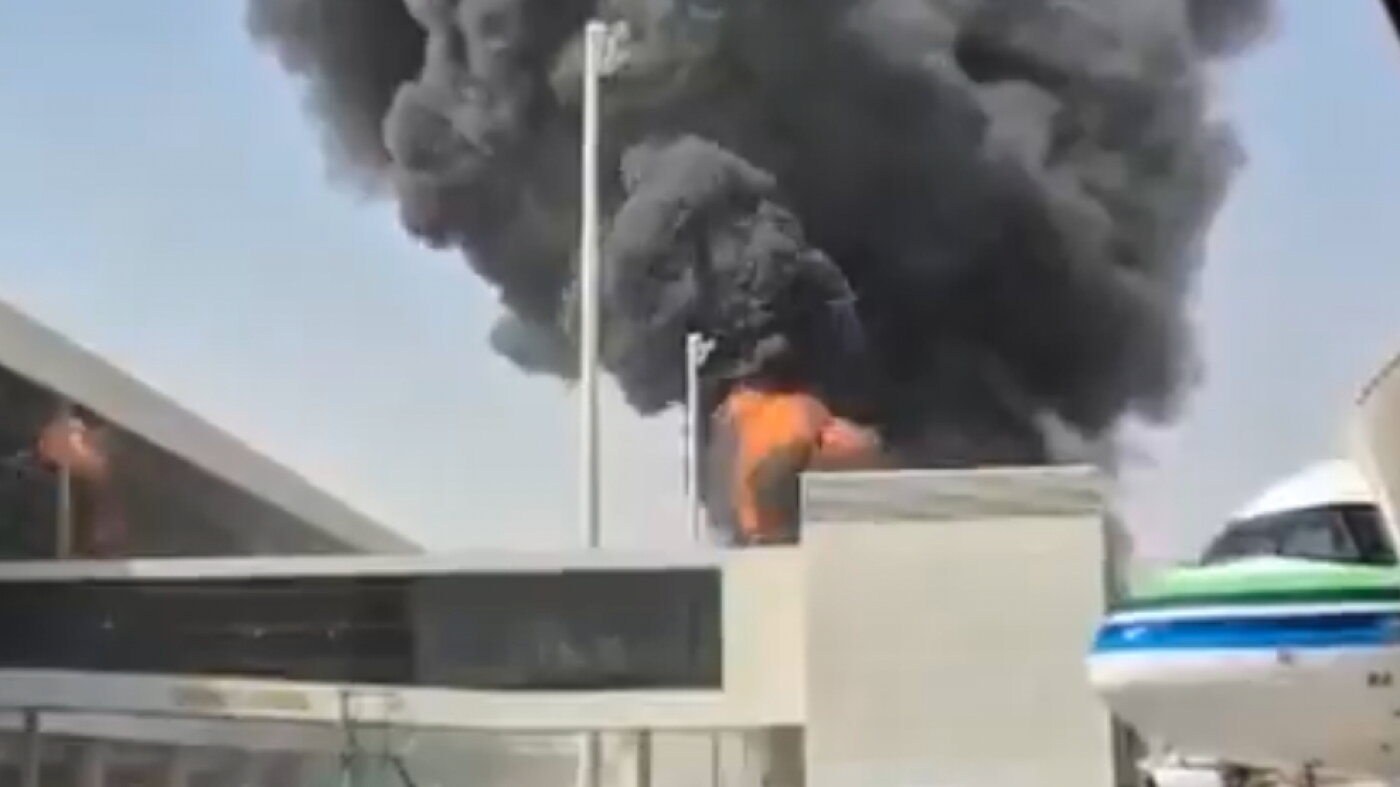
- Houthis struck a complex housing terminals 3 and 4 at King Khalid International Airport on Saturday, killing 12 — including four Saudis, two Bangladeshis, and nationals of Palestine, the U.S., Egypt, Jordan, Syria, and Sudan — and wounding over 300, the deadliest Gulf Arab attack since the Iran war began.
- Trump said hours after the strike that he was evaluating whether the US should join Saudi strikes against the Houthis: "We may. We're going to look at it. We just found out about the recent attack. So we'll make a decision. We move very quickly."
- Saudi Arabia is running low on missile interceptors and has formally asked France, Britain, Pakistan, and Egypt to deploy air defense support, regional officials told the AP, noting the U.S. has also seen its own stock dwindle during the Iran war and is now providing intelligence and target identification rather than hardware.
- King Khalid International Airport suspended operations through midnight, dimmed perimeter lights, blocked all entrances, and diverted flights after the strike, prompting the U.S., Britain, Germany, Australia, and Canada to warn citizens to avoid the facility.
- Saudi Arabia's foreign minister spoke by phone with his Omani counterpart about "supporting diplomatic solutions to de-escalate tensions," as the kingdom simultaneously promoted a major international energy conference set to begin in Riyadh on Sunday despite the attack rattling markets.
- Saudi-led coalition forces launched a major military offensive against the Houthis one week ago, and recent Houthi gains along the Red Sea have given the group better surveillance of a shipping corridor that serves as a crucial alternative to the Strait of Hormuz, where Iran has been attacking ships.
Why it matters: Saudi Arabia — the world's top oil exporter — is asking four foreign militaries for air defense because its own interceptor stockpile is depleted, even as Trump publicly weighs pulling the U.S. into a second active Middle East war; the kingdom is now fighting a multi-front conflict with Houthi gains on the Red Sea providing surveillance of key shipping lanes that route around the Strait of Hormuz.
Ask SkimNews