Bitcoin Yield-Adjusted Top Is Still 2020-21 — SkimNews
Get the Finance newsletter
Daily finance — markets, central banks, M&A, the prints that move money. Free.
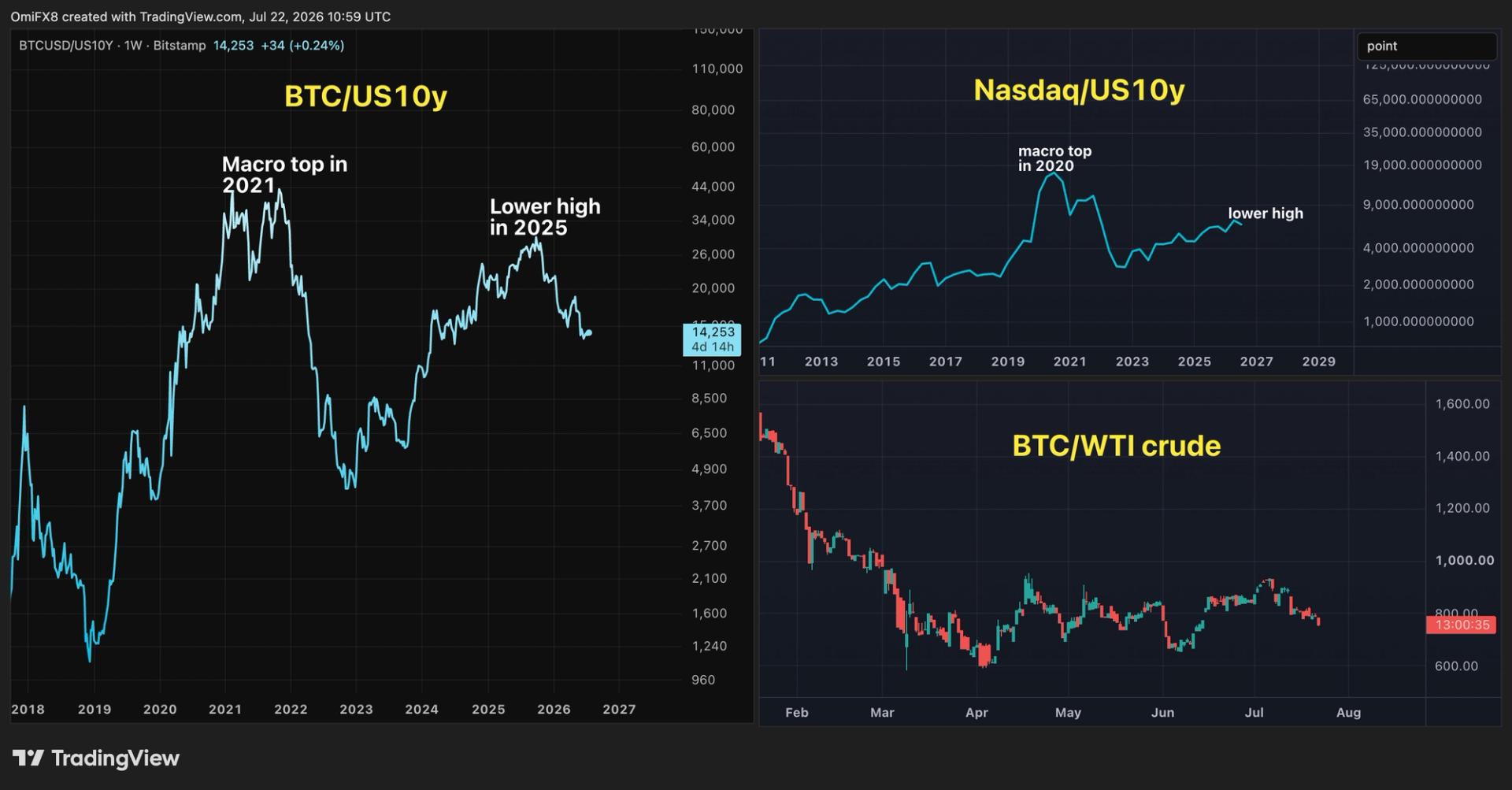
- Bitcoin has rebounded from $58,000 to $66,000, yet its ratio to WTI crude oil futures has declined, confirming energy is outperforming even aggressive risk assets and hinting at cost-push inflation loading.
- BTC/US10Y and Nasdaq/US10Y ratios have failed to surpass their 2020-2021 peaks, even though both assets' dollar-denominated prices set new record highs over the past 12 months — suggesting the real macro tops occurred years ago.
- Federal Reserve officials have maintained decidedly hawkish rhetoric, with some even floating the possibility of additional interest-rate increases, undercutting the 'rates collapse' path that would reignite valuations.
- The yield-adjusted gap can resolve only two ways: interest rates collapse and shrink the denominator, or nominal prices decline to realign with structural weakness — and CoinDesk's analysis flags the latter as more likely given current conditions.
- Oil topping $85 per barrel and the BTC-WTI ratio rolling over in recent days signal a new inflation wave could be building, threatening a 'snap adjustment' in risk-asset prices consistent with their yield-adjusted ceilings.
Why it matters: Bitcoin bulls targeting a decisive break above last year's $126,000 nominal peak face a structural headwind: the BTC/10-year-yield ratio hasn't challenged its 2020-21 high, meaning the market needs either a Fed dovish pivot or a price decline for the math to reconcile. With BTC at $65,625 and oil climbing past $85, traders betting on an unrestricted bull run are pricing in a Fed easing cycle the latest Fedspeak contradicts.
Ask SkimNews