The David Hockney Painting That Makes You Look, and Then Look Again — SkimNews
Get the Culture newsletter
Daily culture — film, music, books, the trends and ideas worth your attention. Free.
- David Hockney died Thursday at 88 after a career that stretched from 1960s acrylic pool paintings to 2020s iPad exhibitions.
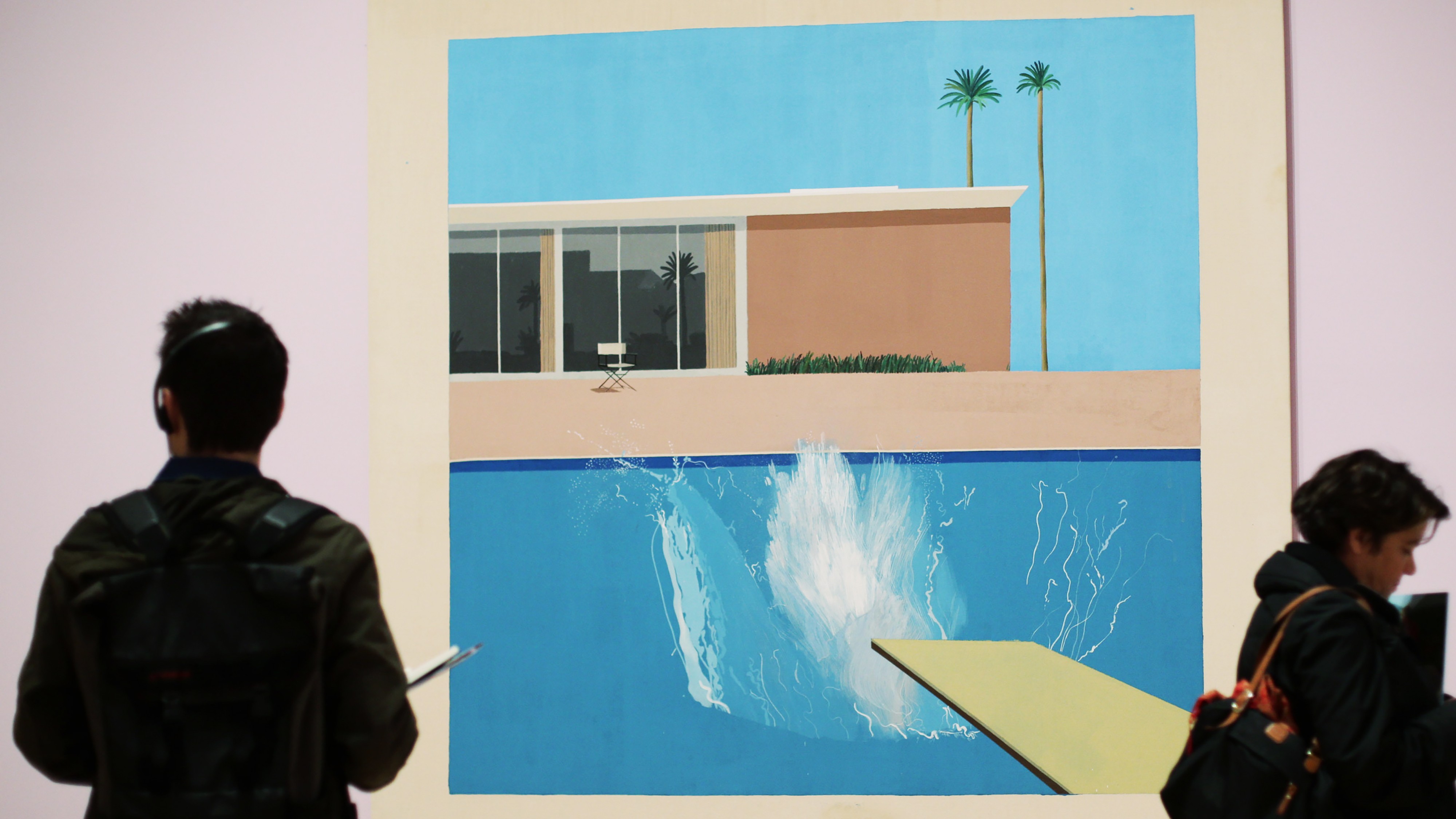
- A Bigger Splash, his most famous work, took two weeks to paint from a photograph of a swimming-pool splash — and Hockney noted he'd spent less time on the house in the same composition's background.
- In a 2013 interview with LACMA director Michael Govan, Hockney argued photography "colored our vision" and might eventually "break something," contrasting it with drawing, which "takes time. A line has time in it."
- Hockney experimented with Polaroid collages, fax machines, three photocopiers, and iPads — the latter featured in a 2021 Royal Academy show in London.
- The New York Times dismissed his later iPad output as "busywork" in its obituary, a characterization this essay rejects as a natural extension of his visual language rather than a decline.
- He also wrote a book arguing old masters secretly used mirrors and lenses to achieve realism, and his recent immersive-experience shows, the piece argues, avoided the "long-dead artists' public-domain works being recirculated for profit" trope.
Why it matters: Hockney's death closes a six-decade run from 1960s acrylics to iPad shows, and his stated belief that photography "colored our vision" — and might "break something" — carries fresh weight as screen and AI-generated images dominate attention. The New York Times obituary's dismissal of his iPad work as "busywork" is now part of a settled critical record, with no further late-career output to settle the argument.
Ask SkimNews