Company that put gas engines in Teslas goes bankrupt owing $37 million — SkimNews
Get the Energy newsletter
Daily energy & climate — solar, EVs, oil, the policy fights and tech bets shaping the transition. Free.
- Three Obrist Group companies filed for insolvency at Austria's Feldkirch Regional Court at the end of September with combined debts of about €31.8 million (~$37 million); a fourth, parent Obrist Engineering (air-conditioning and thermal parts), is not part of the filings and retains about 30 employees
- Obrist Powertrain (the HyperHybrid unit) owes €18.85 million to 34 creditors and was down to 9 employees, while Obrist Technologies (which held the group's methanol-production and CO2-capture patents) owes €6.08 million to 10 creditors and had no staff left; German sales arm Obrist DE is also insolvent with roughly €6.8 million in liabilities
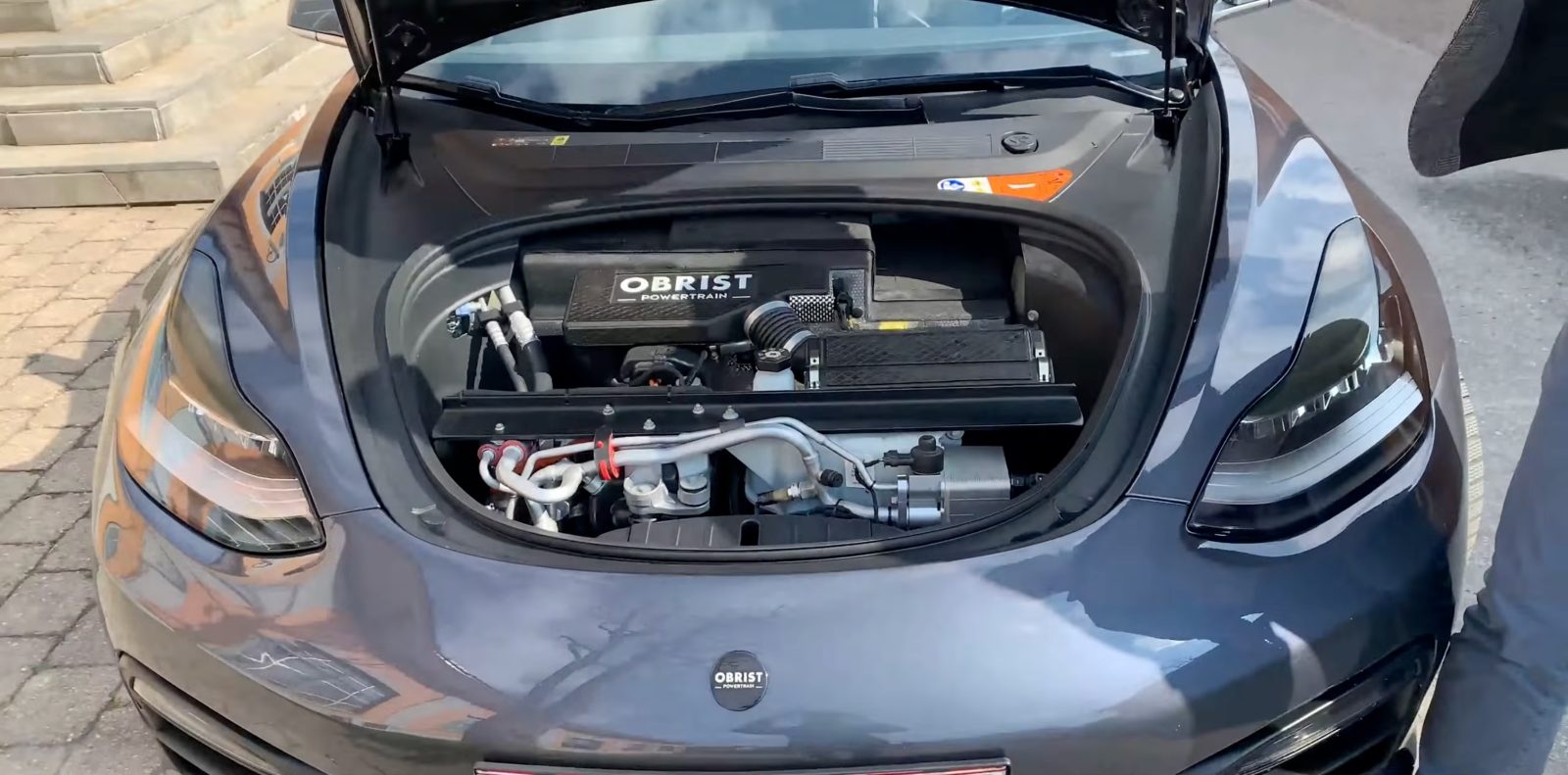
- Obrist spent more than a decade pitching its "HyperHybrid" range extender — a 17.3 kWh battery plus a 40 kW two-cylinder gas generator crammed into a Tesla Model 3's frunk — and never delivered a single production vehicle
- Founder Frank Obrist blamed years of high development costs, failed investor talks, and Europe's auto industry crisis; Austrian creditor group AKV added that European automakers shifting fully electric was another factor in the failure
- Obrist's claims escalated over the years, from a 2020 Model 3 "Mark II" prototype (1,000 km claimed range, €4,500 cost target) to a 2022 Model Y running on synthetic "aFuel" methanol to a 2024 Abu Dhabi fund alliance and a plan for $18.6 billion "gigaplants" — 2,700 of them, roughly $50 trillion, to replace fossil fuels
- Obrist lobbied Brussels in late 2024 to reconsider the EU's 2035 combustion ban, arguing that a HyperHybrid would emit 85% less CO2 than a comparable battery-electric car and calling the tech a potential "lifeline for the European automotive industry"
Why it matters: Obrist's own creditor filing cites automakers going fully electric as a reason for failure, underlining how a contrarian powertrain idea collapsed when the market shifted beneath it. The €31.8 million in liabilities spread across 34+ creditors is the price tag for a decade of demos that produced zero saleable vehicles.
Ask SkimNews