Saudi Arabia, Turkey, Pakistan Sign Joint Defence Pact — SkimNews
Get the Geopolitics newsletter
Daily geopolitics — wars, elections, sanctions, the diplomatic moves that move markets. Free.
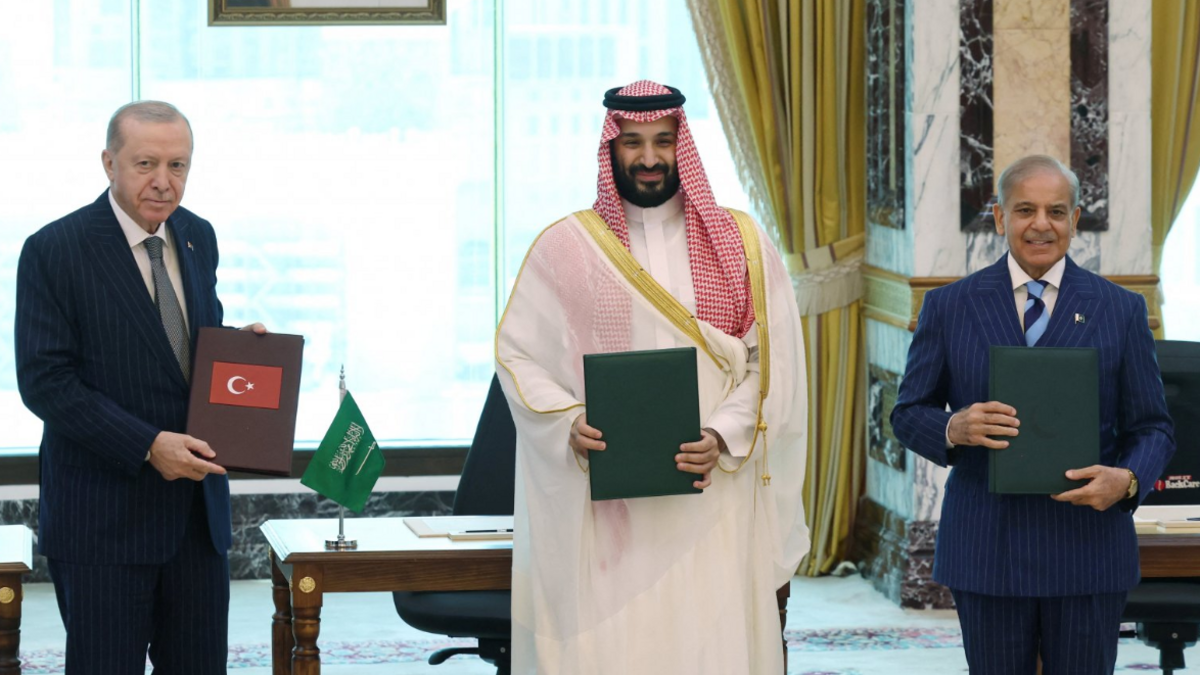
- Saudi Arabia, Turkey, and Pakistan signed a joint defence agreement in Mecca declaring that "any armed attack against any one of the three States shall be regarded as an attack against them all," per the joint statement, and pledging "enhancement of all aspects of defence co-operation."
- The agreement provides no specifics on each party's obligations, and a Turkish official told Reuters the pact was "purely defensive in nature."
- Iran reacted sharply: National Security Commission member Ebrahim Rezaei wrote on X that "a paper agreement with Turkey and Pakistan does not bring [the Saudis] security, just as years of unilateral milking of the Americans did not bring them security."
- Saudi Arabia had already signed a bilateral defence pact with Pakistan last year; this Mecca agreement expands the framework to include Turkey.
- Yemen's Houthis announced a "maritime embargo" against Saudi Arabia last month and targeted Saudi airports, oil facilities, and tankers in the Red Sea — a key driver of Saudi motivation for the new pact.
- Turkey stands to gain defence industry opportunities through "joint production, technology partnerships, procurement and greater military interoperability," per Burcu Ozcelik of the Royal United Services Institute (RUSI).
Why it matters: The pact formalises a three-way mutual defence guarantee among Saudi Arabia, Turkey, and Pakistan as Iran-backed Houthis targeted Saudi airports, oil facilities, and tankers last month and Pakistan-India tensions boiled into open conflict in May 2025. Its vague obligations leave trigger scenarios — Yemen strikes, an India-Pakistan flare-up — unresolved in the text itself.
Ask SkimNews


