Saharan Dust Slashes Southern Europe Solar in March — SkimNews
Get the Energy newsletter
Daily energy & climate — solar, EVs, oil, the policy fights and tech bets shaping the transition. Free.
- Madrid experienced clear‑sky GHI drops from 3–5 March as the Saharan dust plume attenuated sunlight, with dust losses exceeding 15% at peak irradiance on 3 March.
- Portugal was hit by Windstorm Regina, which added cloud cover and rainfall that further cut solar irradiance and deposited “blood rain” on PV panels.
- Solcast modeled the irradiance drop and provides high‑resolution data used by >350 companies managing >350 GW solar assets.
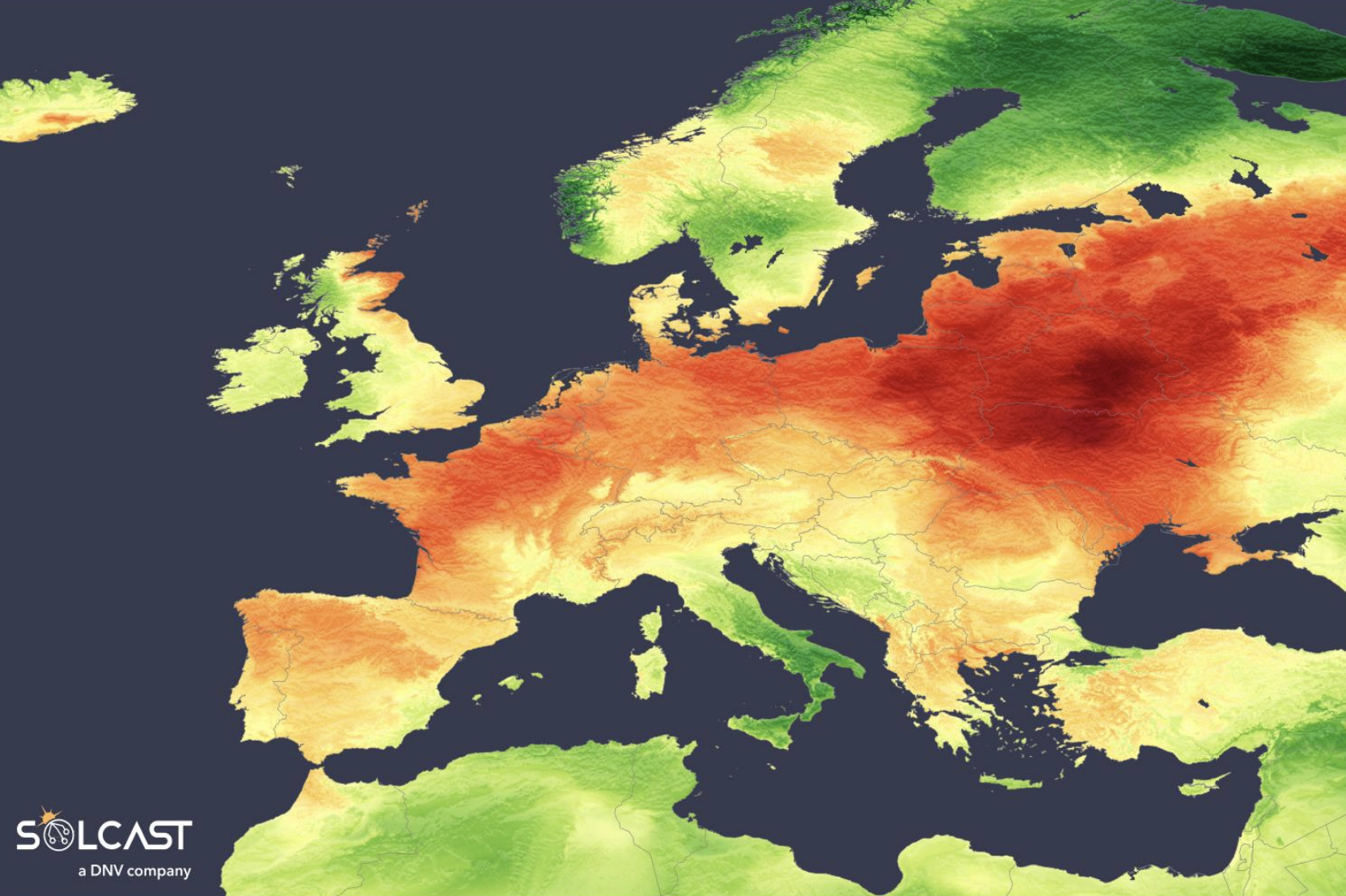
- Northern France enjoyed irradiance ~15% above long‑term averages, while Germany, Poland and northern Ukraine saw 10‑25% gains due to a high‑pressure ridge and positive NAO.
- Croatia lost power for ~18,000 people as Storm Deborah brought hurricane‑force winds, heavy rain and thunderstorms across southern and southeastern Europe.
- Italy saw its monthly solar resource fall to ~3 kWh/m²/day, well below the long‑term average of ~3.7 kWh/m²/day, as the late‑March storm and cold polar airmass reduced irradiance and added snow soiling.
- Western Europe experienced a cold polar airmass from a polar vortex breakdown in the final week of March, bringing widespread cloud, lower temperatures and late‑season snowfall that further reduced solar resources.
Why it matters: Solar operators in southern Europe faced up to 15% daily PV losses from dust and storm‑induced soiling, while those in northern France, Germany, Poland and Ukraine enjoyed 10‑25% higher generation, highlighting how weather extremes can sharply swing revenue across the continent.
Ask SkimNews