Non-Pathogenic Gut Bacteria Inject Proteins Into Cells — SkimNews
Get the Health newsletter
Daily health & science — research, biotech, public health, the studies worth knowing. Free.
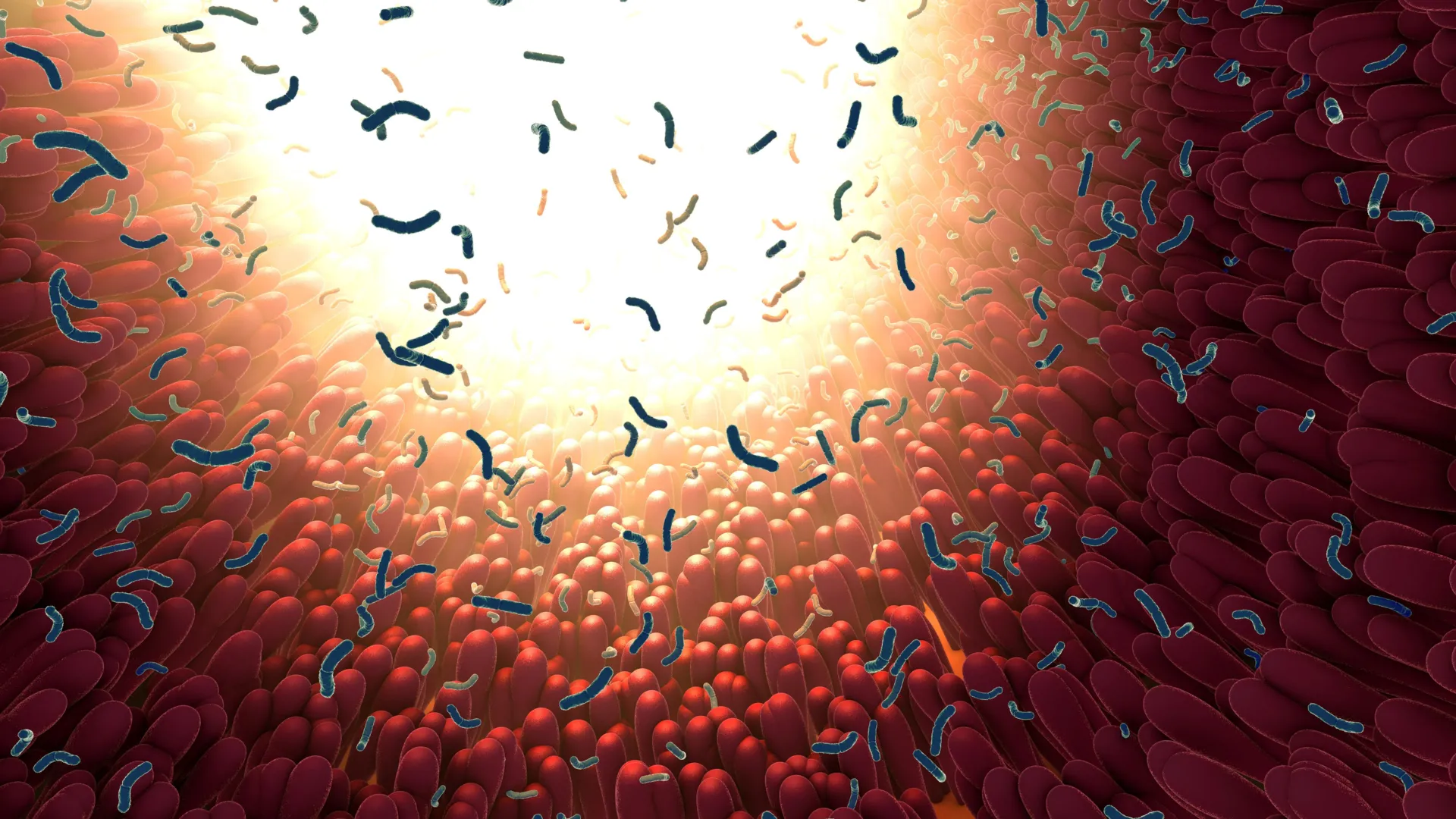
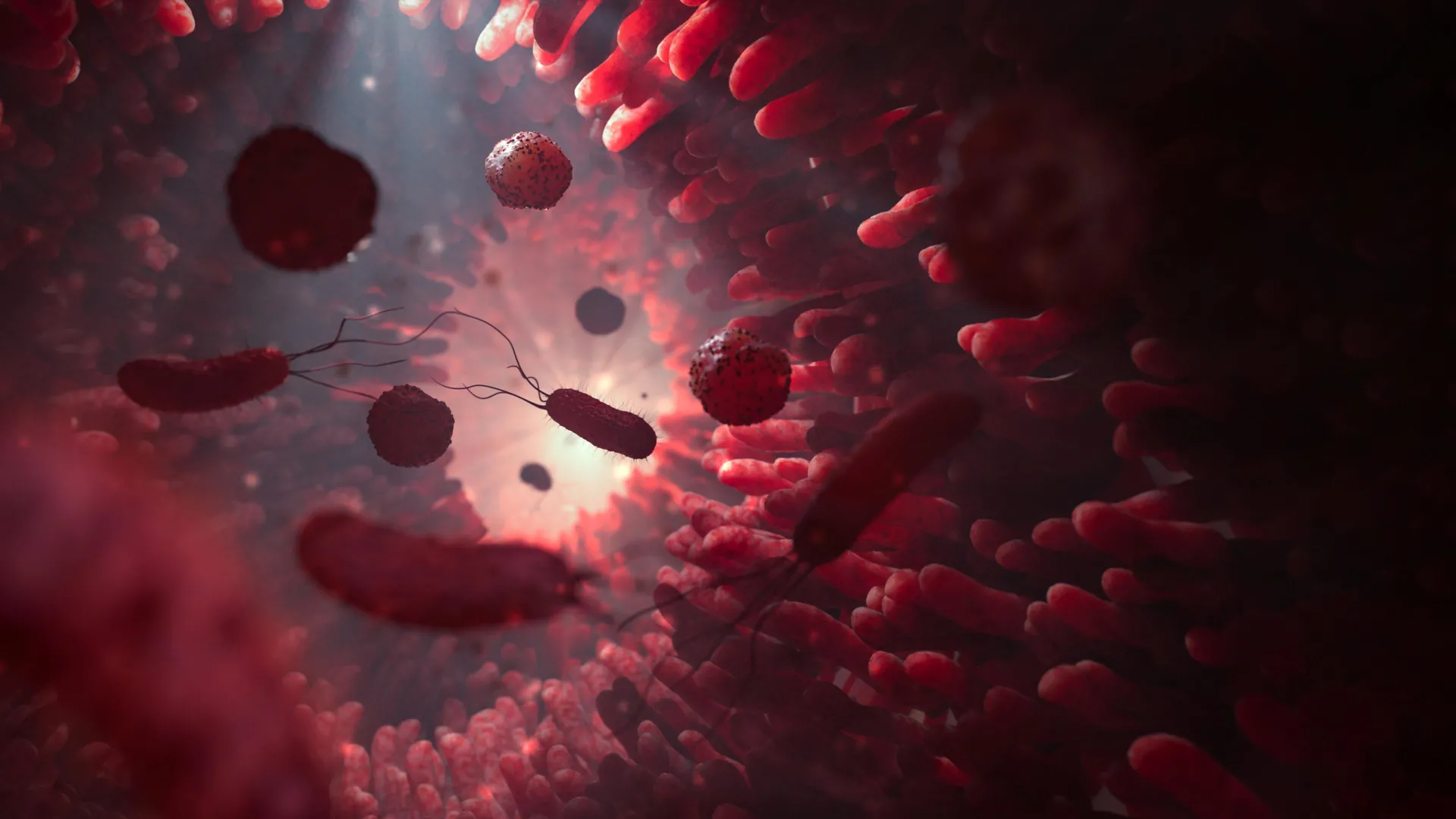
- Helmholtz Munich researchers found that common, non-harmful gut bacteria carry type III secretion systems — syringe-like structures previously thought to be limited to pathogens like Salmonella — that inject bacterial proteins directly into human cells, actively manipulating host biology.
- The team systematically mapped more than 1,000 interactions between bacterial effector proteins and human proteins, finding the injected proteins concentrate on pathways involved in immune regulation and metabolism rather than acting at random.
- Follow-up experiments confirmed the injected proteins influence key immune signaling systems, including NF-κB and cytokine responses — the same pathways targeted by anti-TNF drugs such as infliximab used to treat Crohn's disease.
- Genes encoding these bacterial injection systems are more common in the gut microbiomes of Crohn's patients, providing a possible molecular mechanism for the long-observed correlation between microbiome changes and intestinal inflammation.
- First authors Veronika Young and Bushra Dohai, with corresponding author Prof. Pascal Falter-Braun of the Institute for Network Biology, published the work in Nature Microbiology, with collaborators from LMU Munich, Aix Marseille University, and Inserm.
Why it matters: For Crohn's patients, the study offers a concrete molecular mechanism linking specific gut bacteria to intestinal inflammation, with bacterial proteins hitting the same NF-κB and cytokine pathways that existing anti-TNF drugs already target. It also reframes "commensal" gut bacteria from passive passengers into active immune modulators, pushing microbiome research past correlation toward cause-and-effect.
Ask SkimNews