North Korea Tests Solid-Fuel ICBM with Carbon-Fiber Body — SkimNews
Get the Geopolitics newsletter
Daily geopolitics — wars, elections, sanctions, the diplomatic moves that move markets. Free.
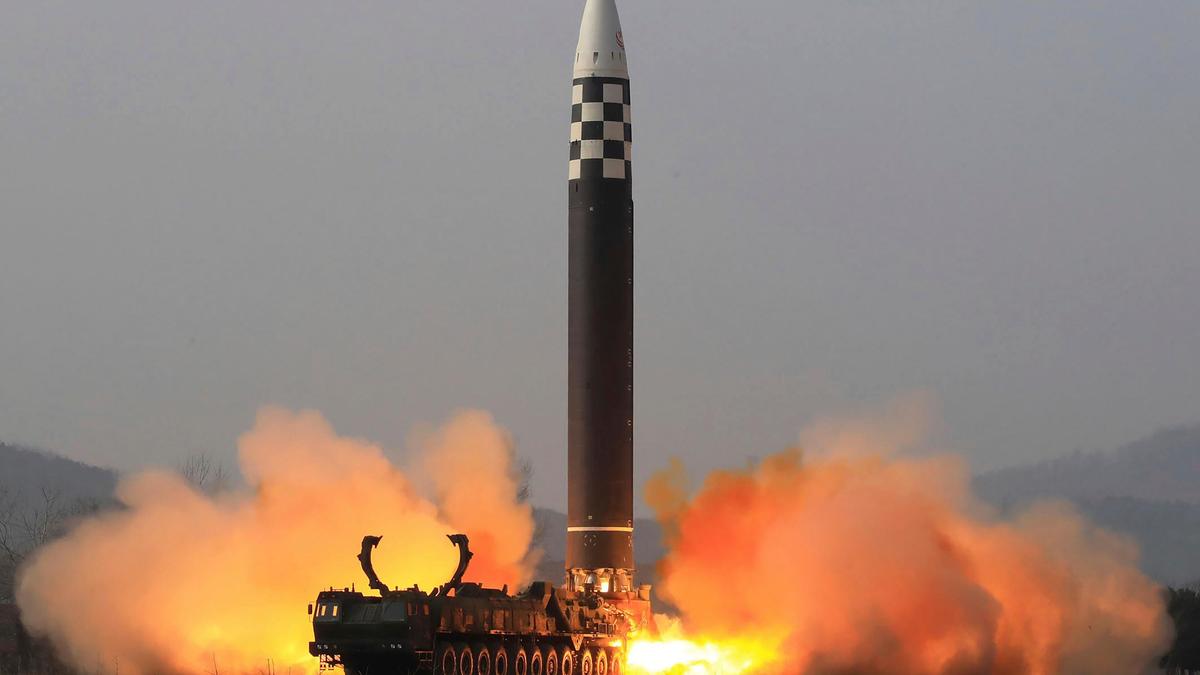
- North Korea conducted a ground test of a solid-fuel rocket engine in March, intended for use in new intercontinental ballistic missiles, according to South Korean lawmakers.
- North Korea displayed the airframe of a missile constructed with carbon fibre during the engine test, a material that can extend range and support heavier payloads.
- South Korean lawmakers stated on April 6 that the new engine likely has greater thrust than a prior 2024 model already assessed as capable of reaching the mainland U.S.
- North Korea has tested longer-range missiles on lofted trajectories, splashing them down in the ocean east of Japan, avoiding full-distance flights over other nations.
Why it matters: The use of carbon fibre and solid fuel marks a significant advancement in North Korea’s ICBM capabilities, reducing launch preparation time and increasing range and payload capacity. This shifts the threat calculus for the U.S. and allies, as faster, more durable missiles become harder to detect and intercept.
Ask SkimNews