Houthis shut Mokha port; Yemen government ends restraint — SkimNews
Get the Geopolitics newsletter
Daily geopolitics — wars, elections, sanctions, the diplomatic moves that move markets. Free.
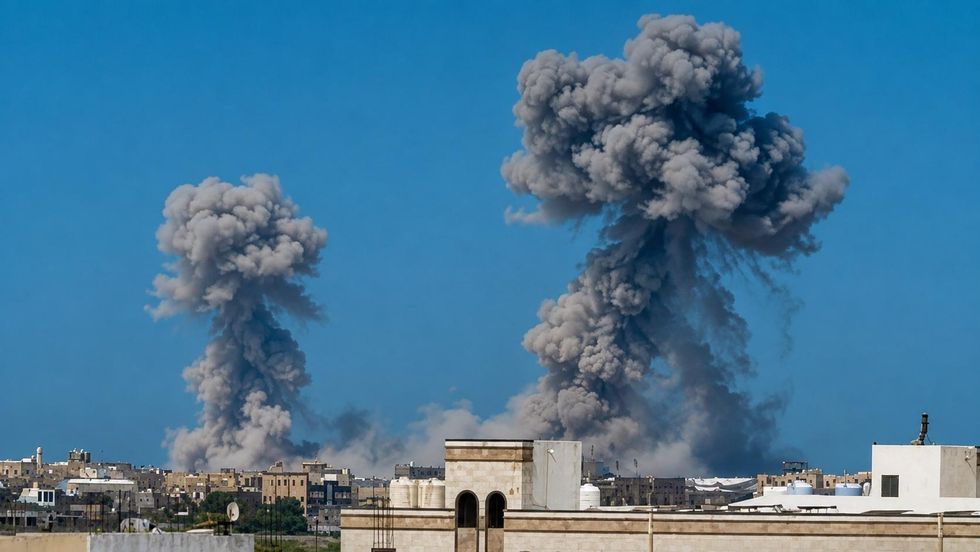
- Houthis have struck the Port of Mokha with more than 35 missile and drone attacks over two weeks, killing 16 and wounding 22, forcing the port to close to maritime traffic; roughly 90 missiles and drones have been launched toward Mokha during the latest escalation.
- Yemen's Presidential Leadership Council, chaired by Rashad al-Alimi, declared that 'the era of aggression without cost is over,' signaling a shift from restrained responses to retaliatory rules of engagement after years of contained confrontation.
- Government forces at Taiz, under Maj. Gen. Hamdi Hassan Shukri (Fourth Military Region) and Taiz Axis commander Maj. Gen. Khaled Fadhel, have reviewed troop deployments, repeatedly blocked Houthi infiltration attempts, and captured infiltrators along contact lines.
- A Houthi ballistic missile crashed into a civilian home in al-Akamah village in Maqbanah district — inside Houthi-controlled territory — believed to have been aimed at Mokha, illustrating how long-range strikes endanger civilians even on the launch side when weapons fall short.
- Saudi Arabia remains the key backer of Yemen's internationally recognized government, providing financial support to the Central Bank, funding reconstruction through the Saudi Development and Reconstruction Program for Yemen, and backing aligned forces including the National Resistance Forces in Mokha.
- The article frames the emerging conflict as fundamentally different from earlier phases: the central question is no longer who gains territory but who can keep ports, supply routes, and reinforcements operating across multiple fronts simultaneously under sustained drone and missile pressure.
- The Houthis' alignment with Iran means the wider regional escalation against Tehran — including the Iran confrontation referenced in the article — reverberates inside Yemen, potentially driving the group to intensify strikes as a deterrent against a feared government offensive.
Why it matters: Yemen's front lines have not yet moved, but the rules frozen since the 2022 truce are breaking: a strategic port has been knocked offline by 35+ strikes, 16 civilians are dead, and the internationally recognized government has publicly abandoned its policy of restraint. If both sides miscalculate — each believing escalation will force the other to back down — the result could be a multi-front war fought with drones and missiles against ports and supply routes rather than ground offensives, with Saudi financial and military backing underwriting the government's ability to sustain that fight.
Ask SkimNews


