Bitcoin Drops Below $64,500 as Iran Deflates Hormuz Hopes — SkimNews
Get the Finance newsletter
Daily finance — markets, central banks, M&A, the prints that move money. Free.
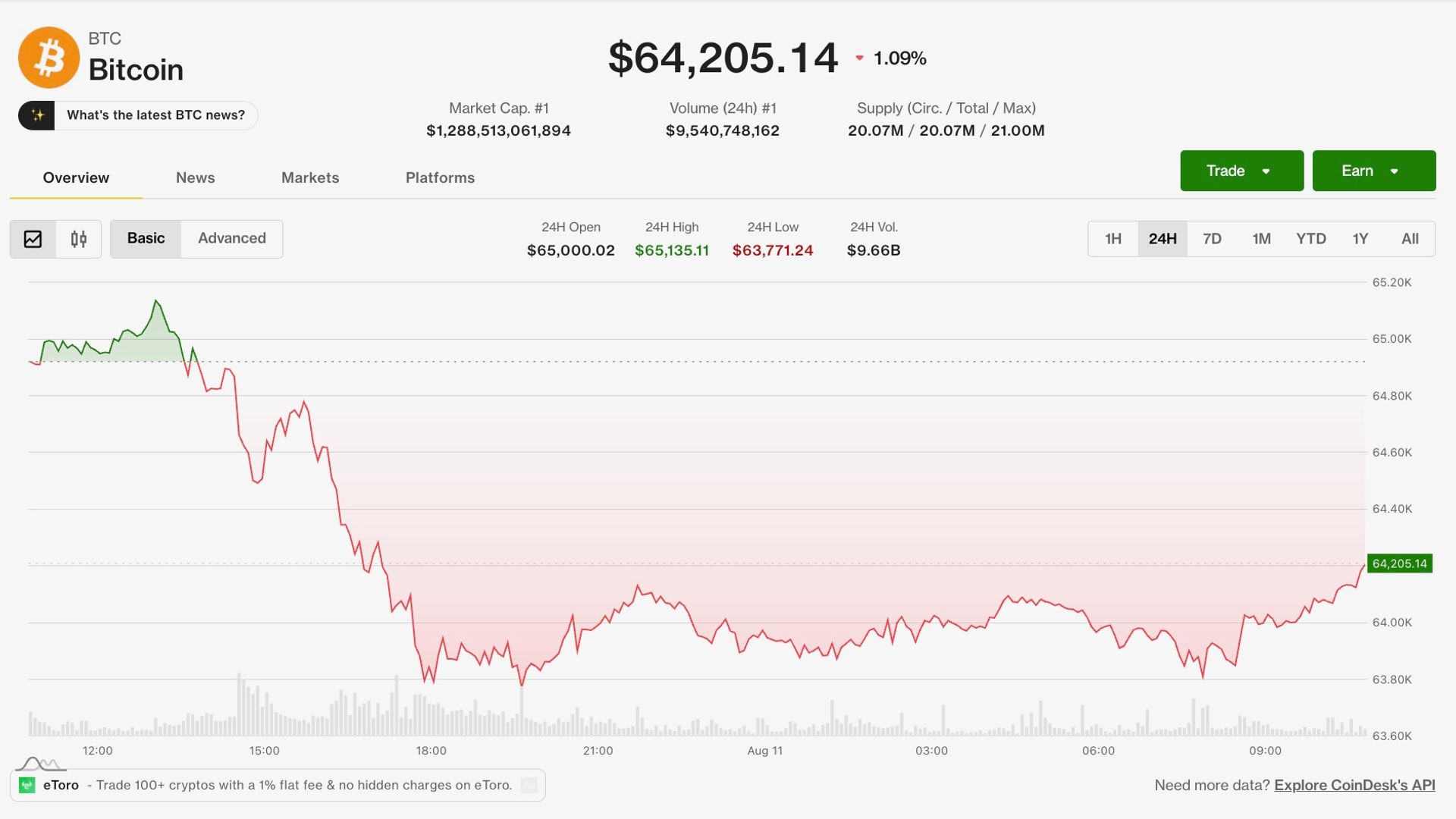
- Bitcoin slipped to $64,447 on Bitstamp — its lowest since Friday — mirroring US stocks as odds of the Strait of Hormuz reopening appeared to fade.
- Iran's deputy speaker Ali Nikzad told the Islamic Consultative Assembly that the opening of the Strait of Hormuz "has no military solution," deflating hopes for the oil route's reopening.
- US WTI crude oil surged nearly 5% to $80.90 per barrel on the Hormuz disappointment, while the S&P 500 reversed to turn green but stayed below Friday's all-time highs.
- The Japanese yen continued weakening against the US dollar despite an earlier rare joint Japan-US intervention, with USD/JPY hitting 159 — nearing the psychologically significant 160 level.
- US spot Bitcoin ETFs recorded net inflows of $865.3 million last week, which Glassnode characterized as "exceptionally strong."
- Glassnode's Market Pulse warned that momentum remained tentative, noting improving demand within "a broader consolidation regime rather than a broad-based expansion in speculative activity."
- CryptoQuant CEO Ki Young Ju flagged that hedge funds flipped net long on CME BTC futures — an event he described as "rare" given that basis-trade structures have kept them structurally short for years.
Why it matters: The divergence between $865.3 million in ETF inflows and a failing price rebound — with Bitcoin dropping to $64,447 as hedge funds just flipped net long on CME futures for what Ki Young Ju called a "rare" event — suggests institutional positioning is split. Glassnode's warning that exchange turnover remains subdued despite accelerated spot taker buying could determine whether the bid holds or fades.
Ask SkimNews