Iran war pushes oil past $100, IEA releases 400M barrels — SkimNews
Get the Energy newsletter
Daily energy & climate — solar, EVs, oil, the policy fights and tech bets shaping the transition. Free.
- US and Israel launched a large-scale military attack on Iran on 28 February, with Iran's counterattacks killing more than 1,000 people and prompting Iran to threaten all vessels in the Strait of Hormuz on 2 March, halting a waterway that carries a quarter of global seaborne oil and a fifth of LNG.
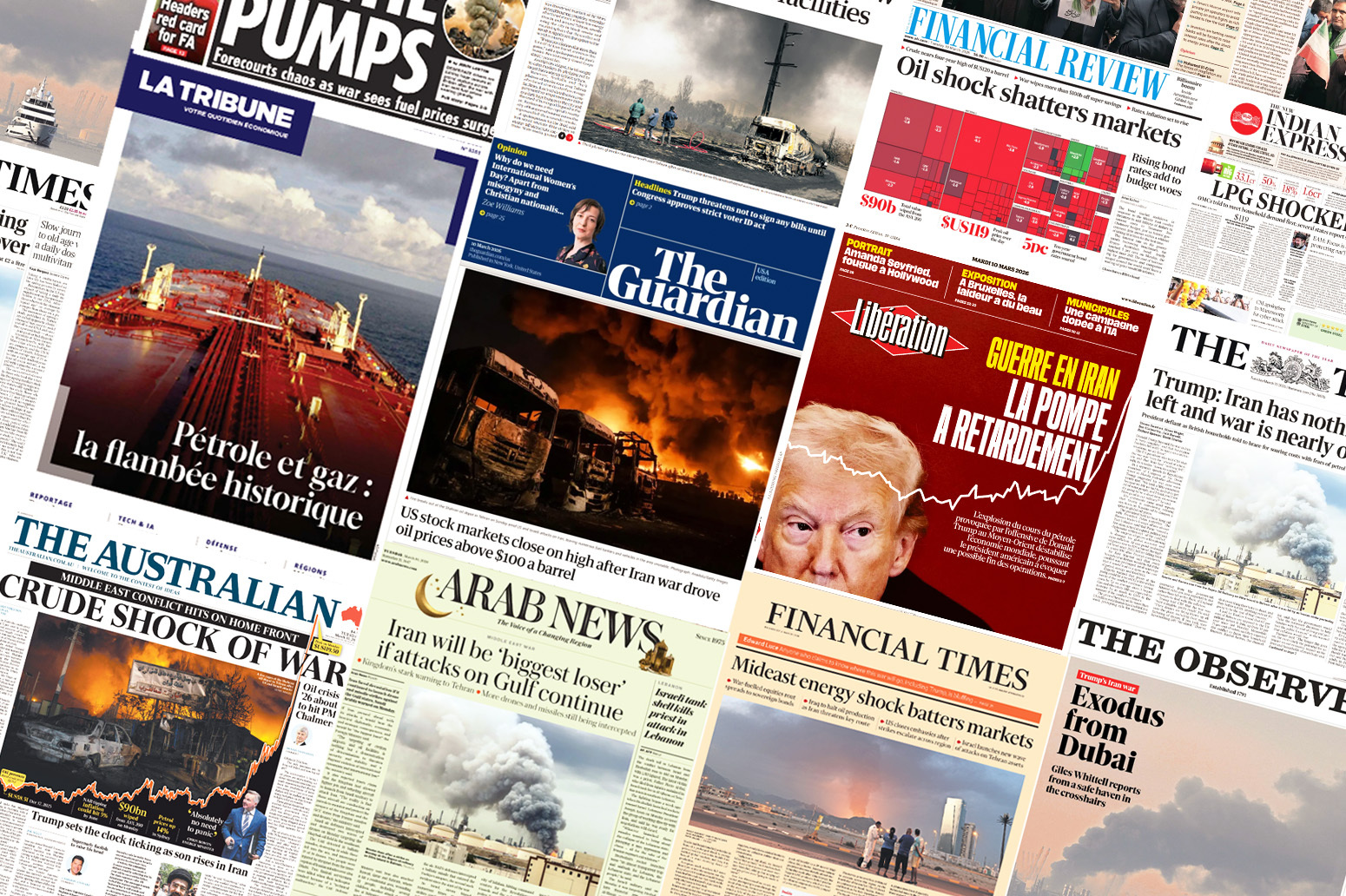
- Oil prices breached $100 per barrel on 9 March for the first time since Russia's 2022 invasion of Ukraine, spiking to $119 intraday before tumbling to around $91.70 the next day after Trump suggested the war could end "very soon."
- Iranian drones struck Qatar's Ras Laffan gas facility — responsible for roughly a fifth of global LNG — forcing QatarEnergy to halt production for weeks, while Saudi Aramco paused work at a refinery and one of the UAE's largest oil storage terminals ceased operations.
- European gas prices jumped up to 45% to roughly €46/MWh on 2 March and rose another 30% to about €60/MWh on 9 March, while Asian gas prices more than doubled and UK gas prices doubled before settling around 75% above pre-crisis levels.
- The IEA announced on 11 March that 32 member countries unanimously agreed to release 400 million barrels from emergency reserves, with executive director Fatih Birol calling the disruption "unprecedented in scale."
- Trump dismissed the energy cost as a "very small price to pay" for "safety and peace," while China announced its biggest retail fuel price cap increase in four years and opened talks with Iran to allow crude and Qatari LNG vessels safe passage through the strait.
Why it matters: The effective closure of the Strait of Hormuz combined with direct hits on Qatari and Saudi infrastructure is straining import-dependent economies — UK households could see annual bills rise 50% to £2,500 when the price cap updates in July, and the IEA's largest-ever coordinated reserve release signals the scale officials now see as necessary. Asia absorbs about 80% of Hormuz oil flows, with India flagged as the most vulnerable major buyer.
Ask SkimNews