Oil Whipsaws, Futures Rebound on Iran Coalition Reports — SkimNews
Get the Finance newsletter
Daily finance — markets, central banks, M&A, the prints that move money. Free.
- U.S. stock futures swung from losses of more than 100 points to gains of more than 140 points (0.3%) on the Dow, with S&P 500 and Nasdaq-100 futures also recovering sharply from early declines on Sunday evening.
- WTI crude spiked as high as $102.57 a barrel before retreating to roughly $99, while Brent crude gave up gains to trade near $104; oil has surged about 40% since the U.S. and Israeli bombing campaign against Iran began in late February, crossing $100 last week for the first time since 2022.
- President Trump told reporters he has "demanded" that about seven countries send warships to escort tanker traffic through the Strait of Hormuz, with the Wall Street Journal reporting a formal coalition announcement is imminent.
- The IEA said emergency oil reserves will begin flowing immediately, following last week's approval to release 400 million barrels from strategic reserves to address what it called "the largest supply disruption in the history of the global oil market"; the U.S. plans to release approximately 172 million barrels starting this week.
- Trump announced Friday the U.S. bombed military targets on Iran's Kharg Island, home to Iran's main oil export terminal, and threatened to strike Iran's vital oil infrastructure if Tehran doesn't allow tankers to flow freely through the strait.
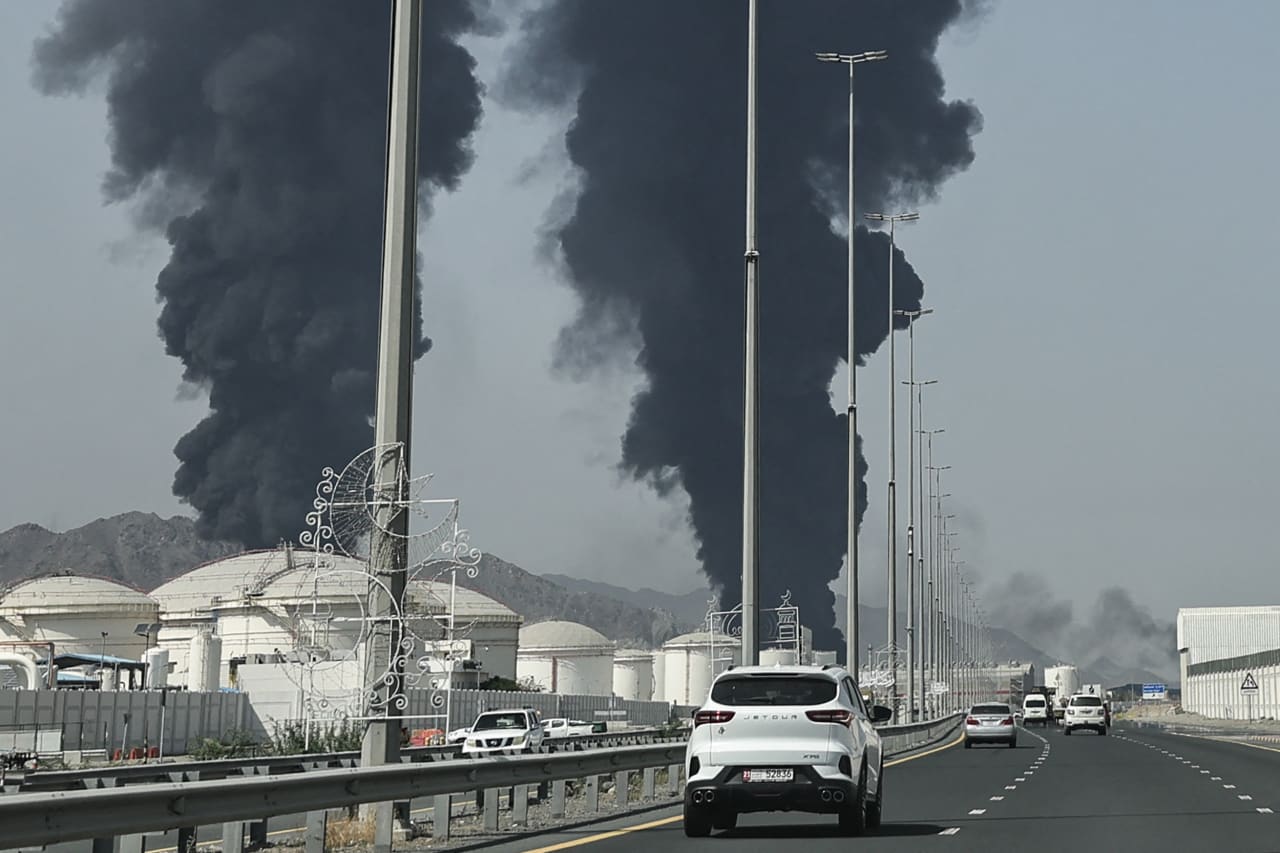
- Iran warned the United Arab Emirates to evacuate three major ports on Sunday, while the U.S. is moving approximately 2,500 Marines to the Middle East, raising the possibility of ground operations against Iran.
- Iranian Foreign Minister Abbas Araghchi, speaking on CBS's "Face the Nation," denied that Iran has closed the strategic waterway, saying the military has decided to let "a group of vessels" from various countries pass safely.
Why it matters: The simultaneous release of 400 million barrels in strategic reserves, Trump's reported coalition demand, and his threat to escalate strikes on Iran's oil infrastructure creates a high-stakes standoff that could keep oil pinned above $100. With all three major indexes posting a third straight weekly decline — the Dow off 2%, the S&P 500 down 1.6%, and the Nasdaq sliding 1.3% — and SPI Asset Management's Stephen Innes warning the oil market is "flirting with the outer edge of disruption risk," markets are pricing in sustained supply shock rather than a short-term spike.
Ask SkimNews

