Nvidia's $1T chip bet runs into energy ceiling — SkimNews

Get the Tech newsletter
Daily tech — startups, AI labs, chips, the launches that shape the next decade. Free.
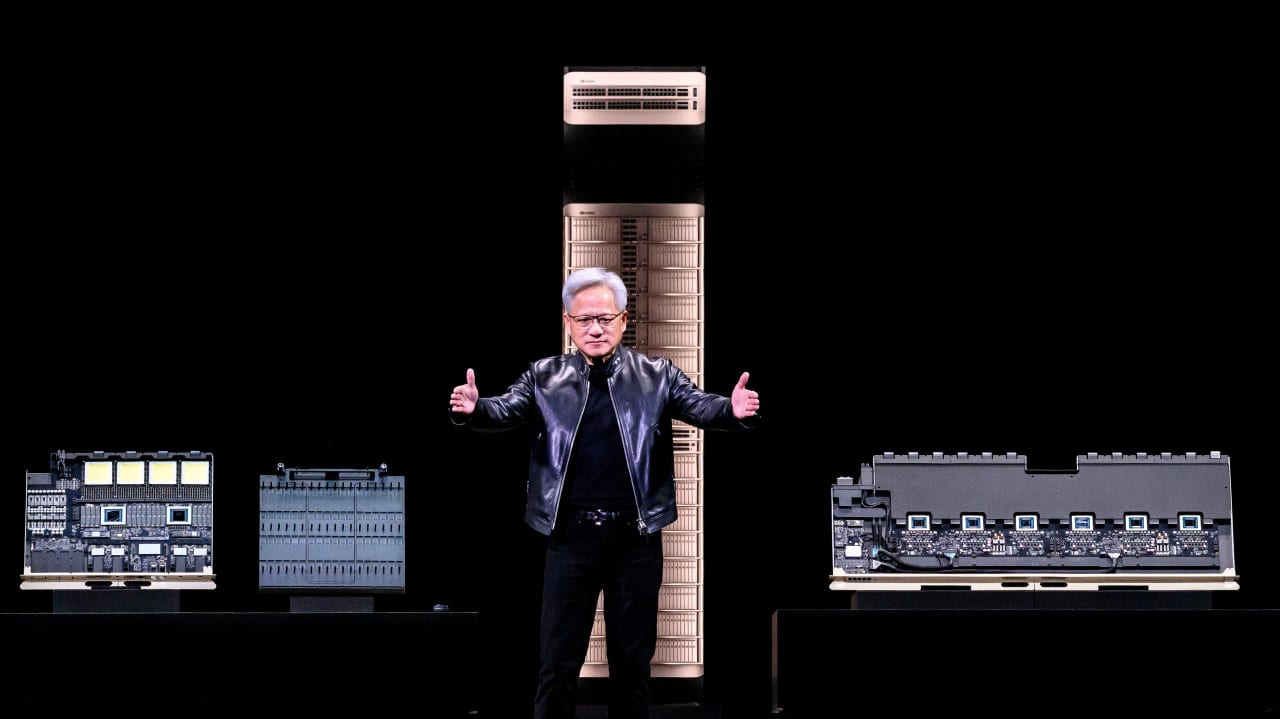
- Jensen Huang said Monday Nvidia expects "at least" $1 trillion in revenue from its newest chips through 2027, on the heels of record sales and earnings last month fueled by Big Tech data center orders.
- Nvidia's cumulative share of AI compute capacity fell from 100% in Q1 2022 to 65% in Q4 2025, with Google now holding the second-largest cumulative share at 18%, followed by AMD, Amazon, and Huawei, per SemiAnalysis.
- Nvidia faces what MIT's Paul Kedrosky called an "incredibly threatening" shift as the industry moves from training to inference AI, where the company's training-optimized chips aren't the natural fit.
- The Blackwell chip redesigned Nvidia's entire computing architecture for more performance and efficiency, said senior director of AI infrastructure Dion Harris — part of a generational leap Huang compared to going from a Model T to a Tesla in under a decade.
- Josh Parker, Nvidia's head of sustainability, acknowledged AI's absolute energy footprint is growing year over year and expected to continue, calling the situation the Jevons paradox "on steroids."
- Huang wrote in a blog post last week that "chips are being redesigned because efficiency determines how fast intelligence can scale," adding that "energy becomes central because it sets the ceiling on how much intelligence can be produced at all."
Why it matters: Nvidia's $1 trillion revenue projection hinges on efficiency gains that alone can keep AI's electricity demand physically feasible — but its market share has already dropped from 100% to 65% as competitors like Google close in, and the industry shift to inference, where Nvidia's chips aren't optimized, adds a second front to the squeeze. The company's dominance now depends as much on outrunning physics as on outrunning rivals.
Ask SkimNews