FACTS Devices Boost Transfer Capacity by 200 MW — SkimNews
Get the Energy newsletter
Daily energy & climate — solar, EVs, oil, the policy fights and tech bets shaping the transition. Free.
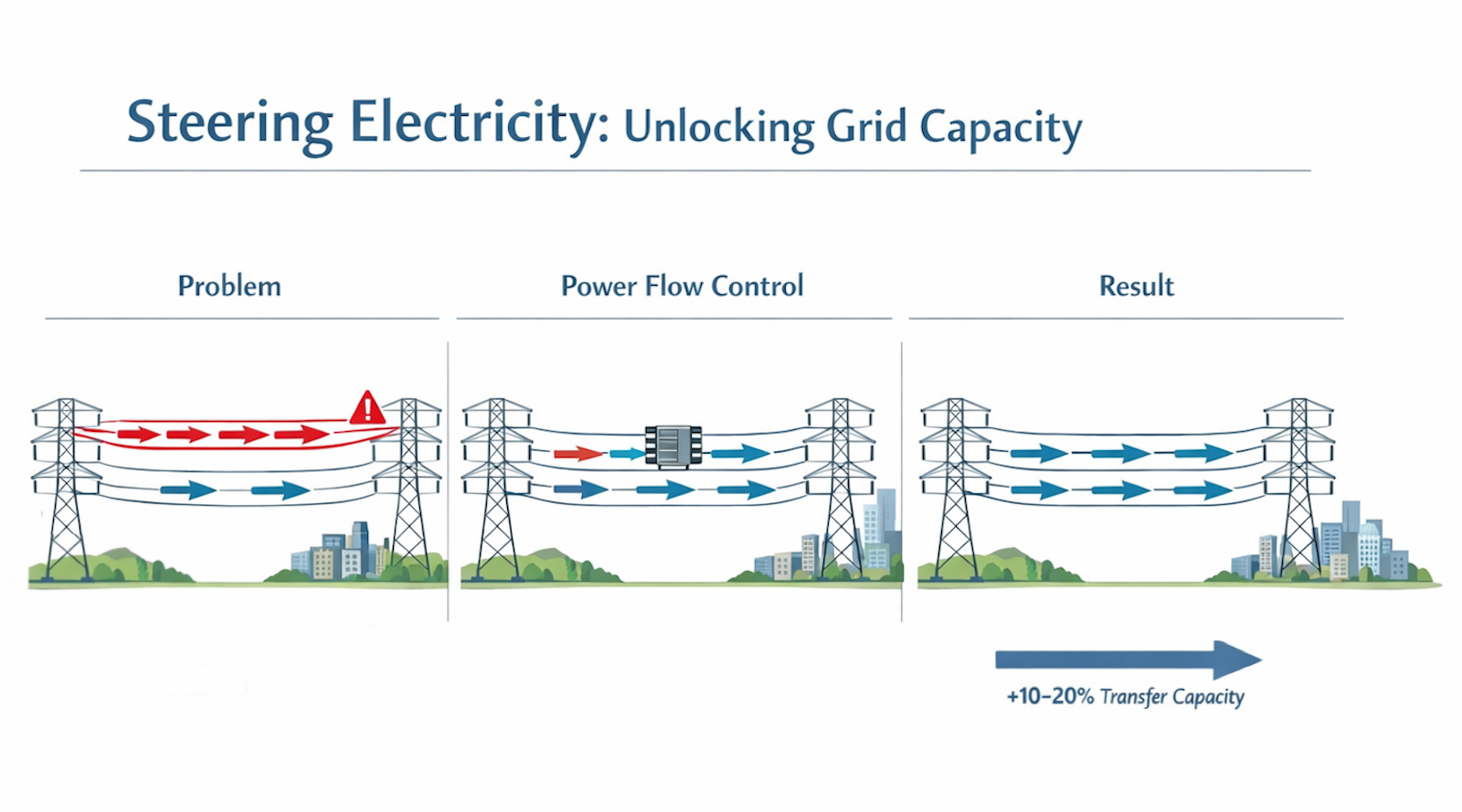
- FACTS technologies (Flexible AC Transmission Systems) use power electronics to control voltage, reactive power, or impedance on transmission lines, enabling more precise steering of electricity flows.
- Static Var Compensator installations, such as the 500 kV Manitoba‑Minnesota interconnection, increased transfer capability by roughly 200 MW, adding capacity beyond the line’s original 1,000–1,500 MW base.
- STATCOM at the Marcy substation in New York deployed about 200 MVA of dynamic reactive power, improving voltage stability and allowing higher transfers across key paths linking western generation to downstate demand.
- Series compensation devices lower effective line impedance, letting more power flow naturally through a corridor without exceeding thermal limits.
- Phase shifting transformers adjust the timing of the electrical wave to nudge power toward one line over another, similar to traffic lights directing flow at a highway merge.
- Renewable integration in Texas, Brazil, and Mexico City has benefited from SVCs and STATCOMs that stabilize voltage and damp oscillations, permitting greater renewable electricity transfer on existing lines.
- Grid operators can run transmission corridors closer to their thermal limits safely, increasing usable capacity without constructing new high‑voltage lines that face lengthy permitting and legal challenges.
Why it matters: Utilities and grid operators gain up to 200 MW of extra transfer capacity per device, enabling more renewable generation to reach demand centers while avoiding the years‑long permitting and social opposition that new high‑voltage lines entail. This also improves the economics of grid upgrades, reducing capital expenditures for utilities and accelerating the transition to low‑carbon power.
Ask SkimNews