Turkey cave artefacts hint Neanderthal-human exchange
The 30-Second Skim7 points
- What happenedArchaeological excavations at Üçağızlı II cave in Turkey reveal that Neanderthals and Homo sapiens maintained remarkably consistent stone-tool technology and both collected ornamental Columbella rustica sea snail shells across roughly 30,000 years of sequential occupation.
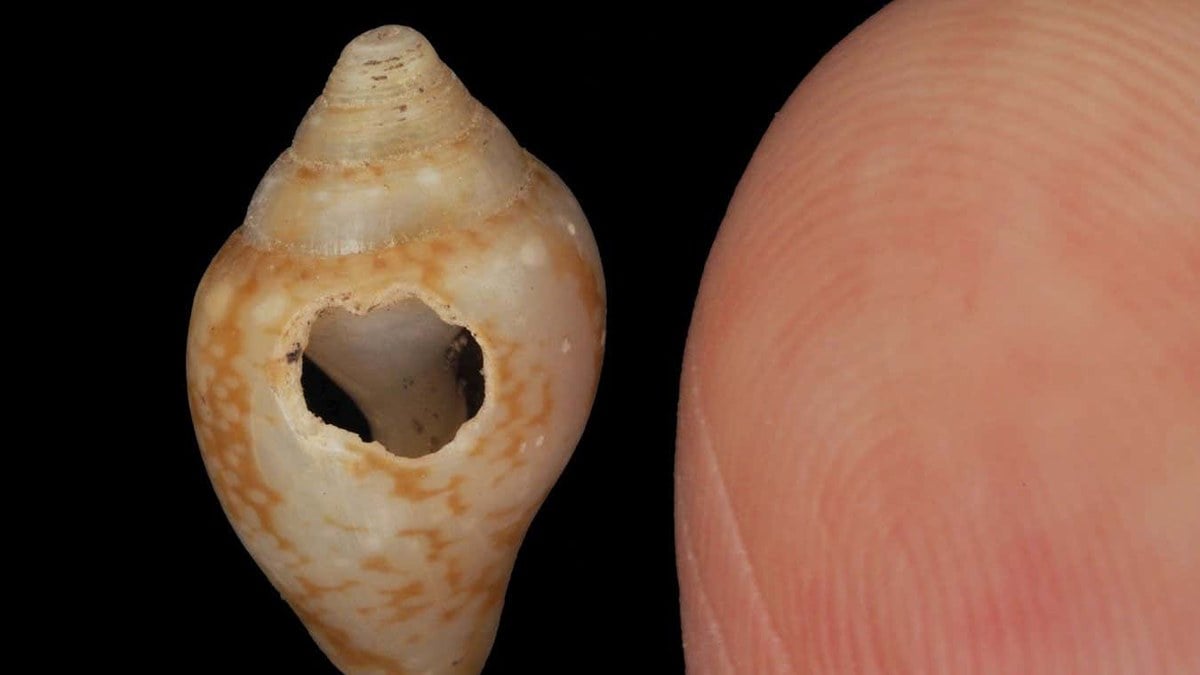
- Key facts & numbersÜçağızlı II cave on Turkey's Mediterranean coast was occupied by Neanderthals from 77,000 to 59,000 years ago, then by Homo sapiens from 59,000 to 47,000 years ago, according to teeth and jaw remains recovered at the site. Naoki Morimoto at Kyoto University led the first full archaeological dig in 2020, recovering nearly 20,000 stone artefacts whose technology remained extraordinarily consistent across both species' occupations. Researchers found nearly 30 examples of Columbella rustica sea snail shells throughout all layers of cave deposits, with some showing broken points or holes suggesting decorative use, despite having no clear utility as tools or food.
- What happens nextMorimoto admits he can't prove the species overlapped — it's his hypothesis. But 30 identical decorative shells across all layers is one hell of a coincidence.
- Üçağızlı II cave on Turkey's Mediterranean coast was occupied by Neanderthals from 77,000 to 59,000 years ago, then by Homo sapiens from 59,000 to 47,000 years ago, according to teeth and jaw remains recovered at the site.
- Naoki Morimoto at Kyoto University led the first full archaeological dig in 2020, recovering nearly 20,000 stone artefacts whose technology remained extraordinarily consistent across both species' occupations.
- Researchers found nearly 30 examples of Columbella rustica sea snail shells throughout all layers of cave deposits, with some showing broken points or holes suggesting decorative use, despite having no clear utility as tools or food.
- Morimoto said the 'striking consistency' in both stone tools and shell collection is 'difficult to explain by independent, parallel processes alone,' proposing that regional contact or cultural exchange is a plausible explanation.
Why It Matters
For decades, Neanderthals were framed as cognitively inferior to modern humans. The shared collection of aesthetically valued but non-utilitarian shells suggests cognitive parity and possible cultural transmission between species, reshaping how researchers model early human migrations and the symbolic capabilities of Neanderthals.
Sources Cited
Related Coverage
Ask SkimNews
The day’s news in one short email, every morning.
Free. One email a day. Unsubscribe in one click.