This solar-powered ‘ambulance’ has a range of up to 444 miles — SkimNews
SkimNews Take
By pairing solar propulsion with onboard diagnostics, Stella Juva bypasses both fuel and grid dependencies that typically constrain remote healthcare — suggesting solar's practical frontier is shifting from passenger transport into utility-grade service vehicles.
Get the Energy newsletter
Daily energy & climate — solar, EVs, oil, the policy fights and tech bets shaping the transition. Free.
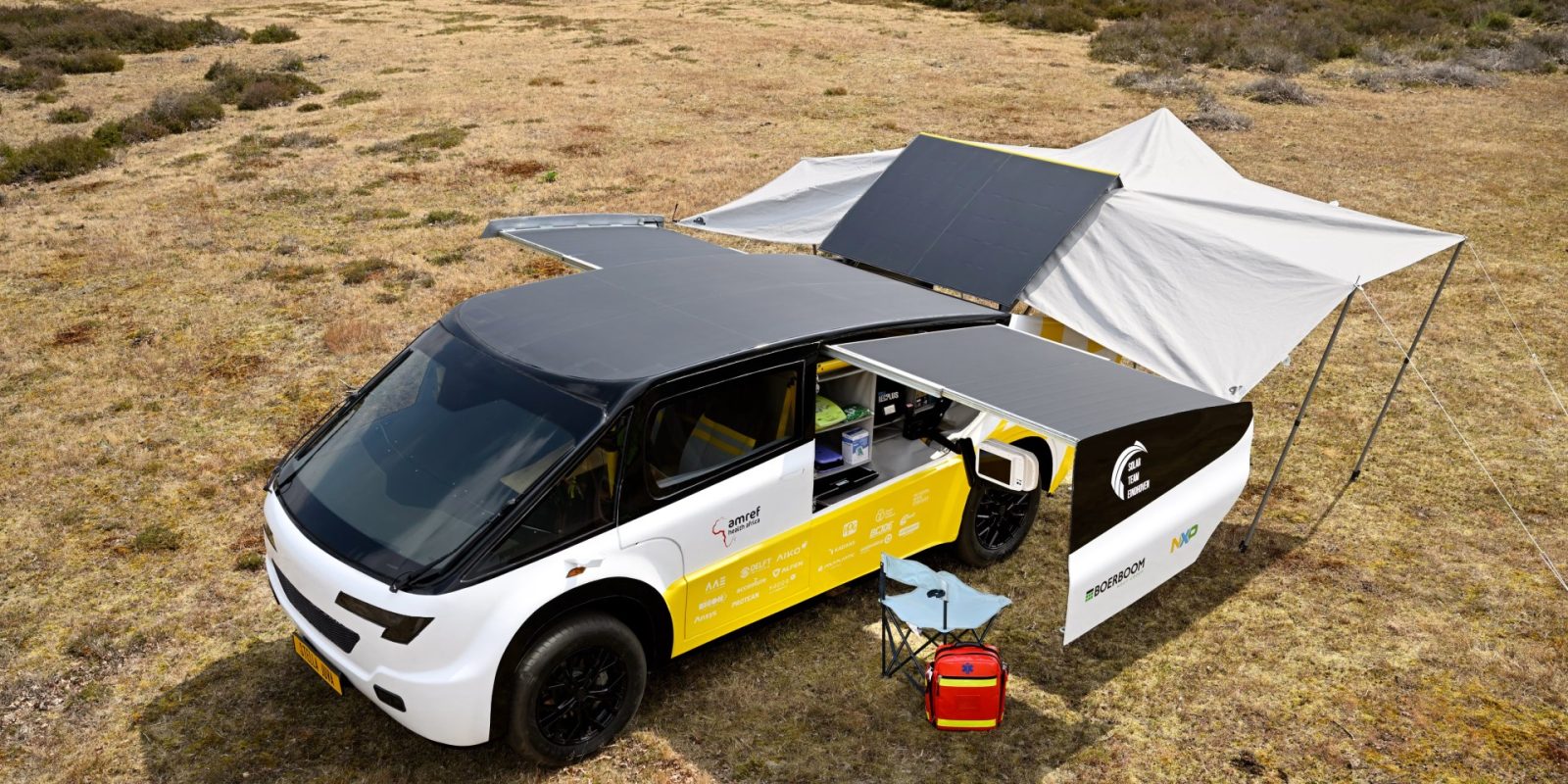
- Solar Team Eindhoven, a group of 23 students at Eindhoven University of Technology, unveiled Stella Juva — billed as the world's first solar-powered "ambulance" — that brings medical care to patients rather than transporting them to a hospital.
- The vehicle's rooftop AIKO All Back Contact (ABC) solar cells power both driving and onboard equipment, which can perform blood tests, screen for tuberculosis and malaria, administer vaccines, and carry out pregnancy ultrasounds; the team estimates 715 km (444 miles) of range on a sunny day.
- PPG supplied its CoraChar SE 4000 epoxy coating to protect the battery from thermal runaway and provided a $46,250 (€40,000) grant toward the vehicle's development.
- Amref Health Africa in the Netherlands advised the students; partnerships manager Femke Maurits said "access to care shouldn't depend on whether there's access to electricity or fuel."
- The team's earlier builds include Stella Terra, an off-road solar EV that completed a 620-mile test drive through Morocco and the Sahara in 2023, and Stella Vita, a solar-powered camper.
- Stella Juva heads to Kenya in August, where healthcare workers will simulate tuberculosis treatment scenarios at remote field locations — the first real-world test of the vehicle's range and medical equipment.
Why it matters: The 444-mile figure is a sunny-day estimate, not a proven capability — and the AIKO-powered build has yet to be tested outside a university workshop. The August Kenya deployment, where Amref-advised healthcare workers will run simulated TB scenarios at remote sites with no charging stations for hundreds of kilometers, is the first proof point for whether a solar-only mobile clinic can function in the conditions it was designed for.
Ask SkimNews


![GoSun built a practical electric tractor that charges itself with solar panels [video]](https://electrek.co/wp-content/uploads/sites/3/2026/09/gosun_electric-farm-tractor.jpg?quality=82&strip=all&w=1400)