Lincoln Microgrid Adds 3-MW Zinc Battery From Eos — SkimNews
SkimNews Take
A municipal utility's first grid-scale storage project defaulting to zinc rather than the dominant lithium chemistry suggests alternative-chemistry procurement is no longer confined to demonstration sites.
Get the Energy newsletter
Daily energy & climate — solar, EVs, oil, the policy fights and tech bets shaping the transition. Free.
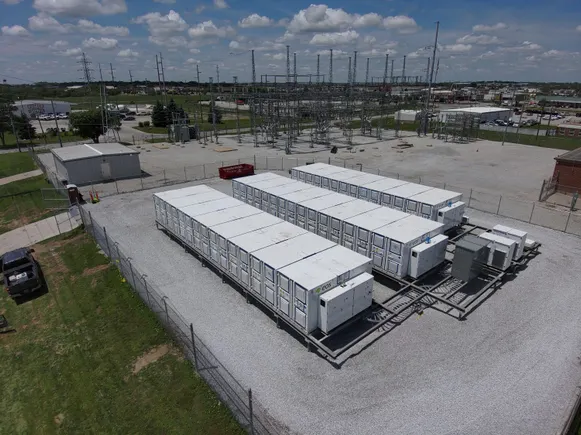
- Lincoln Electric System is adding a 3-MW/12-MWh zinc battery to its 30-MW downtown Lincoln microgrid, boosting capacity by about 10% — the utility's first grid-scale storage project, now in final commissioning for commercial operations in the coming weeks.
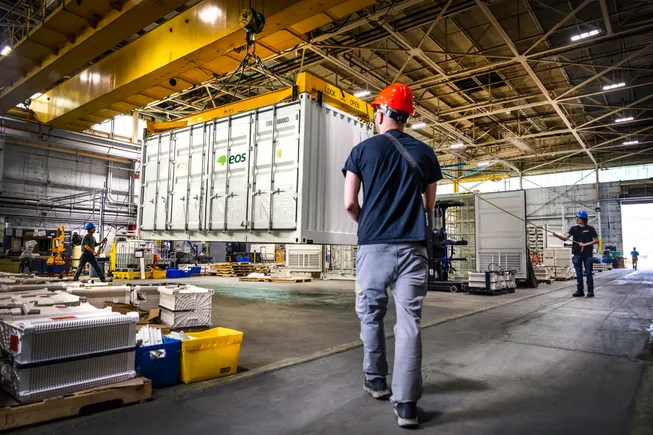
- Eos Energy Enterprises won the contract through a late-2021 RFP, securing what was then its largest battery under contract; the Pittsburgh-based company has since expanded to gigawatt-scale deals including a 36-MW/216-MWh Springfield, Missouri project and Frontier Power's 100-MW/400-MWh Redbird project in ERCOT.
- The zinc battery was selected for lowest per-unit cost over the contract span and a non-flammable chemistry — a key advantage for the dense urban substation location backing up the state Capitol complex, a federal building, city offices, and two public safety facilities.
- The Lincoln microgrid already runs on a dual-fuel combustion turbine (mainly natural gas), 300 kW of customer-owned solar, and 500 kW of customer-owned thermal energy storage; the downtown facility came online in 2020, where LES saw a 'marriage' for storage.
- LES, a publicly owned nonprofit utility and Southwest Power Pool member since 2009, has no immediate plans for more batteries but said a resource plan done today would evaluate storage as a cornerstone technology for a system that peaks around 800 MW of load.
Why it matters: For publicly owned LES, with no pressing resource needs, the 3-MW zinc battery is a deliberate technology pilot — Director Scott Benson said the project will get the utility 'comfortable' with storage. The non-flammable chemistry, chosen explicitly for dense urban placement near the state Capitol, illustrates why non-lithium storage is gaining traction at utilities serving critical infrastructure.
Ask SkimNews
![ELM MicroGrid installs battery storage in its hometown [video]](https://electrek.co/wp-content/uploads/sites/3/2026/06/ELM_PEORIA.jpg?quality=82&strip=all&w=1600)