Zinc Batteries Push for US Grid Storage Role Amid Lithium Supply Risks — SkimNews
Get the Energy newsletter
Daily energy & climate — solar, EVs, oil, the policy fights and tech bets shaping the transition. Free.
- International Zinc Association officials told Utility Dive that zinc-based batteries are poised for wider US deployment amid surging storage demand and potential regional lithium shortages by 2030, driven by China's dominance of the global lithium battery supply chain.
- Zinc battery production is hindered by high scaling costs and safety standards written for more flammable lithium-ion chemistries, according to a June 30 white paper coauthored by Josef Daniel-Ivad, head of the IZA's Zinc Battery Initiative, and executive director Andrew Green.
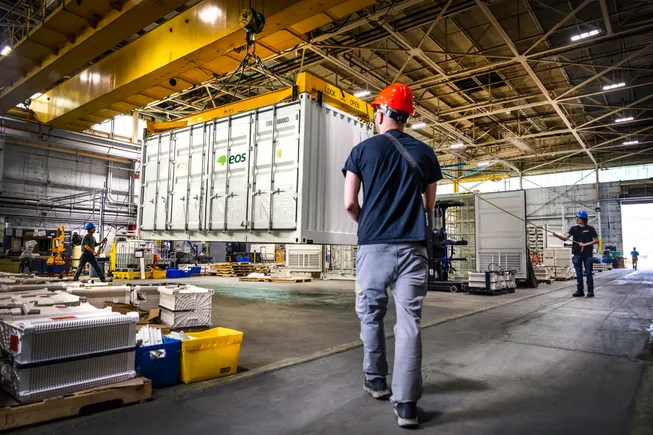
- US grid-scale zinc installations remain rare, with most deployments hosting 1 MW or less, per the Department of Energy, though Eos Energy aims to double its production capacity to 8 GWh within two years.
- Zinc batteries offer thermal stability (eliminating fire suppression systems), 25% longer service life, better extreme-temperature performance, and cost-effective recycling, and zinc-air chemistries can deliver economical multiday storage for grids with high renewables penetration.
- US zinc supply has a 'head start' thanks to ample mining capacity, recent Mountain West mine starts and expansions, and zinc's federal 'critical mineral' designation last year; the US imports 77% of refined zinc, mostly from Canada and Mexico.
- The IZA roadmap says boosting zinc battery output to 10% of US zinc demand would enable 40 GWh of annual storage capacity while only marginally increasing refined zinc imports.
- Green and Daniel-Ivad called for DOE incentives to scale manufacturing lines, a pilot line dedicated to zinc chemistries, grant and loan financing from the Office of Critical Minerals and Energy Innovation and the Office of Energy Dominance Financing, and public-private outreach to build utility comfort with the technology.
Why it matters: The IZA is positioning zinc as a domestically anchored hedge against lithium supply-chain concentration in China, but zinc remains a rounding error versus tens of gigawatts of US lithium deployments in 2025; without DOE-backed pilot manufacturing lines and incentives, utilities are unlikely to overcome inertia and rewrite fire-safety standards built around lithium-ion chemistries.
Ask SkimNews