Fear is fading across markets, be it bitcoin, stocks, gold or bonds — SkimNews
Get the Finance newsletter
Daily finance — markets, central banks, M&A, the prints that move money. Free.
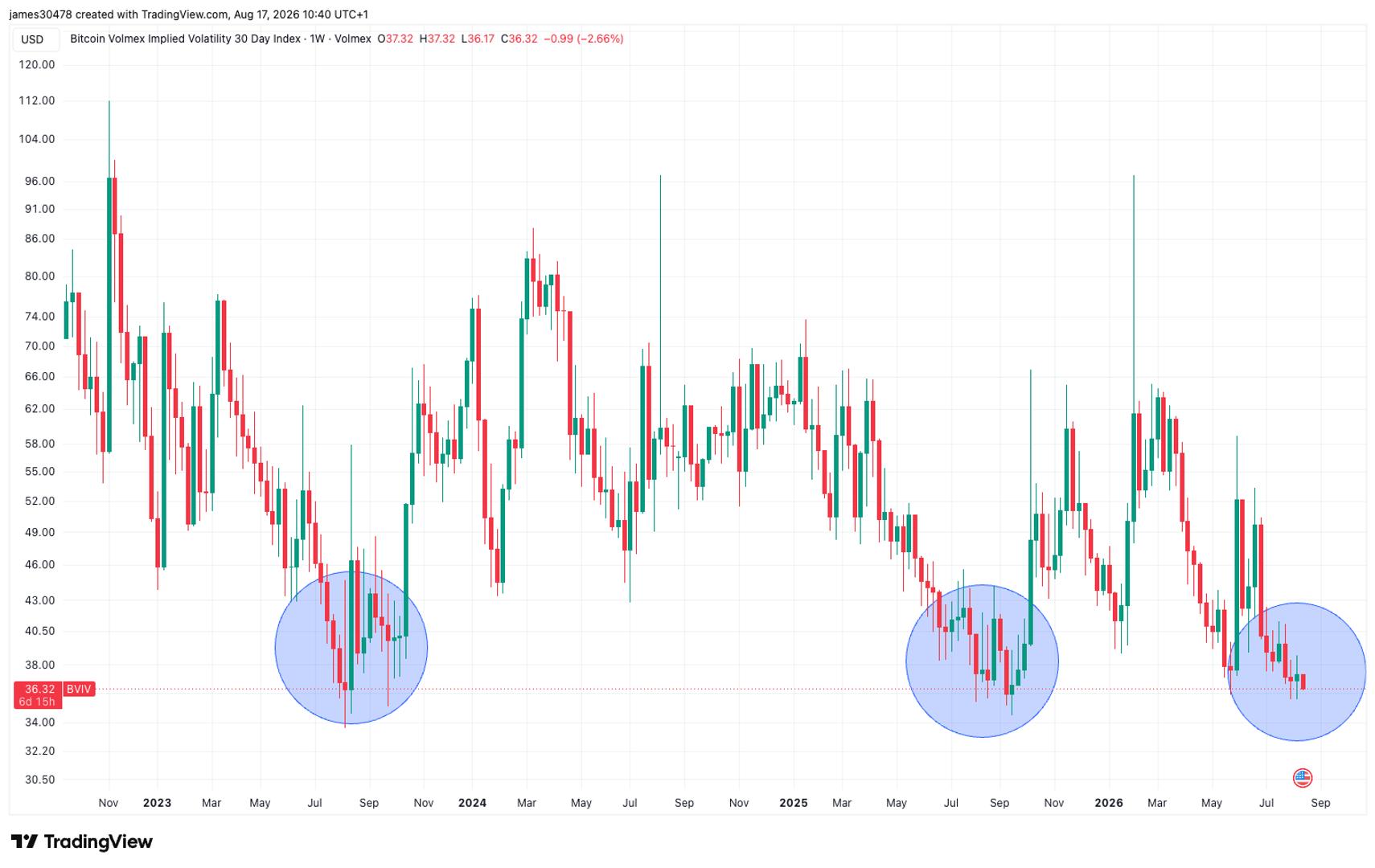
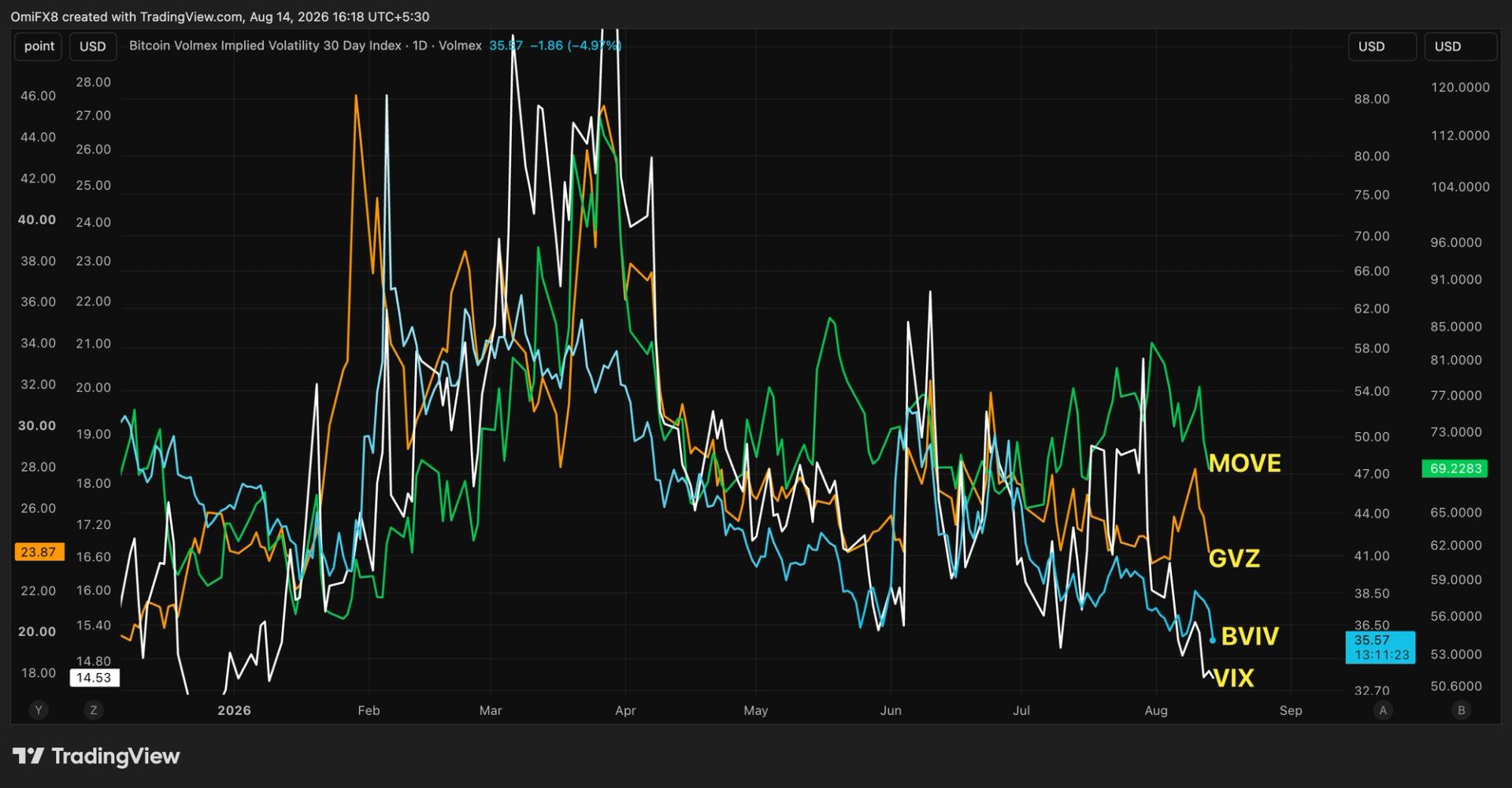
- Bitcoin's BVIV dropped to a 2026 low near 36%, reversing a minor pop to nearly 38% earlier in the week, according to TradingView data.
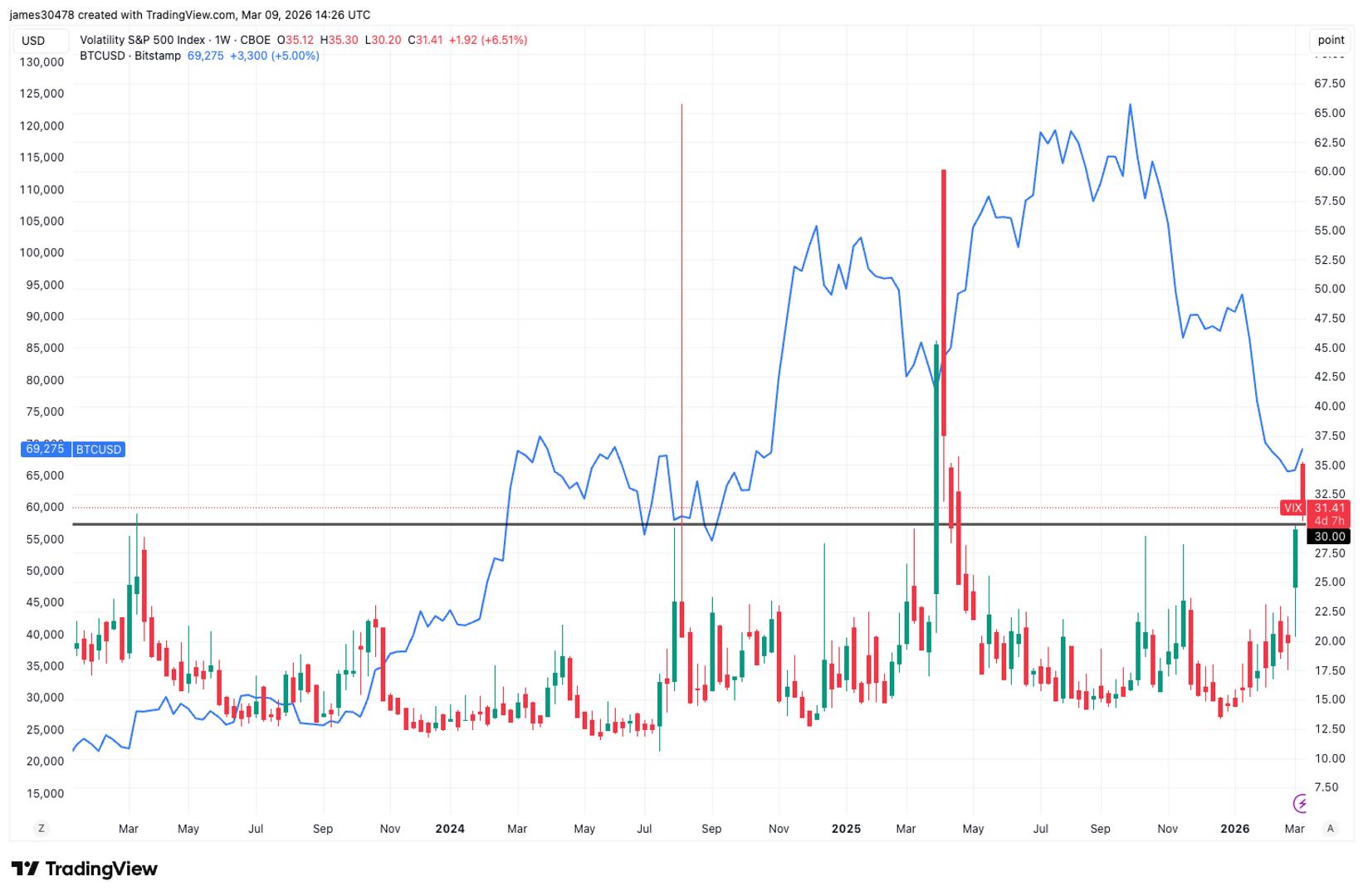
- The VIX fell to its lowest level since January, while the Treasury market's MOVE index hovers near the lower end of its 66%–84% multi-month range.
- Gold and oil volatility indexes are also declining, extending a months-long synchronized drop across all four major measures — BVIV, VIX, MOVE, and GVZ.
- Reasons for concern persist, including continued U.S.-Iran escalation risks, mounting sovereign debt, and rising bond yields, plus crypto-specific regulatory disappointments, weak demand, and hack risks.
- Treasury yields rose after the U.S. said its naval blockade of Iranian ports could continue "indefinitely," with the 10-year at 4.661%, 2-year at 4.152%, and 30-year at 5.237%.
- The MOVE decline is especially significant because Treasury notes underpin global finance — increased turbulence there can transmit financial tightening across other asset classes.
Why it matters: Hedging costs are at 2026 lows across crypto, stocks, bonds, and commodities — Bitcoin's BVIV sits near 36%, the VIX hit its lowest since January, and the MOVE index hovers at the bottom of its 66%–84% range. That cross-market calm persists despite U.S.-Iran escalation, rising Treasury yields, and crypto regulatory headwinds.
Ask SkimNews