Major UK Jurassic Fossil Collection Sold to Abu Dhabi Museum — SkimNews

SkimNews Take
The sale exposes how publicly funded UK museums are structurally outbid by sovereign-backed foreign institutions for nationally significant heritage, suggesting further exports will follow unless acquisition budgets or export-deferral mechanisms change.
Get the Health newsletter
Daily health & science — research, biotech, public health, the studies worth knowing. Free.
- Chris Moore, a private Dorset-based fossil hunter, sold his 318-specimen collection of Jurassic marine fossils to the Natural History Museum Abu Dhabi, where it went on public display in November 2025.
- The Natural History Museum in London and Amgueddfa Cymru (Museum Wales) both declined the eight-figure asking price, with an internal NHM email seen by the Guardian saying the institution had "no money at all" for acquisitions.
- The collection — ichthyosaurs, fish, crustaceans and other creatures, some possibly new species — was sourced from the Lower Lias rocks of Lyme Regis, Charmouth and the south-west UK along the Jurassic Coast, a UNESCO World Heritage Site.
- Richard Butler, professor of palaeobiology at the University of Birmingham, called it "one of the most important collections of fossils ever made" on the Jurassic Coast and said the sale raised questions about preserving irreplaceable UK natural heritage.
- UK law leaves fossils outside the treasure-act regime: they belong to landowners, require no cultural-property export licence, and the west Dorset collecting code — which asks collectors to offer category 1 specimens to UK museums for six months — is not legally binding.
- Dr Erin Maxwell of the Stuttgart State Museum of Natural History said the sale was a blow to the UK but argued the best-case scenario, when the state cannot afford market price, is a foreign museum rather than a wealthy private buyer.
- The Natural History Museum Abu Dhabi defended the purchase, telling the Guardian that "all museums must travel both spatially and temporally with their collections" to tell the 4.2-billion-year story of life on Earth.
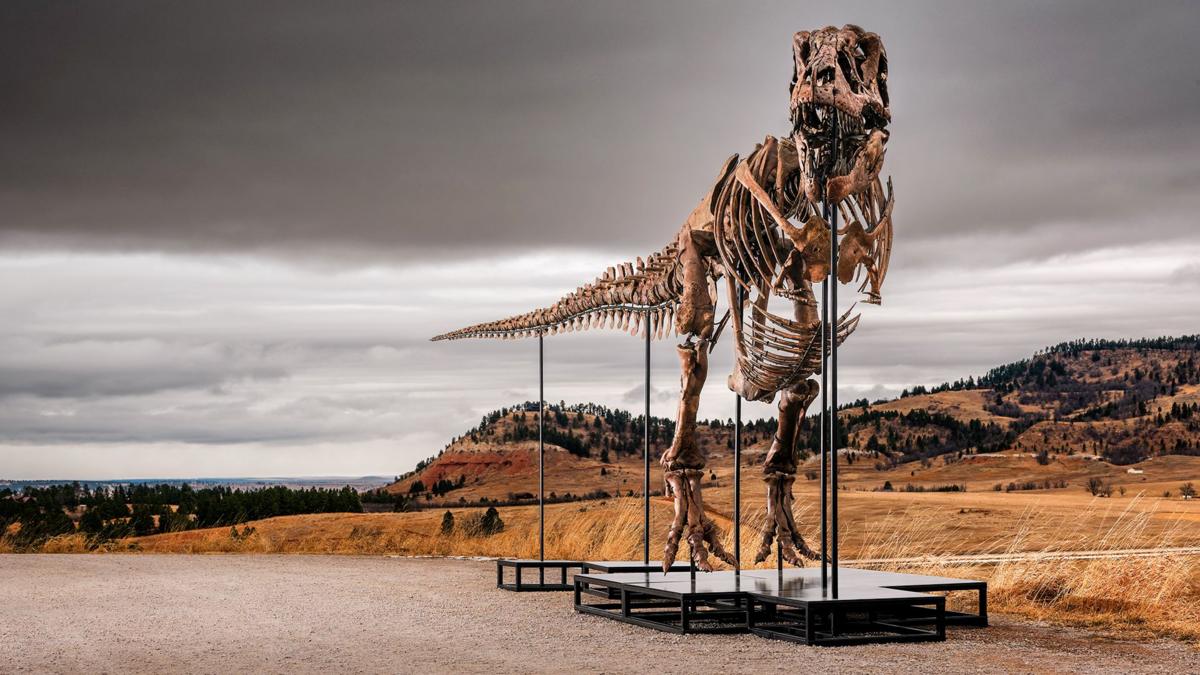
- The Moore sale follows a pattern of headline fossil exports: Stan the T-rex went to the same Abu Dhabi museum for $31.8m in 2020, and another T-rex skeleton nicknamed Gus sold at Sotheby's in July for $50.1m.
Why it matters: Because UK fossils fall outside the treasure-act framework and carry no export licence requirement, scientifically important specimens legally walk out of the country whenever British institutions cannot match the price — a structural gap that has already cost the Natural History Museum London Stan the T-rex and now the Moore collection, both now housed in Abu Dhabi.
Ask SkimNews