AI-Timed Pink Noise Boosts Brain Waste Clearance in Sleep — SkimNews

Get the Health newsletter
Daily health & science — research, biotech, public health, the studies worth knowing. Free.
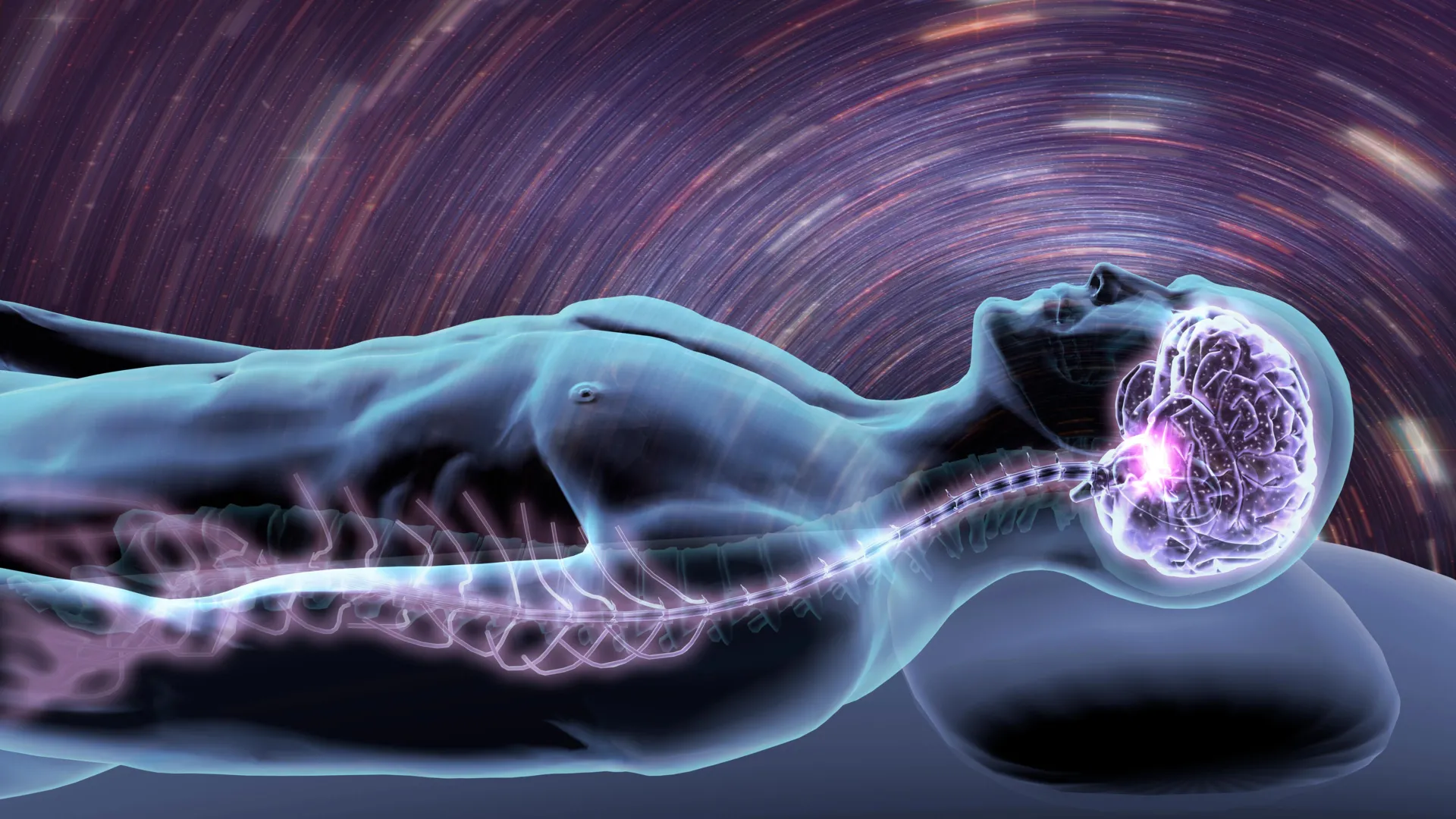
- Joshua Levitt at Boston University, Laura Lewis at MIT, and colleagues found that 50-millisecond pink-noise bursts played at slow-wave peaks strengthened those waves and briefly boosted cerebrospinal fluid flow into the brain in 14 participants (of 27 healthy adults averaging age 29) who reached N2 sleep during afternoon MRI naps.
- The CSF boost appeared driven by enhanced blood-vessel pumping, which pushes fluid through the glymphatic system — the brain's network for clearing waste products linked to Alzheimer's disease.
- The team trained an AI model on prior EEG data to predict slow-wave peaks roughly 70 milliseconds in advance, solving the problem that MRI scans interfere with EEG readings, making real-time wave detection too slow to time sound stimulation.
- Sephira Ryman at the University of New Mexico called the AI-enabled approach "methodologically a real move forward," and noted the technique could eventually be delivered via a portable device while people sleep at home, rather than requiring an MRI.
- The researchers are now exploring whether the approach works in older adults and boosts clearance of beta-amyloid and other Alzheimer's-linked proteins, with future plans to test whether it slows cognitive decline in normal aging, mild cognitive impairment, and early-stage Alzheimer's. The study was published in Science Translational Medicine.
Why it matters: The findings point toward a non-invasive, sleep-based route to clearing Alzheimer's-linked waste via the glymphatic system — but the immediate win is methodological. The AI-timing system lets researchers synchronize sensory stimulation with brain waves inside an MRI for the first time, a combination that previously couldn't coexist. The team's next target is older adults, where beta-amyloid clearance matters most.
Ask SkimNews