Saylor Slams BIP-110 as 'Bad Idea' for Bitcoin — SkimNews

Get the Finance newsletter
Daily finance — markets, central banks, M&A, the prints that move money. Free.
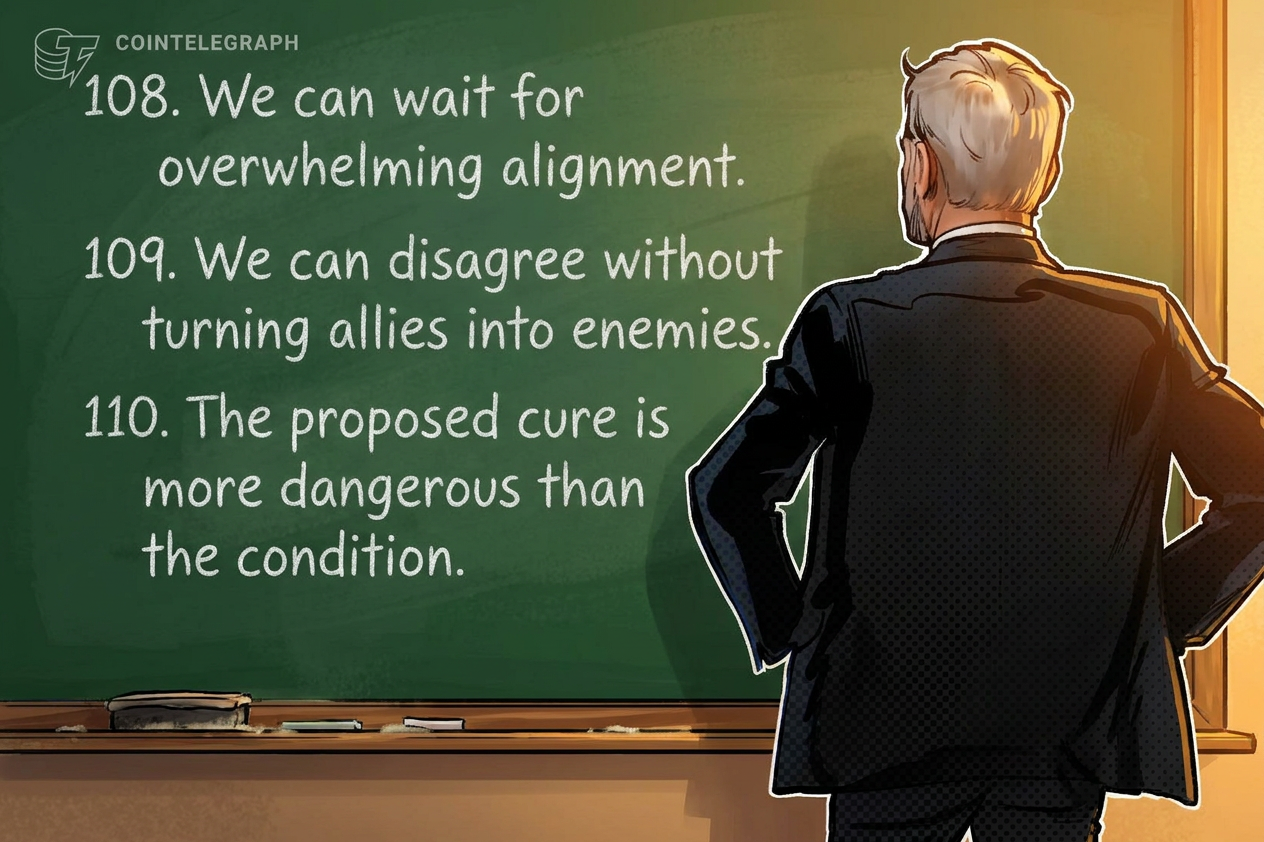
- Michael Saylor, executive chairman and co-founder of Strategy, published "110 reasons BIP-110 is a bad idea" on X, calling the proposal to restrict so-called "spam" data a threat to Bitcoin's neutrality: "The proposed cure is more dangerous than the condition."
- BIP-110 would implement a one-year temporary soft fork with seven consensus restrictions capping data payload sizes and rejecting certain script executions, alongside lowering the miner approval threshold from the standard 95% to just 55%.
- Saylor labeled the 55% threshold "too aggressive," warning it could trigger network splits and market uncertainty, and argued that "Bitcoin cannot read intent" — the protocol cannot distinguish spam from legitimate images, proofs, contracts or authentication records.
- Strategy, Saylor's firm, holds 843,775 BTC valued at $54.31 billion as of Sunday, the largest corporate bitcoin treasury in the world, giving Saylor's warning particular weight given the firm's exposure to network stability.
- Saylor cautioned BIP-110 would create a "chilling effect" on developers and innovation, and that suppressing uses of the network could erode fee revenue, weakening miner hash-power incentives as the block subsidy continues to halve.
- Saylor recommended market-based fees and individual relay policies as alternatives to consensus changes, concluding: "Bitcoin does not need guardians of purity. It needs guardians of neutrality."
Why it matters: With Strategy holding 843,775 BTC worth $54.31 billion, Saylor is speaking from the largest single corporate position in the asset — and his warning that a 55% miner threshold is "too aggressive" reframes the debate as one about whether Bitcoin's rules can be changed without splitting the network or chilling future development on top of it.
Ask SkimNews