Japan Turns FOIP Vision Into Southeast Asia Security Deals — SkimNews

Get the Geopolitics newsletter
Daily geopolitics — wars, elections, sanctions, the diplomatic moves that move markets. Free.
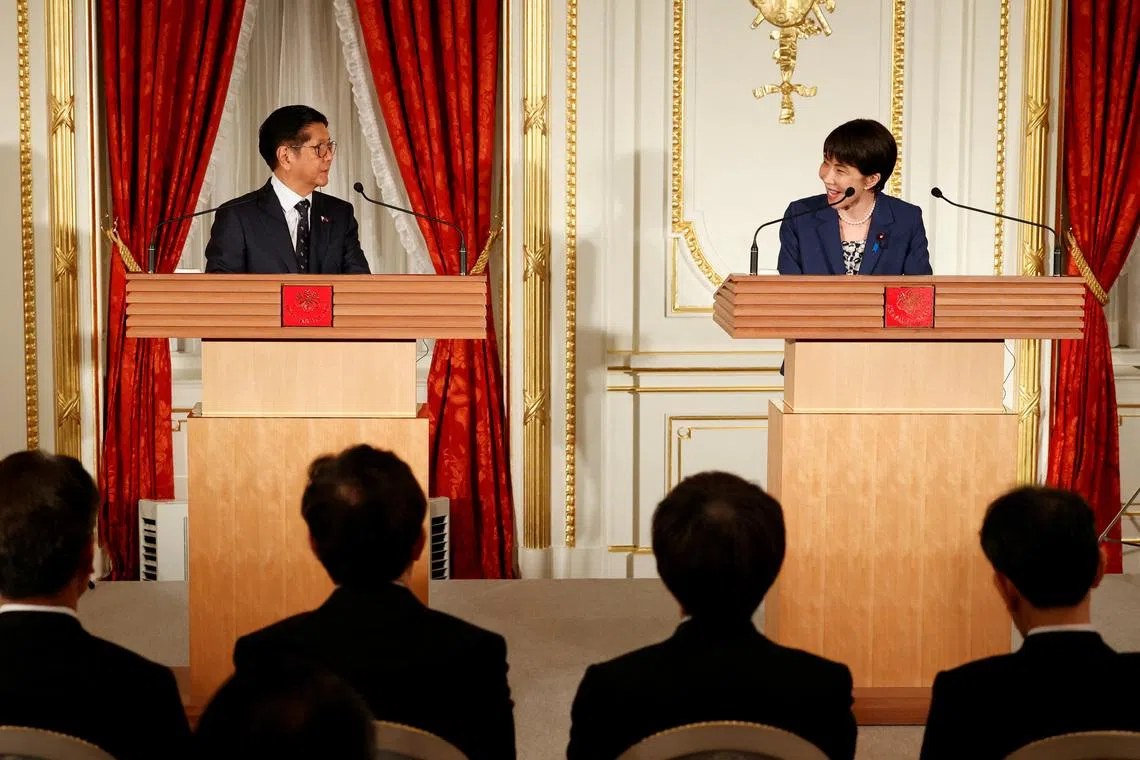
- Takaichi Sanae outlined Japan's updated Free and Open Indo-Pacific (FOIP) strategy in a May 2 speech at Vietnam National University in Hanoi — marking a decade since Abe's original proposal — with three priorities: AI-era economic infrastructure and critical mineral supply chains, public-private cooperation with shared rules, and expanded security cooperation.
- Motegi Toshimitsu told the July 22 ASEAN-Japan Foreign Ministers' Meeting in Manila that ASEAN is "at the core" of FOIP, pledging cooperation in maritime security, economic security, energy resilience, artificial intelligence, and disaster response.
- Motegi opposed "unilateral attempts to change the status quo by force or coercion" in the East and South China Seas — language widely understood as directed at China — and called for any future South China Sea Code of Conduct between China and ASEAN to conform to UNCLOS.
- Japan's Official Security Assistance (OSA), introduced in 2023 to provide defense equipment directly to partner armed forces, has delivered monitoring and surveillance equipment to the Philippines, a diving support vessel for ASEAN observer teams in Malaysia, high-speed patrol boats for Indonesia, maritime search-and-rescue gear for Thailand, and communications equipment and patrol boats for Cambodia.
- Tokyo and Hanoi agreed earlier this month to begin discussions on joint development and production of fast landing craft, while the Philippines' Acquisition and Cross-Servicing Agreement with Japan — signed in January — entered into force as of August 22 alongside continued radar transfers and expanding joint military exercises.
- Japan held the third Japan-Pacific Islands Defense Dialogue in February with ASEAN countries participating as observers for the first time, linking Southeast Asian and Pacific Island security concerns, while the Quad in Manila pledged deeper cooperation with ASEAN on maritime security, critical technologies, economic security, and humanitarian assistance.
- China warned against a "revival of militarism," rejected Motegi's account of a brief exchange with Foreign Minister Wang Yi, and had state media dismiss the episode as "political theater," while ASEAN governments responded unevenly: the Philippines and Vietnam most receptive to Japan, Indonesia and Malaysia cautious, Cambodia and Laos constrained by close China ties.
Why it matters: Japan is embedding defense infrastructure across ASEAN through Official Security Assistance, with Cambodia — one of Beijing's closest Southeast Asian partners — accepting Japanese patrol boats. The Philippines-Japan ACSA entering force August 22 cements their security partnership as the region's most institutionalized bilateral arrangement.
Ask SkimNews