The Guardian view on India’s green growth gamble: it will need more than private finance | Editorial — SkimNews

SkimNews Take
India's ambition to multiply GDP nearly eightfold while decarbonizing exposes a planning gap: green-growth roadmaps detail financing instruments yet treat demand creation as exogenous, making the trajectory dependent on market behavior that policy cannot directly shape.
Get the Energy newsletter
Daily energy & climate — solar, EVs, oil, the policy fights and tech bets shaping the transition. Free.
- Niti Aayog claimed no major economy has tried to expand GDP nearly eightfold within a generation while reaching net zero within two generations, asserting there is "no historical precedent" for this dual challenge.
- India still relies heavily on coal at peak power needs, setting up a feedback loop where heat drives cooling demand, coal-burning, and higher temperatures — even though in April all 50 of the planet's hottest cities on a single day were in India.
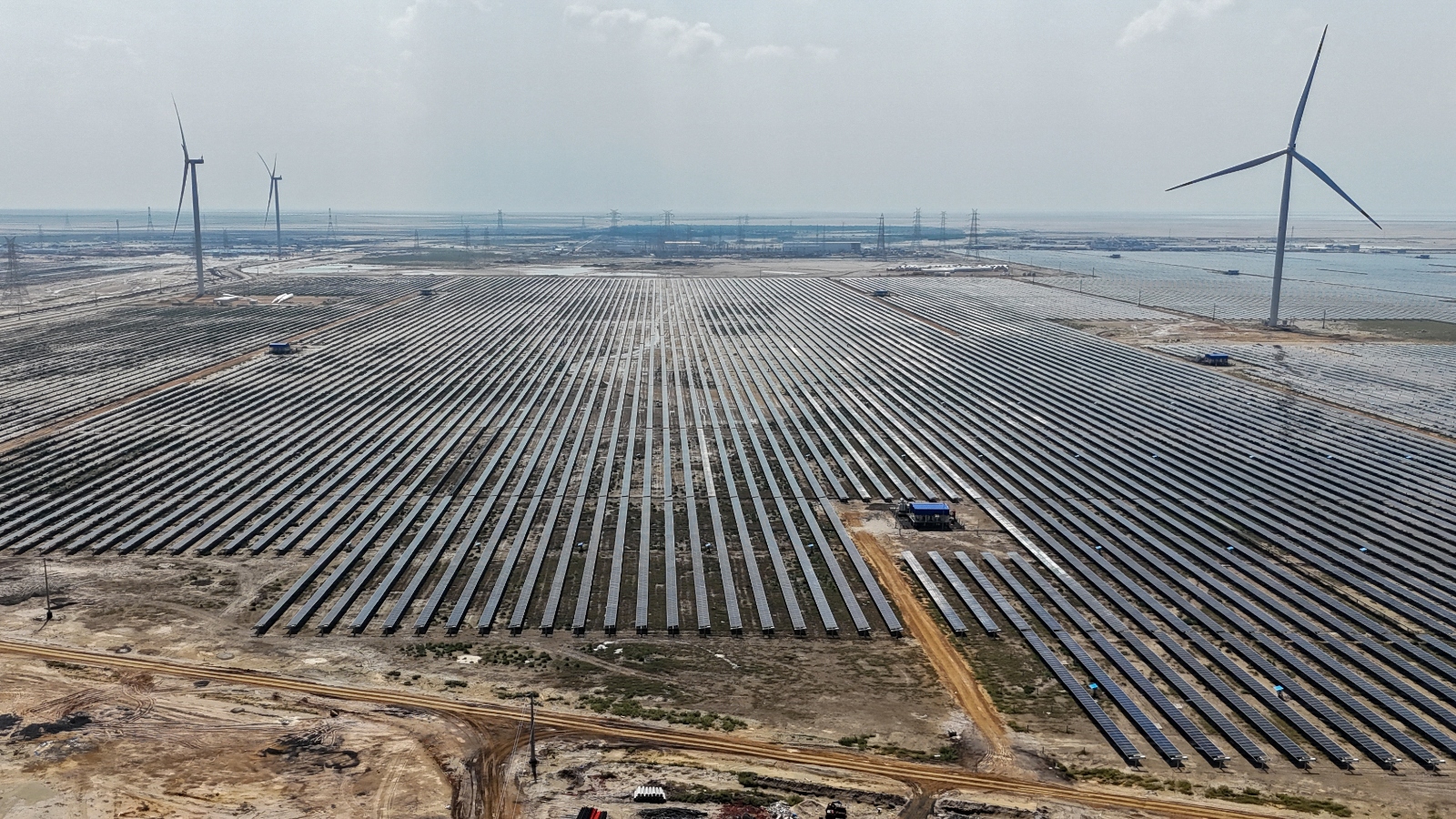
- India's non-fossil fuel sources now account for more than half of installed electricity capacity as the country tries to pivot away from coal.
- Political economist Mathias Larsen argued in a 2025 paper that India's solar success came because the state created a market, deployed public sector financial firepower and protected domestic producers — not because private finance spontaneously allocated capital.
- China industrialised inside a US-led trading system after Washington opened the American market in 1979, letting export-led growth absorb state-created capacity — a path India cannot replicate given climate trade barriers, fragile supply chains and Chinese export overcapacity.
- The Niti Aayog report assumes India reaches $30tn GDP by 2047 with rising urbanisation and industrialisation, but leaves unexplained what source of demand starts and sustains the virtuous cycle.
Why it matters: The Niti Aayog report targets $30tn GDP by 2047 yet names no actor to create initial demand for the transition. With China-style export markets blocked by climate trade barriers, the source concludes Indian state spending and protected domestic producers — not private finance alone — must anchor the build-out.
Ask SkimNews