Bitcoin's volatility has plunged, but extreme price swings are more frequent than in 2018 — SkimNews
Get the Finance newsletter
Daily finance — markets, central banks, M&A, the prints that move money. Free.
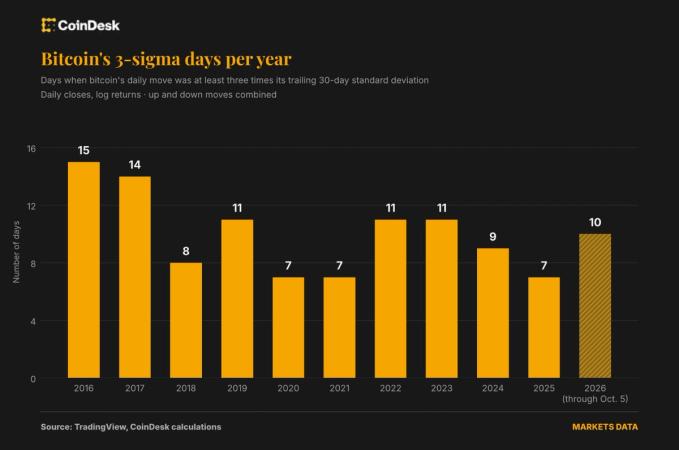
- Bitcoin recorded 10 three-sigma trading days in 2026, exceeding the eight logged across all of 2018, when the asset lost 73% of its value, per CoinDesk analysis.
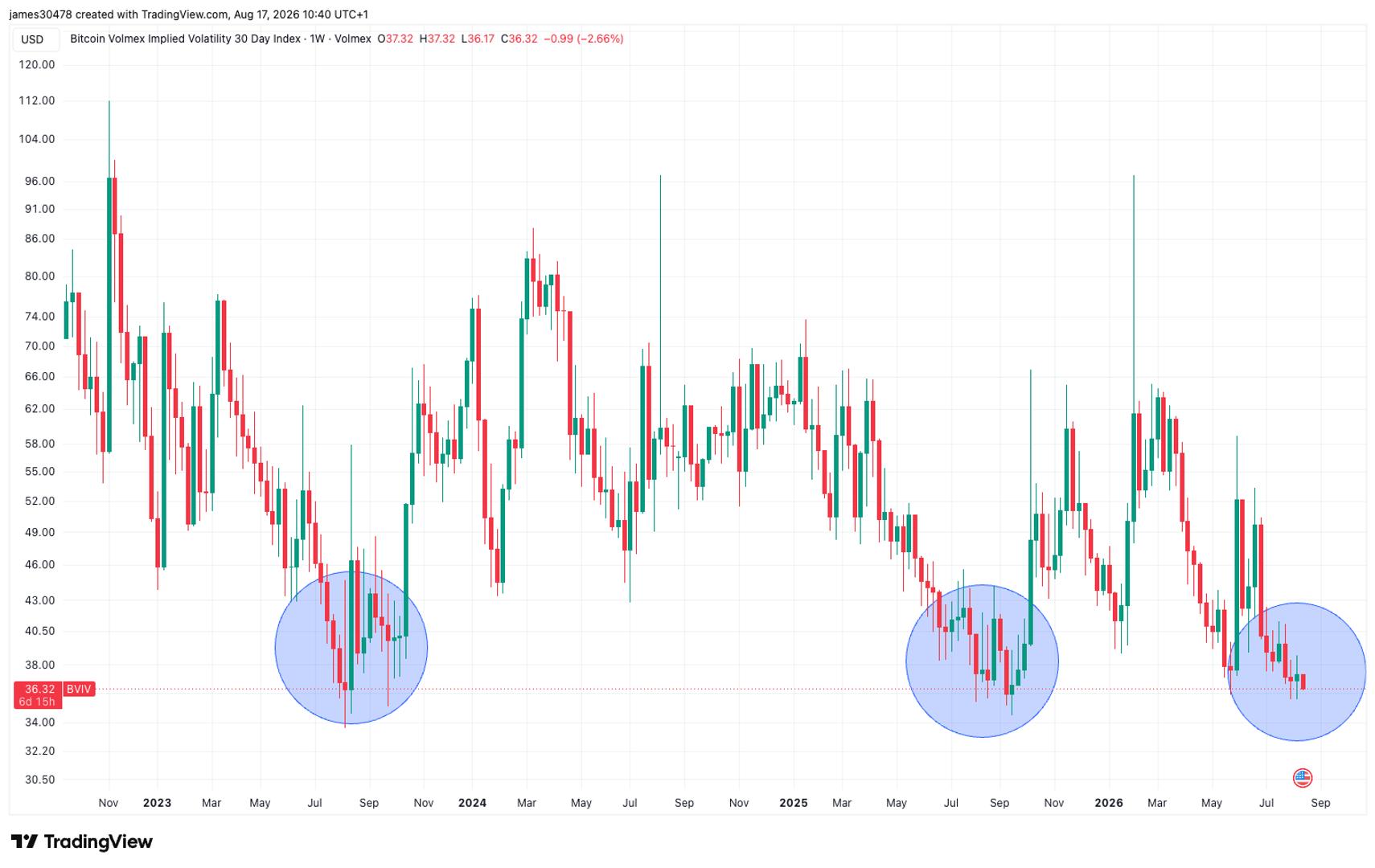
- Bitcoin's annualized volatility has fallen to ~46% from 84% in 2018, even as the average size of a 3-sigma move has shrunk from ~10% to ~7% — meaning outsized days remain frequent relative to recent behavior.
- Since 2024, Bitcoin has logged 26 three-sigma days, versus eight for Nvidia, 16 for the S&P 500, and 12 for gold.
- Standard value-at-risk models may understate Bitcoin's tail risk and encourage outsized allocations, driving the industry toward Expected Shortfall measures, per Deribit CEO Luuk Strijers.
- Crowded short-vol positioning, especially call overwriting, amplifies moves when macro headlines hit, according to Two Prime CEO Alexander S. Blume.
- On Sept. 21, Paradigm cleared a record $6.7 billion in bitcoin options trades during the latest 3-sigma day without major desk losses, per the firm's Nicolas Quatravaux.
Why it matters: Per Deribit CEO Luuk Strijers, value-at-risk models do not properly assess Bitcoin's tail risk, and the industry is moving toward Expected Shortfall measures. With 10 three-sigma days already in 2026 against an annualized volatility of ~46%, institutional allocators relying on VaR alone face a measurable gap between perceived calm and actual downside — exactly the kind of blind spot that turns routine macro headlines into portfolio-damaging shocks.
Ask SkimNews