Turkey, Pakistan, Saudi Arabia Sign NATO-Style Defence Pact — SkimNews
Get the Geopolitics newsletter
Daily geopolitics — wars, elections, sanctions, the diplomatic moves that move markets. Free.
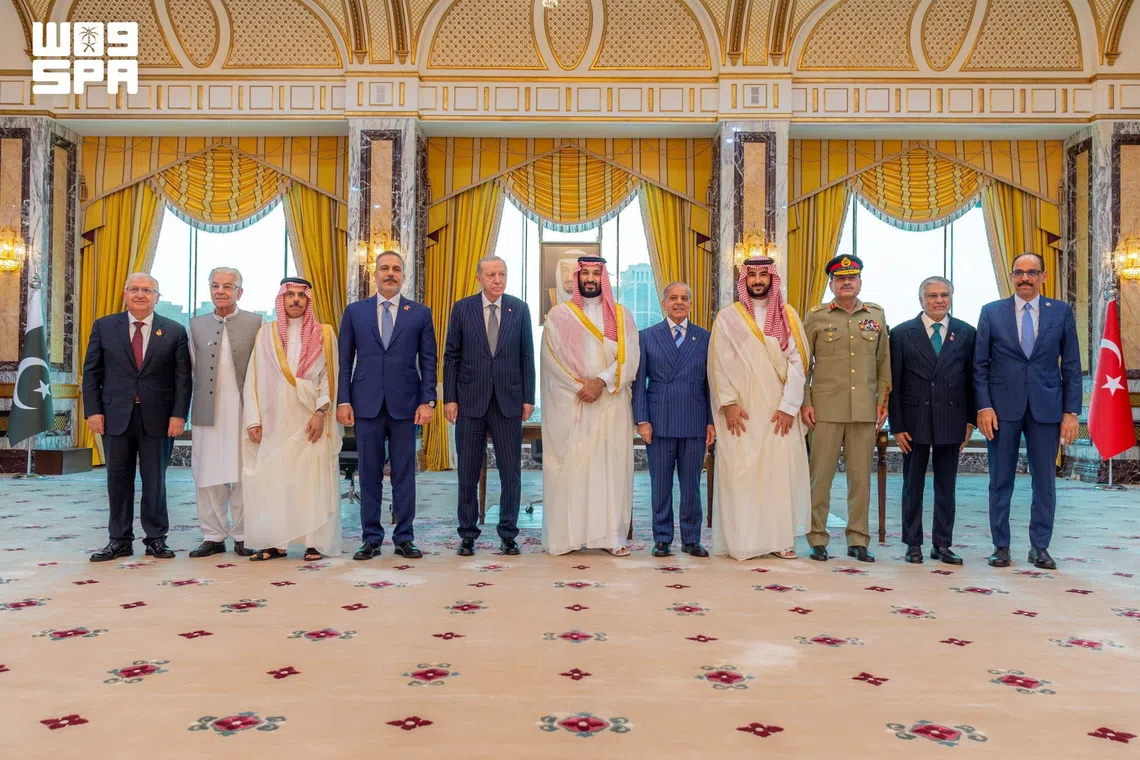
- Turkey, Pakistan and Saudi Arabia signed the "Mecca Joint Defence Agreement" on Friday, stipulating that an armed attack against any one of the three would be regarded as an attack on all — a mutual-defence pledge drawn up over two years and eight months of talks.
- Hakan Fidan, Turkey's foreign minister, told state-run Anadolu that the pact is "technically the same as NATO's Article 5" but is not directed against Iran or any other country, framing it instead as a general security pledge.
- President Erdogan wants the alliance to grow beyond three members, with Egypt identified as a potential candidate once "certain technical matters" are resolved.
- The new alliance's structure will mirror NATO's, featuring a committee of ministers and a general secretariat based in Saudi Arabia, with operational details to be set at the first committee meeting.
- The pact's context is regional conflagration that has brought Iranian missile fire onto Gulf oil exporters; Turkey, Saudi Arabia, Pakistan and Egypt had earlier formed the "R4" group to address the war on Iran, and this accord is meant to "solidify" that partnership through concrete mechanisms.
- Turkey, which has NATO's second-largest army, has said the pact does not seek to replace any existing alliance and is open to other regional countries; Fidan separately argued Turkey should join the international coalition protecting Red Sea shipping from Houthi attacks.
Why it matters: Three Sunni-majority U.S. allies have codified a mutual-defence commitment functionally equivalent to NATO's Article 5 — the first such trilateral arrangement among them — creating a new security bloc designed for collective deterrence in a region where Iranian missile strikes have already hit Gulf oil exporters, with Egypt already queued as a potential fourth member.
Ask SkimNews

