Lemon Frost Geckos' Tumors Share Genes with Human Cancer
Get the Health newsletter
Daily health & science — research, biotech, public health, the studies worth knowing. Free.
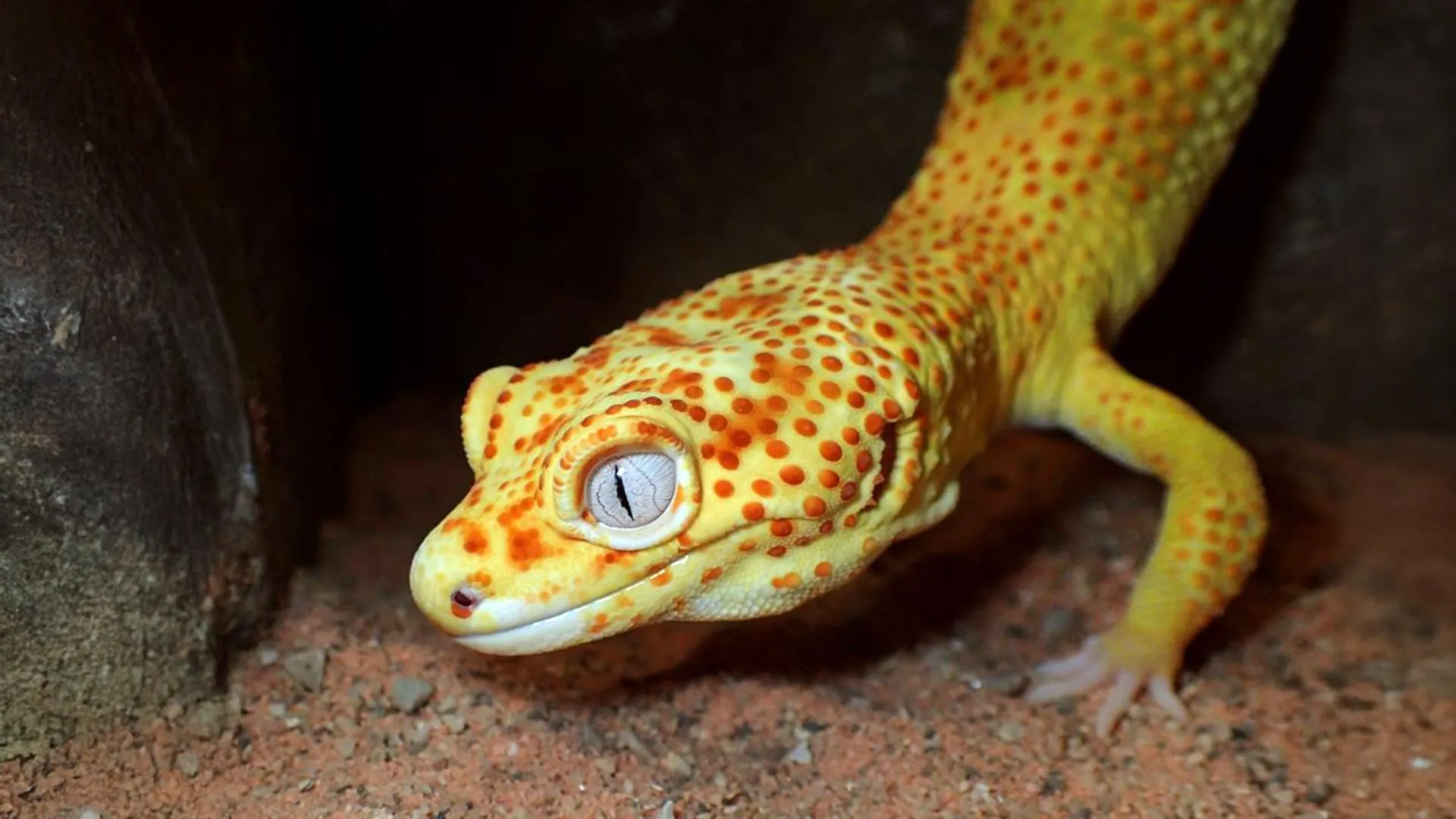
- Lemon frost leopard geckos develop aggressive tumors naturally in about 80% of individuals, according to a University of Nottingham-led study published in BMC Biology.
- Whole genome sequencing of tumor and healthy tissue from the geckos identified genetic changes involving the same genes and biological pathways already linked to human cancers.
- The lemon frost morph originated from a spontaneous genetic mutation during selective breeding in the pet trade, where its white and yellow coloration drove popularity before breeders noticed widespread tumors.
- Unlike laboratory mice, which require researchers to artificially induce tumors, lemon frost geckos develop cancer naturally at a relatively young age, and the tumors frequently metastasize — giving scientists a window into how cancer begins and spreads under natural conditions.
- Dr. Ylenia Chiari of the University of Nottingham's School of Life Sciences led the international team, which included PhD researcher Brandon Hastings and collaborators from the University of Birmingham, Marquette University, University of Florida, and University of Trieste.
- Dr. Scott Glaberman of the University of Birmingham said the findings underscore why protecting biodiversity matters for medicine: 'every species has something to teach us,' particularly when comparing cancer-vulnerable animals with cancer-resistant ones like turtles and tortoises.
Why it matters: Cancer researchers gain a new model where roughly 80% of subjects develop tumors naturally and young, and where those tumors metastasize — conditions that normally have to be engineered into lab mice. The cross-species genomic approach also reframes biodiversity conservation as directly relevant to medical discovery, with researchers explicitly aiming to inspire new prevention, detection, and treatment strategies in humans.