Tubulin Stops Alzheimer's, Parkinson's Toxic Clumps — SkimNews
Get the Health newsletter
Daily health & science — research, biotech, public health, the studies worth knowing. Free.
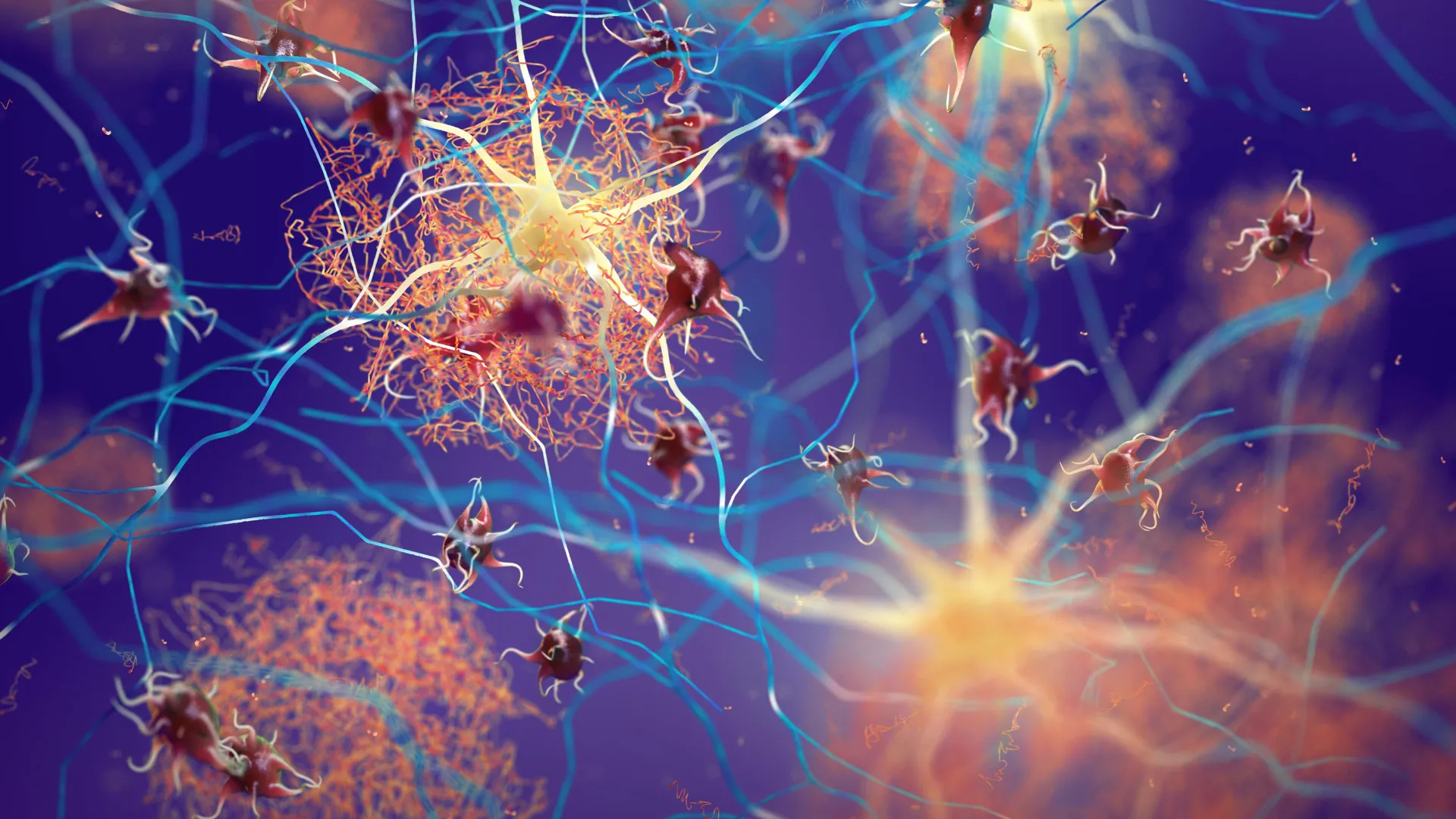
- Baylor College of Medicine researchers found that tubulin, the building block of microtubules, redirects Tau and alpha-synuclein away from forming toxic aggregates and toward assembling healthy microtubules inside brain cells.
- Dr. Lathan Lucas, postdoctoral associate and first author, and co-corresponding author Dr. Allan Ferreon published the work in Nature Communications in 2026, reframing tubulin from 'a passive casualty of disease to an active protector against toxic protein aggregation.'
- When tubulin levels are low — as observed in Alzheimer's disease — Tau and alpha-synuclein form harmful clumps; restoring tubulin shifts those proteins toward productive microtubule assembly, Lucas said.
- The strategy differs from approaches that try to eliminate the cellular droplets (condensates) where the proteins aggregate, instead preserving the droplets but steering their contents down a healthy path.
- Co-corresponding author Josephine C. Ferreon, co-first author Phoebe S. Tsoi, and contributors My Diem Quan and Kyoung-Jae Choi — all at Baylor — collaborated on the biochemistry, biophysics, high-resolution microscopy, and neuron-based assays.
- The study was supported by NINDS-NIH grant R01 NS105874, Welch Foundation grant Q-2097-20220331, and NIGMS-NIH grant R01 GM122763.
Why it matters: For drug developers targeting Alzheimer's and Parkinson's, the finding reframes the therapeutic target: boosting the tubulin pool may curb toxic aggregation while preserving the normal roles of Tau and alpha-synuclein — sidestepping the risk baked into earlier condensate-elimination strategies, which threatened to disrupt healthy neuronal function by removing the droplets entirely.
Ask SkimNews