Greenland sharks keep healthy eyes for 400 years, study finds — SkimNews
Get the Health newsletter
Daily health & science — research, biotech, public health, the studies worth knowing. Free.
- Dorota Skowronska-Krawczyk and colleagues at UC Irvine, with co-authors from the University of Basel, published findings in Nature Communications showing Greenland sharks show no evidence of retinal cell death despite lifespans of up to 400 years.
- Rhodopsin in the shark retina remained active and was tuned to detect blue light — an adaptation to the extremely low light levels of Arctic deep waters.
- John Fleng Steffensen at the University of Copenhagen, Peter G. Bushnell at Indiana University South Bend, and Richard Brill of the Virginia Institute of Marine Science caught and dissected shark eyes between 2020 and 2024 near the university's Arctic Station on Disko Island, Greenland.
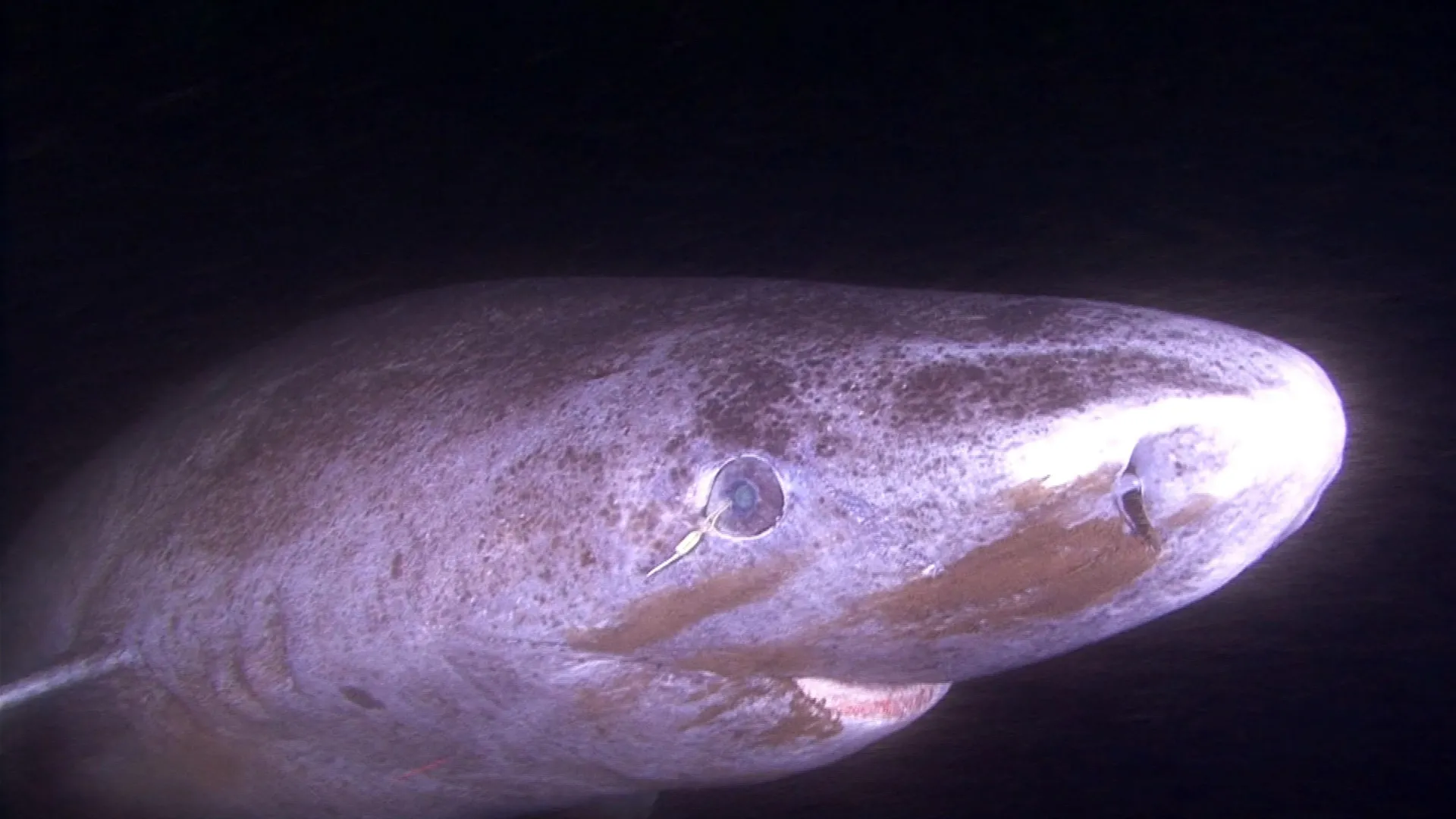
- The finding challenges the long-held assumption that Greenland sharks are functionally blind from parasites attached to their eyeballs — Skowronska-Krawczyk's trigger was watching video of the sharks actively tracking light.
- Researchers hypothesize a DNA repair mechanism preserves vision across centuries, a pathway the authors say could eventually inform strategies against age-related human vision loss including macular degeneration and glaucoma.
- Skowronska-Krawczyk flagged uncertainty around federal research funding as a concern for future support of this comparative-longevity work.
Why it matters: For vision-aging researchers, the Greenland shark offers a living model of retinal preservation across centuries, and the article directly links the work to future strategies against macular degeneration and glaucoma — leading causes of blindness in older adults. The lead researcher also warns that federal funding uncertainty could slow exactly this kind of long-horizon comparative biology.
Ask SkimNews