Tesla Unredacts 17 Robotaxi Crashes — Most Weren't Its Fault — SkimNews
Get the Tech newsletter
Daily tech — startups, AI labs, chips, the launches that shape the next decade. Free.
- Tesla unredacted all 17 of its autonomous driving crash narratives filed with NHTSA, reversing nearly a year of marking every single report as 'confidential business information' — a practice that made it the sole outlier among ADS operators like Waymo, Zoox, Avride, and May Mobility.
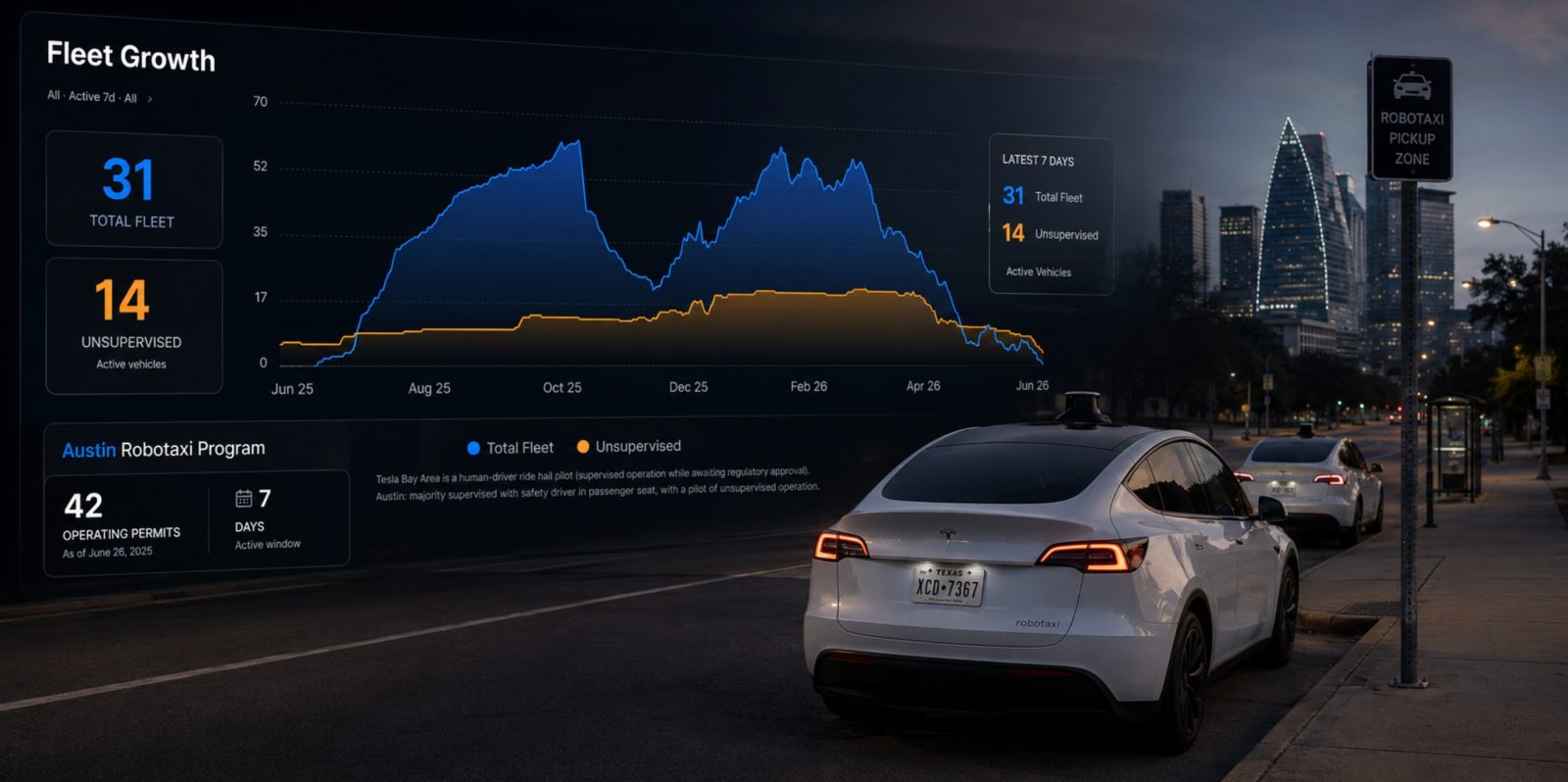
- The 17 incidents span July 2025 through March 2026, covering the entire period of Tesla's Robotaxi testing in Austin, with every crash involving a 2026 Model Y running ADS with a safety monitor present.
- Injury outcomes were relatively mild: 13 crashes caused property damage only, 2 had no reported injuries, 1 involved a minor injury without hospitalization, and 1 — caused by an SUV rear-ending a creeping Tesla at 2 mph — resulted in hospitalization.
- Several crashes were not Tesla's fault, including multiple rear-endings while the Tesla was stopped at red lights or stop signs, a city metrobus sideswiping it during a right turn, a pedicab clipping its mirror, and an SUV creeping into it from behind.
- Two crashes stemmed from teleoperator failures: in July 2025, a remote operator drove a stopped Model Y up a curb and into a metal fence at 8 mph, causing the only non-hospitalization injury; in January 2026, another teleoperator drove straight into a construction barricade at 9 mph.
- Tesla's ADS itself showed spatial awareness issues, driving into a metal chain after an unprotected left turn, clipping a dump trailer's gooseneck hitch, backing into a wooden electrical pole, and scraping a curb while reversing into a parking space.
- The pattern of rear-endings by human drivers mirrors what Waymo reports in the majority of its own crash data — suggesting that AVs getting hit while stopped is an industry-wide phenomenon, not a Tesla-specific problem.
Why it matters: The unredacted reports resolve a year-long transparency standoff and give regulators, safety advocates, and the public full context on Tesla's Robotaxi performance for the first time. Most incidents were caused by other drivers — echoing Waymo's data — but two teleoperator errors (a metal fence at 8 mph, a construction barricade at 9 mph) expose genuine safety gaps in Tesla's remote backup system that secrecy previously concealed.
Ask SkimNews