U.S. Grid Can't Keep Up With AI Power Demand — SkimNews
SkimNews Take
The convergence itself reveals the constraint has moved upstream: when utilities, tech firms, and climate financiers all name policy, permitting, and financing as the bottleneck, generation technology is no longer the limiting factor — institutional throughput is.
Get the Energy newsletter
Daily energy & climate — solar, EVs, oil, the policy fights and tech bets shaping the transition. Free.
- OpenAI and major utility leaders have warned that U.S. electricity supply is insufficient to meet AI-driven load growth, with hyperscale data centers increasingly expected to supply their own power.
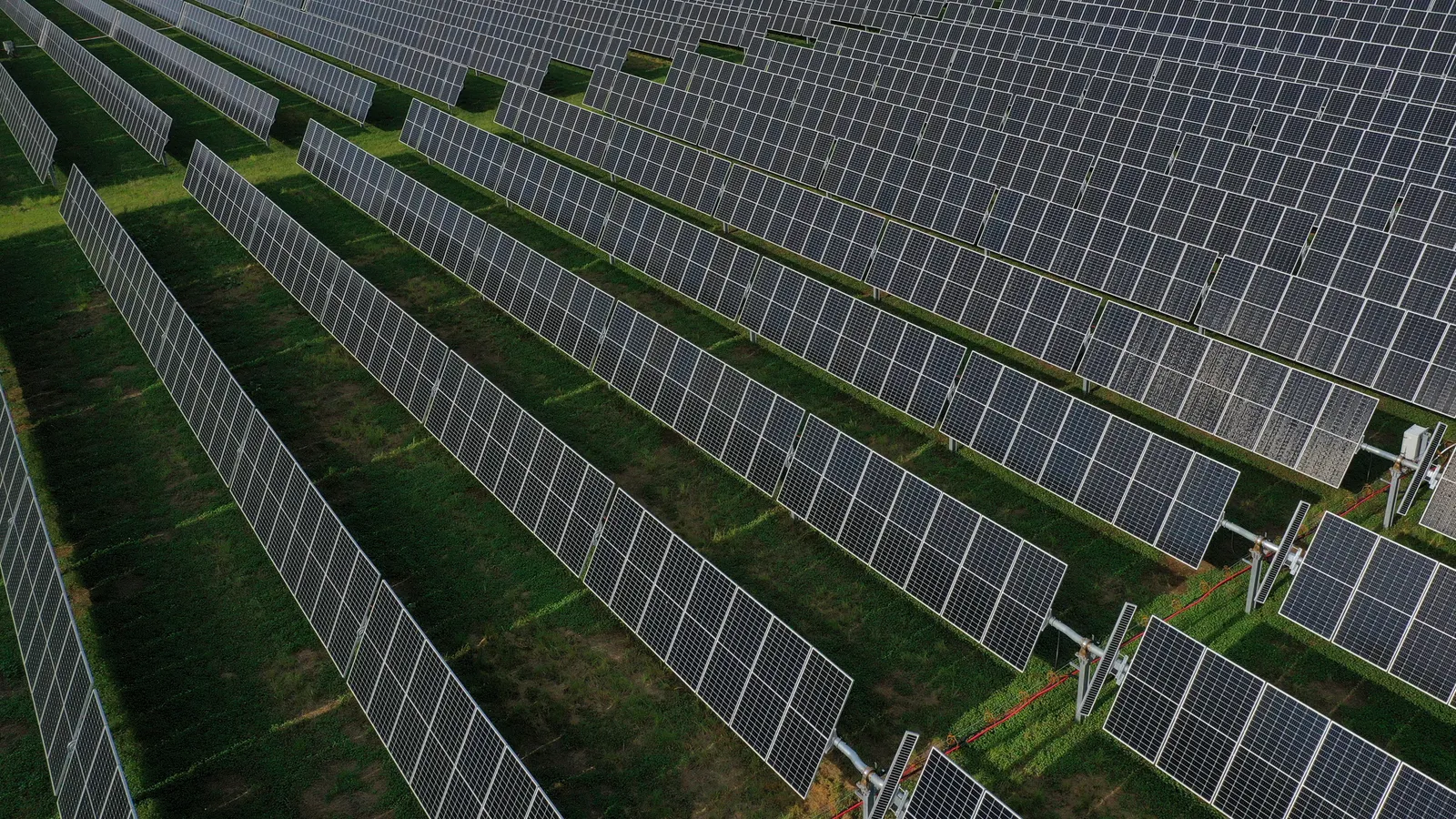
- Solar installations topped 40 GW in 2025, representing 54% of all new U.S. electricity-generating capacity that year; combined with storage, the two technologies accounted for 79% of new capacity (per the Solar Energy Industries Association).
- The Energy Information Administration projects nearly 70 GW of new solar projects will come online by 2027, and utility-scale energy storage is set to more than double to 65 GW within two years.
- U.S. data center load alone is forecast to exceed 100 GW by 2035, driven by AI, advanced computing, industrial reshoring, and transportation electrification.
- Combined-cycle natural gas faces supply chain limits — new turbines ordered today won't be delivered until 2032 — while advanced nuclear, geothermal, and long-duration storage are unlikely to contribute meaningfully to U.S. electricity supply before 2030.
- Global energy transition investment hit $2.3 trillion in 2025, with roughly $1.2 trillion flowing to renewable energy and power grids, reinforcing capital's tilt toward quickly deployable capacity.
- Battery storage costs remain on a steep downward curve, with capital cost for a 4-hour system projected to fall to $245/kW-hour by 2030 and $159/kW-hour by 2050.
Why it matters: With data center load forecast to top 100 GW by 2035 and gas turbine deliveries pushed to 2032, the only resources with construction timelines short enough to meet near-term demand are solar and storage — and institutional capital is already following that math, with $1.2 trillion of 2025 energy-transition money flowing to renewables and grids.
Ask SkimNews