China Returns to Island-Building in South China Sea — SkimNews

Get the Geopolitics newsletter
Daily geopolitics — wars, elections, sanctions, the diplomatic moves that move markets. Free.
- Chinese coast guard personnel landed on Sandy Cay in the Spratly Islands in April 2025 and unfurled the Chinese flag — Beijing's first formal on-the-ground assertion of sovereignty over an unoccupied land feature in more than a decade.
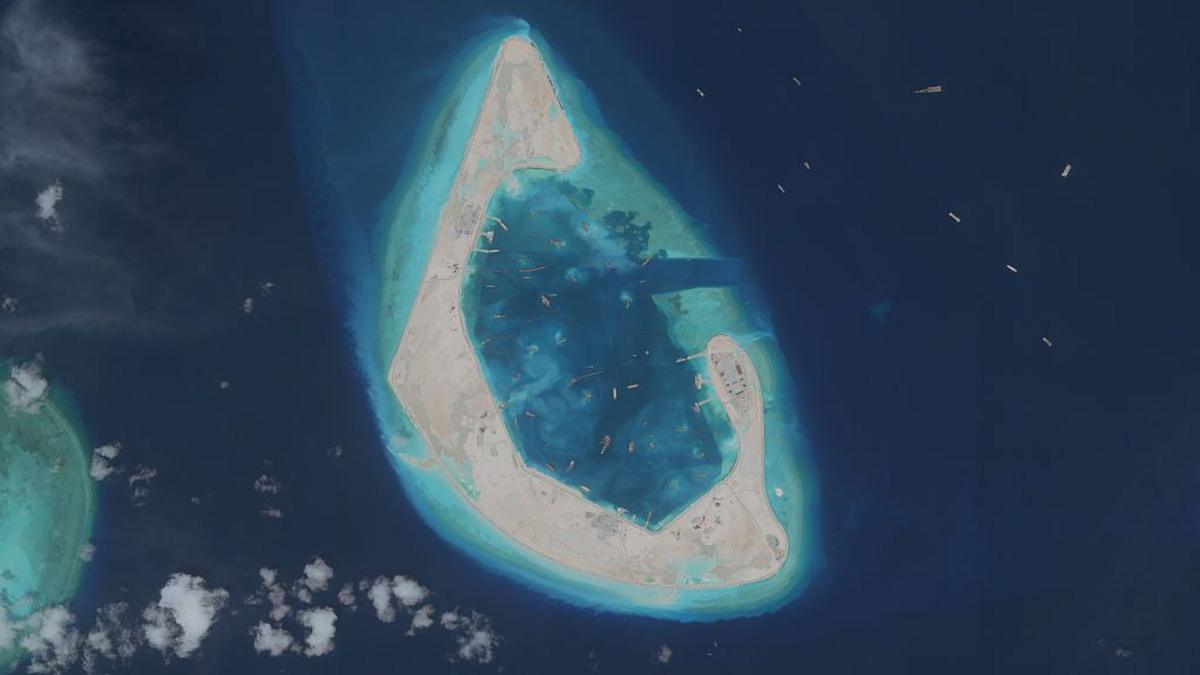
- Antelope Reef in the Paracel Islands became the site of China's first significant island-building campaign in about a decade when large-scale dredging began there in October 2025, roughly 215 nautical miles east of central Vietnam's coast.
- The 2002 ASEAN nonbinding commitment not to inhabit unoccupied features is under fresh strain as Beijing targets unoccupied land features beyond Sandy Cay, while continuing to interfere with neighbors' fishing and offshore energy activity.
- Manila's provisional arrangement with Beijing from July 2024 reduced high-intensity clashes at Second Thomas Shoal, with 13 resupply and rotation missions proceeding without incident as of March — though Chinese coast guard personnel struck a Filipino sailor with a wooden baton this month.
- Chinese research vessels are increasingly conducting unauthorized surveys in the exclusive economic zones of the Philippines, Malaysia, and Vietnam, typically without coast guard or maritime militia escorts and withdrawing when challenged.
- The 2016 Hague tribunal rejected China's nine-dash line and found that none of the Spratly features, Scarborough Shoal, or Reed Bank generates an exclusive economic zone — a ruling Beijing rejected but one that strengthened other Southeast Asian claimants' positions.
Why it matters: China's pivot from sea coercion to landing on unoccupied features — Sandy Cay in April, Antelope Reef dredging starting October — makes its claims harder to reverse and chips away at the 2016 Hague ruling and 2002 ASEAN commitment. Southeast Asian states under pressure from Middle East fallout and U.S. tariffs face incentives to recalibrate toward Beijing, eroding the foundation of Washington's regional strategy.
Ask SkimNews