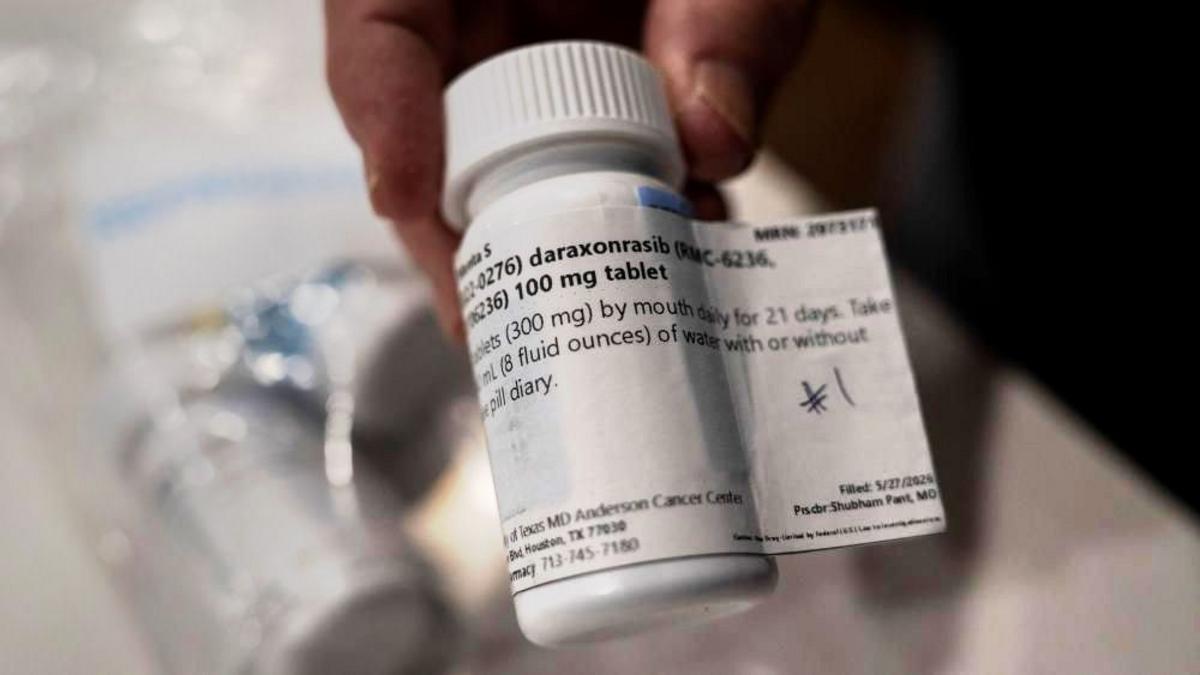
Daraxonrasib Doubles Pancreatic Cancer Survival — SkimNews

SkimNews Take
Targeting the Ras family of proteins, previously considered undruggable, represents a fundamental shift in oncology, validating a new approach to drug development applicable across many cancer types.
Get the Health newsletter
Daily health & science — research, biotech, public health, the studies worth knowing. Free.
- Daraxonrasib doubled median overall survival for pancreatic cancer patients in a recent clinical trial, extending average survival from six to 13 months.
- Daraxonrasib targets the Ras family of proteins, a class of oncogenic drivers that had long been considered “undruggable.”
- Daraxonrasib is now being evaluated in trials for other Ras‑driven cancers, including roughly 40% of colorectal cancers and about 30% of small‑cell lung cancers.
- Daraxonrasib can be matched to patients through routine genetic screening for Ras mutations, expanding its potential use across multiple tumour types.
Why it matters: Pancreatic cancer patients gain an extra seven months of median survival, and clinicians can now target Ras‑driven tumors across multiple cancers, expanding treatment options for patients and families.
Ask SkimNews