Estate records 'abundance' of wildlife despite drought — SkimNews

Get the Energy newsletter
Daily energy & climate — solar, EVs, oil, the policy fights and tech bets shaping the transition. Free.
- Wimpole Estate in Cambridgeshire recorded 5,242 species across its parkland, farmland, woodland, and wetlands over the last six years, an "abundance" the National Trust said is remarkable given the area's habitat loss and hot, dry conditions
- Rare species spotted include barbastelle bats, great crested newts, and corn buntings, plus a tiny pygmy ant recorded at only one other UK site
- Estate general manager David Hassall said the count "reflects five decades of careful stewardship and shows that nature can flourish alongside farming, public access and heritage conservation"
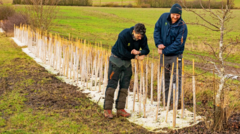
- Since 2021, the National Trust planted 125,000 trees and created 35 hectares of woodland and 52 hectares of wood pasture at the estate, with another 77 hectares of tree planting currently being designed
- National Trust head of nature conservation Ben McCarthy said wildlife across the UK is under "immense pressure from habitat loss and fragmentation as well as climate change," making nature restoration "more urgent than ever"
- The government confirmed the East of England is one of seven UK areas in drought, with hosepipe bans in force across parts of the region
Why it matters: Wimpole offers a concrete, documented counterexample to the narrative of unavoidable biodiversity decline in low-lying, farmed English landscapes — 5,242 recorded species in a drought-affected county. For the National Trust, the estate functions as a visible proof point for its landscape-scale restoration model, with 125,000 trees planted since 2021 and 77 more hectares in design, at a moment when habitat fragmentation is described as making nature recovery "more urgent than ever."
Ask SkimNews