Here’s why Pyongyang is testing an array of missile capabilities — SkimNews

Get the Geopolitics newsletter
Daily geopolitics — wars, elections, sanctions, the diplomatic moves that move markets. Free.
- North Korea has conducted approximately 20 missile-related tests and exercises since the beginning of 2026, according to media reports available November 6, spanning ballistic and cruise missiles, rockets, drones, warheads and air defenses rather than conventional ballistic missiles alone.
- North Korea reportedly tested a 600-mm multiple rocket launcher on October 30, a cluster-bomb warhead for tactical ballistic missiles on October 31, a strategic cruise-missile dispersal warhead on November 3, and a new air-defense missile alongside a long-range cruise-missile exercise on November 4.
- Hwasong-11 Ma series reportedly incorporates maneuverable-flight technology intended to complicate interception, part of North Korea’s effort to vary missile delivery trajectories and platforms.
- North Korea has reportedly experimented with AI-assisted targeting, autonomous navigation and anti-jamming technology; combined exercises have also paired ballistic missiles, cruise missiles, rockets and drones, although the AI systems’ operational maturity remains uncertain.
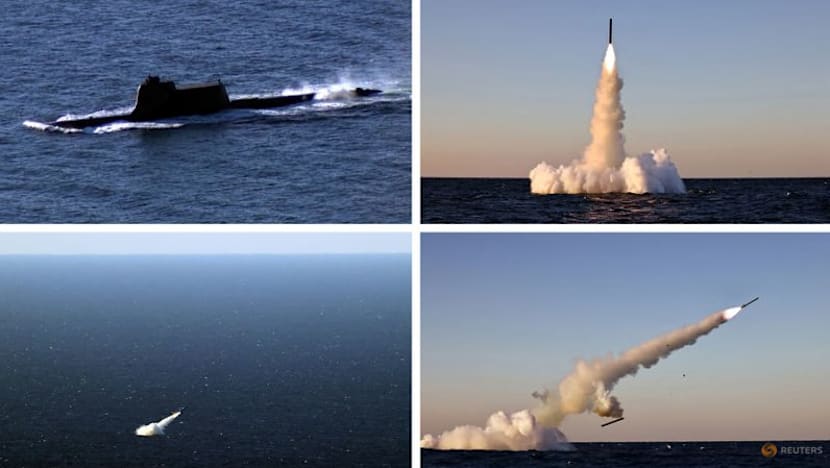
- Choe Hyon destroyer was used to test cruise missiles, indicating North Korea’s interest in additional sea-based launch platforms and expanded maritime strike options.
- North Korea faces a conventional airpower gap against South Korea’s F-35A, F-15K, KF-16, FA-50 and E-737 fleet and U.S. regional forces; economic, industrial and sanctions constraints make missiles a less expensive way to impose costs and complicate operations.
- South Korea fields Patriot and Cheongung-II and is developing L-SAM, but intercepting saturation attacks across different trajectories and multiple launch platforms remains a demanding operational challenge.
Why it matters: North Korea’s 2026 program of approximately 20 missile tests and exercises spans hypersonic systems, cruise missiles, drones and dispersal warheads, while South Korea fields Patriot, Cheongung-II and the developing L-SAM. The strategic change is that Pyongyang is pursuing coordinated attacks intended to confuse or delay the U.S.-South Korean response before the alliance’s superior airpower can fully operate.
Ask SkimNews