Light-Activated Eye Drops Restore Vision in Blind Mice — SkimNews
Get the Health newsletter
Daily health & science — research, biotech, public health, the studies worth knowing. Free.
- Prosthe6 compounds designed by an IBEC-led consortium restored saccadic eye movements in blinded zebrafish larvae and innate light-avoidance behavior in mouse models of age-related macular degeneration and retinitis pigmentosa, according to a paper in the Journal of the American Chemical Society.
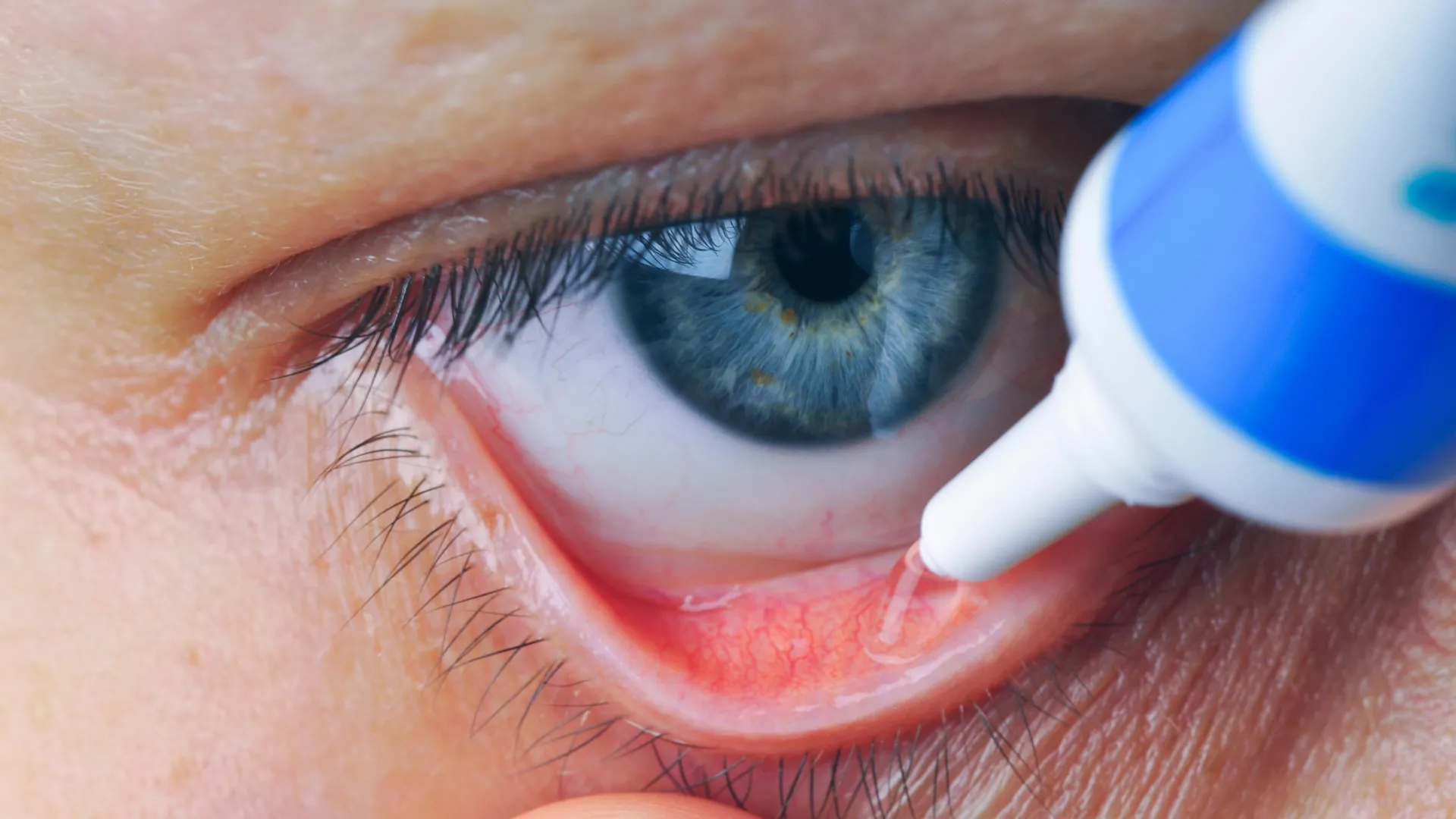
- Pau Gorostiza's team at IBEC showed two lead compounds — prosthe6-12 and prosthe6-15 — worked both via intraocular injection and as topical eye drops, producing restored visual behavior under ordinary indoor and overcast-day illumination.
- The compounds target ON-bipolar neurons via the mGlu6 protein, functioning as "molecular prostheses" that re-activate surviving retinal circuitry downstream of dead photoreceptors without genetic modification or implanted hardware.
- Pedro de la Villa's group at the University of Alcalá ran the mouse behavioral experiments, with additional collaborators from IQAC-CSIC, the University of Barcelona, UAB, IRYCIS, and Fundació Eduard Soler.
- Gorostiza emphasized the approach works independent of the specific genetic mutation driving photoreceptor loss — a contrast with gene therapy, which the source notes is suitable for only a small fraction of patients.
- Eyelumina, a spin-off now being formed, will pursue translational development; the prosthe6 technology is already patented, with safety and formulation studies underway.
- The findings follow the first clinical trial of a photopharmacological vision-restoration drug (targeting an unrelated protein), signaling the field's gradual shift toward human testing.
Why it matters: AMD and retinitis pigmentosa together affect roughly 200 million people worldwide, most of whom cannot benefit from existing gene therapy because their mutations don't match approved treatments. A mutation-independent, drop-form therapy that works in ambient light could reach a far broader patient population than current options — though human trials remain years away and the compounds still require safety validation. The researchers themselves stress the approach does not reverse photoreceptor degeneration, only substitutes for lost function.
Ask SkimNews