Breast cancer hijacks immune cells to grow tumor nerves — SkimNews
Get the Health newsletter
Daily health & science — research, biotech, public health, the studies worth knowing. Free.
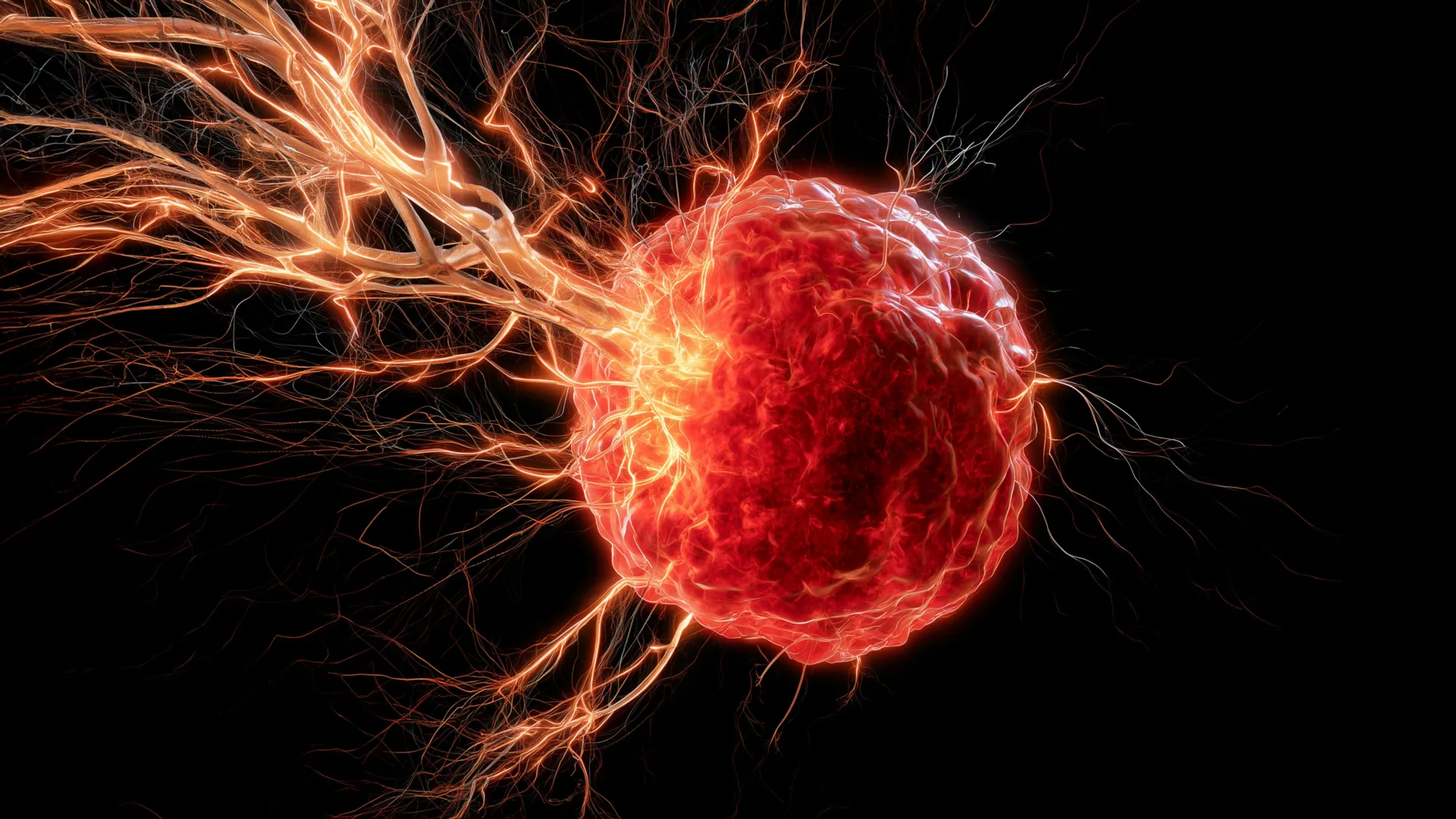
- University of Oklahoma researchers discovered that triple-negative breast cancer tumors recruit macrophages, which then release the protein BDNF to draw nerves into the tumor and potentially support cancer progression.
- Maureen Cox, Ph.D., an assistant professor of microbiology and immunology at OU, led the study published in Cell Death & Differentiation, calling macrophages "the critical source for drawing nerves into the tumor."
- In mouse experiments, a drug that blocks BDNF signaling stopped nerves from growing into tumors and significantly reduced tumor growth; Cox noted the drug is "already on the market."
- Patient data analysis showed that triple-negative breast cancer tumors containing higher levels of macrophages and BDNF were linked with poorer survival, supporting the mouse findings.
- The research team plans to test the same BDNF-blocking intervention in high-grade ovarian cancer, another aggressive and hard-to-treat disease, and is also exploring whether tumors stimulate blood vessel growth or metastasize along the nerve pathways.
- The study was funded by the NIH's National Institute of General Medical Sciences, Oklahoma's Tobacco Settlement Endowment Trust, and related Oklahoma translational-research grants.
Why it matters: Because triple-negative breast cancer patients have limited treatment options and tumors with higher BDNF and macrophage levels correlate with poorer survival, a drug already on the market that blocked this nerve-drawing pathway and significantly reduced tumor growth in mice offers a near-term repurposing candidate for an aggressive cancer subtype.
Ask SkimNews